 look news india

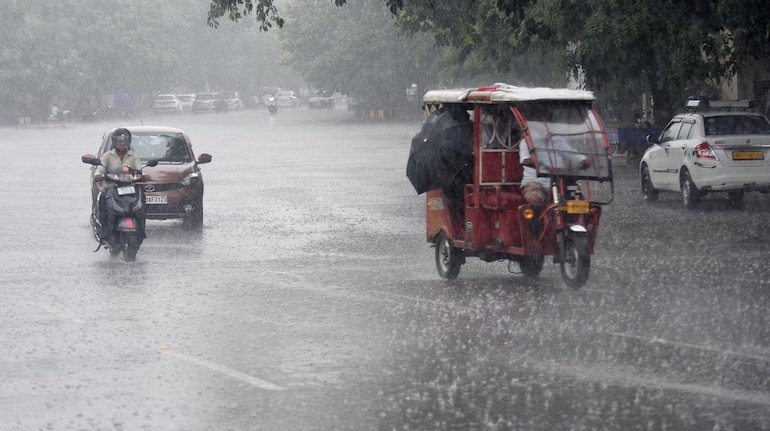
The Indian Meteorological Department (IMD) has issued a serious warning regarding weather patterns in many major states of the country for September 23. Due to the active cyclonic circulation and low pressure area in the Bay of Bengal, a period of heavy rains is going to begin in Odisha, Coastal Andhra Pradesh, Chhattisgarh and Telangana. The Meteorological Department has issued red and orange alerts for these areas and has instructed the local administration and the general public to remain alert.
Due to this weather system, which developed just before the withdrawal of monsoon, there is a possibility of strong gusty winds at a speed of 40 to 50 kilometers per hour in the coastal and peninsular areas. Due to continuous torrential rains, the danger of waterlogging in low-lying areas, increase in the water level of rivers and landslides on hilly roads has increased.
The coastal and southern interior districts of Odisha may see the most aggressive form of weather on September 23. Extremely heavy rainfall is expected in districts like Puri, Ganjam, Gajapati, Koraput, Rayagada and Malkangiri. The state government has ordered district magistrates of coastal districts to put disaster management teams on alert mode to deal with any flood-like situation.
There is a possibility of torrential rain and lightning in northern coastal areas of Andhra Pradesh, especially Visakhapatnam, Vizianagaram, Srikakulam and East Godavari districts. Due to the possibility of high waves in the sea, the Meteorological Department has issued a strict advisory to fishermen not to venture into the deep sea on September 23.
Heavy to very heavy rainfall has been predicted in the southern division of Chhattisgarh including Bastar, Sukma, Dantewada and Bijapur on September 23. Due to continuous rains, the water level of local rivers like Indravati and Shabri can rise rapidly, due to which there is a possibility of rural areas being cut off from the main roads.
In Telangana, there has been a warning of thunder and lightning along with torrential rain in Hyderabad, Khammam, Warangal, Karimnagar and Bhadradri Kothagudem districts. In urban areas, additional pressure on the drainage system can lead to heavy waterlogging on the roads and traffic jams. The State Disaster Management Department has instructed people not to stand under the open sky or near old trees and electric poles unless there is urgent work.
The impact of this weather system will not be limited to only four states, but its widespread impact will be visible in the surrounding areas as well. Moderate to heavy rainfall is expected in eastern and southern parts of Madhya Pradesh, Vidarbha and Marathwada divisions of Maharashtra.
There is a possibility of intermittent rain and thundershowers with movement of dense clouds over the coastal districts of West Bengal, Jharkhand and southern parts of Bihar. At the same time, due to the active monsoon trough in the northeastern Indian states of Assam, Meghalaya, Nagaland and Manipur, moist winds can bring heavy showers.
The weather will remain mixed over most parts of North and North-West India. There is very little chance of heavy rain in Delhi-NCR, Punjab, Haryana and Western Rajasthan, although partly cloudy sky and humid heat can cause trouble.
Light to moderate drizzle may be recorded at some places amid cloud movement in eastern parts of Uttar Pradesh, while the weather is expected to be mainly dry in western Uttar Pradesh. Some hilly areas of Uttarakhand and Himachal Pradesh may see light to moderate scattered rain due to local convective clouds.
The Meteorological Department has issued safety guidelines for common citizens in view of heavy rains and storms:
-
Avoid standing near open fields, trees, tin sheds and electric transformers during lightning.
-
Avoid driving on underpasses and waterlogged roads during heavy rains.
-
Farmers should keep their harvested or prepared crops covered in safe places and ensure drainage arrangements in the fields.
-
Keep an eye on weather bulletins and emergency numbers issued by local authorities.