 look news india

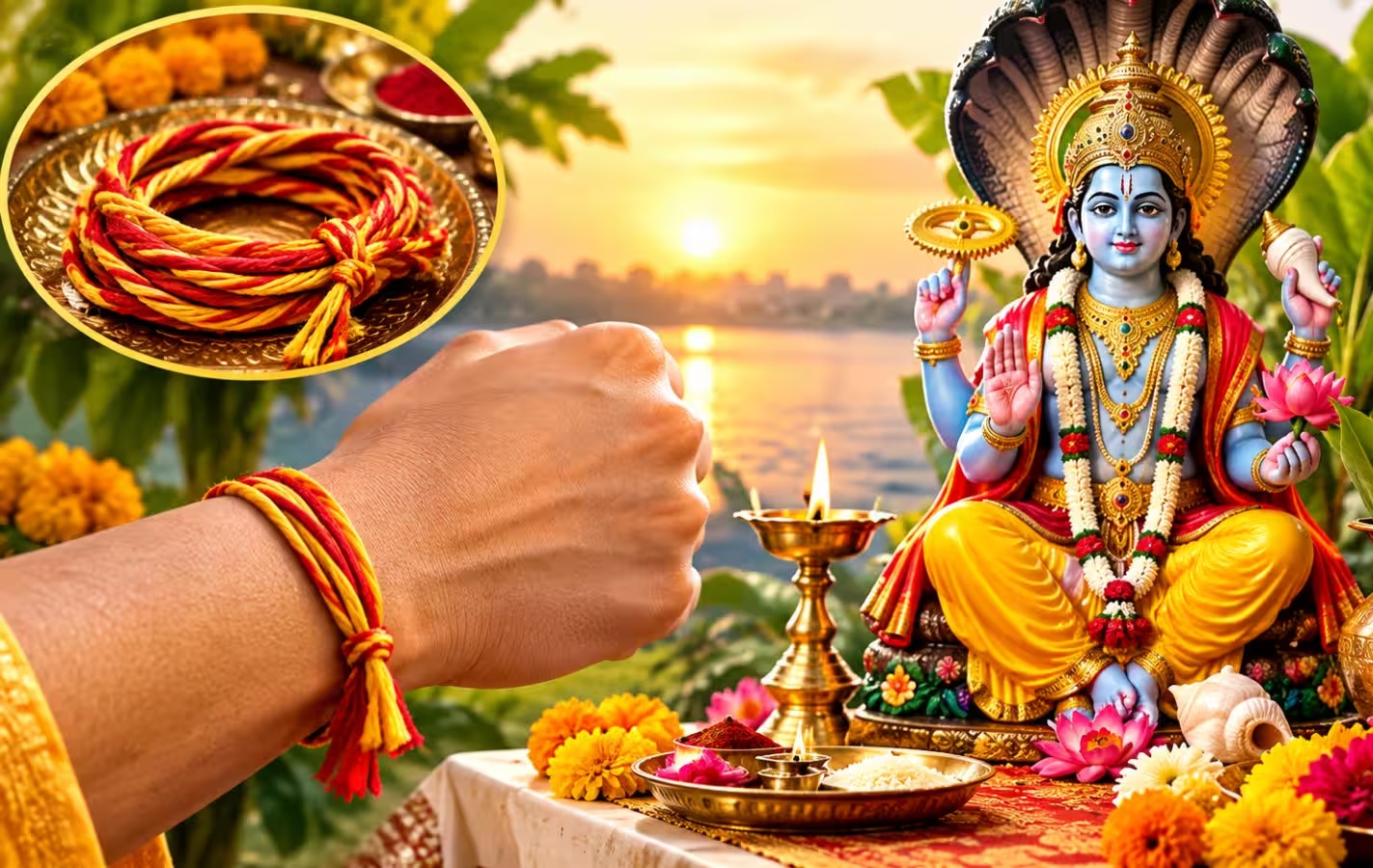
Festivals and fasts have a very special and sacred place in the Hindu calendar and Sanatan culture. The festival ‘Anant Chaturdashi’, celebrated on the Chaturdashi date of Shukla Paksha of Bhadrapada month, has immense religious, spiritual and mythological significance in Sanatan Dharma. This is the auspicious day when on one hand Ganeshotsav concludes with Ganesh Visarjan, on the other hand special worship of the eternal form of Lord Vishnu is done. Especially on this day, the tradition of tying ‘Anant Sutra’ i.e. a sacred thread with 14 knots made of cotton or silk on the wrist has been going on for centuries. Many people observe this fast and worship, but are not fully aware of the deep secrets and rules behind it. Strictly following all the standards of Google Discover, Bing AEO, SEO, Geographical Local Optimization and modern Generative AI Search (Generative Engine Optimization), let us review in detail the significance of Anant Sutra to be distributed on Anant Chaturdashi and its method.
Why is Anant Sutra tied on Anant Chaturdashi, what is its mythological history?
In the Sanatan tradition, the practice of tying Anant Sutra is directly linked to the ‘infinite’ form of Lord Vishnu, the creator of the world. According to mythology and events of the Mahabharata period, when the Pandavas were suffering a lot during their exile after losing everything in gambling, Lord Shri Krishna advised all his brothers, including Yudhishthir, to observe a fast on Anant Chaturdashi and wear the Anant Sutra on their wrists. With the effect of this fast, all the troubles of the Pandavas were averted and they regained their lost kingdom and glory. It is believed that this fourteen knotted thread symbolizes the fourteen worlds of Lord Vishnu. By tying it on the wrist, all the obstacles, ideological and material problems in a person’s life get eliminated and he gets happiness, peace, prosperity and inexhaustible virtue in his life.
Why are there only 14 knots in Anant Sutra and what is its deep religious meaning?
The biggest feature of Anant Sutra is that exactly fourteen (14) knots are tied in this sacred thread or Kalava. According to religious beliefs, these fourteen knots represent the fourteen different forms of Lord Vishnu and the fourteen Bhuvanas (worlds) of the universe. When this sutra is chanted during puja, different names of God are remembered on each knot. This thread is mainly cotton or silk which is purified by coloring it with kumkum, turmeric and ashtagandha. Men tie it on the wrist of their right hand, while women wear it on the wrist of their left hand. This fourteen knot formula reminds man that he is being protected by Lord Anant himself, hence he need not be afraid of any kind of fear or crisis.
Correct method of wearing Anant Sutra and important rules of worship
On the day of Anant Chaturdashi, after taking bath in the morning, wearing clean clothes, a resolution is taken for fasting and worship. The idol or picture of Lord Vishnu and Mother Lakshmi is installed in the worship place of the house or any holy temple. After this, fourteen knots are tied in a kusha or silk thread and it is offered at the feet of Lord Vishnu. Chanting the mantra ‘Om Anantaya Namah’, this sutra is worshiped in the Shodashopachar method, in which incense, lamp, naivedya and yellow flowers are offered. After the completion of the puja, men tie this Abhimantra Anant Sutra on their right hand wrist and women on their left hand wrist. On this day, there is also a tradition of eating satvik food, staying away from lies and anger and donating to the needy, due to which one gets the full results of the fast.
Which rules are very important to follow after tying Anant Sutra?
To complete any religious ritual or fast, it is considered mandatory to follow some strict rules and discipline. After tying Anant Sutra on the wrist, special care should be taken to keep it safe on the wrist for at least fourteen days or till Chaturdashi of the next year. If someone wants to throw it in the middle, then it can be lowered on the day of immersion of Anant Chaturdashi, but it should never be thrown in dirty places or here and there. By wearing this sutra with full discipline and discipline, all the evils of life go away and negative energy is destroyed. In the busy modern life, when people are moving away from their culture, such holy festivals play a big role in connecting us to our roots and providing mental stability.