 look news india

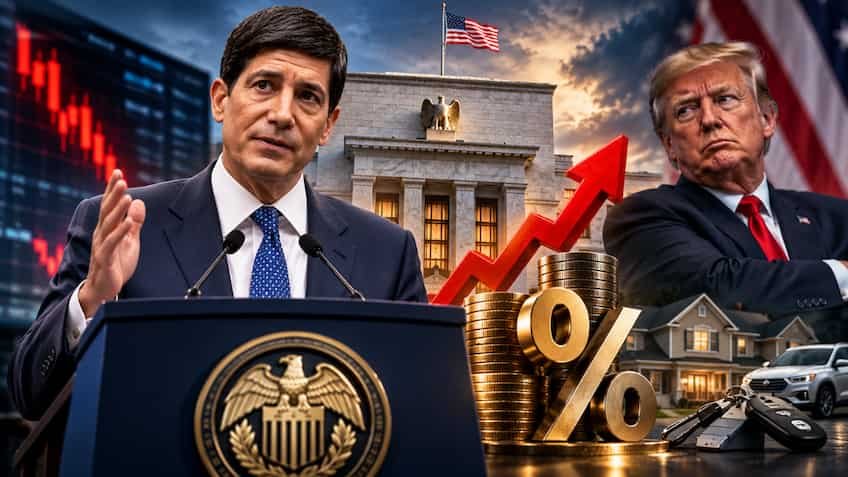
The US Central Bank Federal Reserve has made a major change in monetary policy, ignoring the repeated statements and open pressure of President Donald Trump. The Federal Open Market Committee (FOMC) has increased benchmark interest rates by 25 basis points (0.25%) in its latest two-day meeting. This is the first time after the year 2023, i.e. in the last 3 years, that the US Federal Reserve has adopted the stance of hike instead of cutting the rates. With this increase, the policy interest rates in America have increased to the range of 3.75% to 4.00%.
As soon as this unexpected policy decision came out, there was a sharp selloff in the US stock markets (Wall Street), while the 10-year US Treasury bond yield jumped to the highest level in 19 years (beyond 5%). This aggressive attitude of the Fed has deepened the fears of financial instability and slowing down of growth in the global markets.
President Donald Trump had long been a strong advocate of bringing interest rates down to 1% or below so that the US economy could get cheap loans and boost manufacturing. By writing a post on social media, he had also reiterated the strict demand for immediate reduction in the rates. Despite political pressures, Federal Reserve Chairman Kevin Wersh and policymakers prioritized their constitutional obligation to control rising inflation.
Mainly three big factors were responsible behind this strict action of Fed:
-
Sticky Inflation: The US consumer inflation rate remains in the elevated range of 3.4% to 3.7%, against the Fed’s long-term target of 2%. The rise in energy prices and the inflation of food products are not showing signs of decreasing.
-
Tariff and Trade Policies: New tariff rules and protectionist trade policies have increased the cost of imported products, which has directly pushed up retail prices.
-
Artificial Intelligence and Infrastructure Boom: Cash flows across industries remained tight due to heavy capital spending on AI data centres, chips and high-tech infrastructure, which was causing the economy to overheat.
The Fed Chairman made clear that unless inflation clearly returns towards the 2% target, reducing rates could prove suicidal for the purchasing power of American citizens.
Investor confidence in US markets was shaken as interest rates rose and there were signs of another possible hike by the end of the year:
-
Selling in Nasdaq and S&P 500: Tech and growth stocks are most sensitive to expensive debt. Due to the increase in rates, sharp profit booking was recorded in big stocks like Apple, Microsoft, Nvidia and Tesla.
-
Record jump in bond yields: US 10-year Treasury yield crossed 5.02%. When risk-free government bonds start yielding more than 5%, institutional capital starts moving out of the equity market and towards the bond market.
-
Dollar shines: The US Dollar Index (DXY) has strengthened, due to which the pressure on emerging currencies around the world (such as the Indian Rupee, Euro and Yen) has deepened.
The immediate impact of the 25 basis points increase in the federal funds rate on the wallets of ordinary American consumers is certain to be:
-
Mortgage (Home Loan) Rates: 30-year fixed home loan rates may again touch 7% to 7.5% levels, which will impact home sales in the real estate market.
-
Credit Cards and Auto Loans: The average annual interest (APR) on credit cards remains above 21%, which will get more expensive. Along with this, the monthly EMI of auto loan will increase, which may reduce the demand for cars and consumer durables.
The impact of this decision of the US Federal Reserve will be visible on the Indian financial markets at many levels:
-
Selling by foreign investors (FIIs): Due to attractive US bond yields, foreign institutional investors can withdraw capital from the Indian stock market and shift it to US bonds, which will put pressure on the domestic stock markets (Nifty and Sensex).
-
Pressure on rupee and imported inflation: Due to strengthening of dollar, the Indian rupee may fall, which will make the import of crude oil, electronics and raw materials expensive for India.
-
RBI’s ban on interest rates: The Reserve Bank of India, which was planning to boost growth by cutting repo rates in the coming months, may now have to postpone the decision to cut interest rates to handle foreign capital flight and currency exchange rates.
This decision of the Federal Reserve proves that for central banks, inflation control and long-term economic stability are more paramount than political demands. This conflict between the White House and the Fed is likely to intensify in the coming days.