 look news india

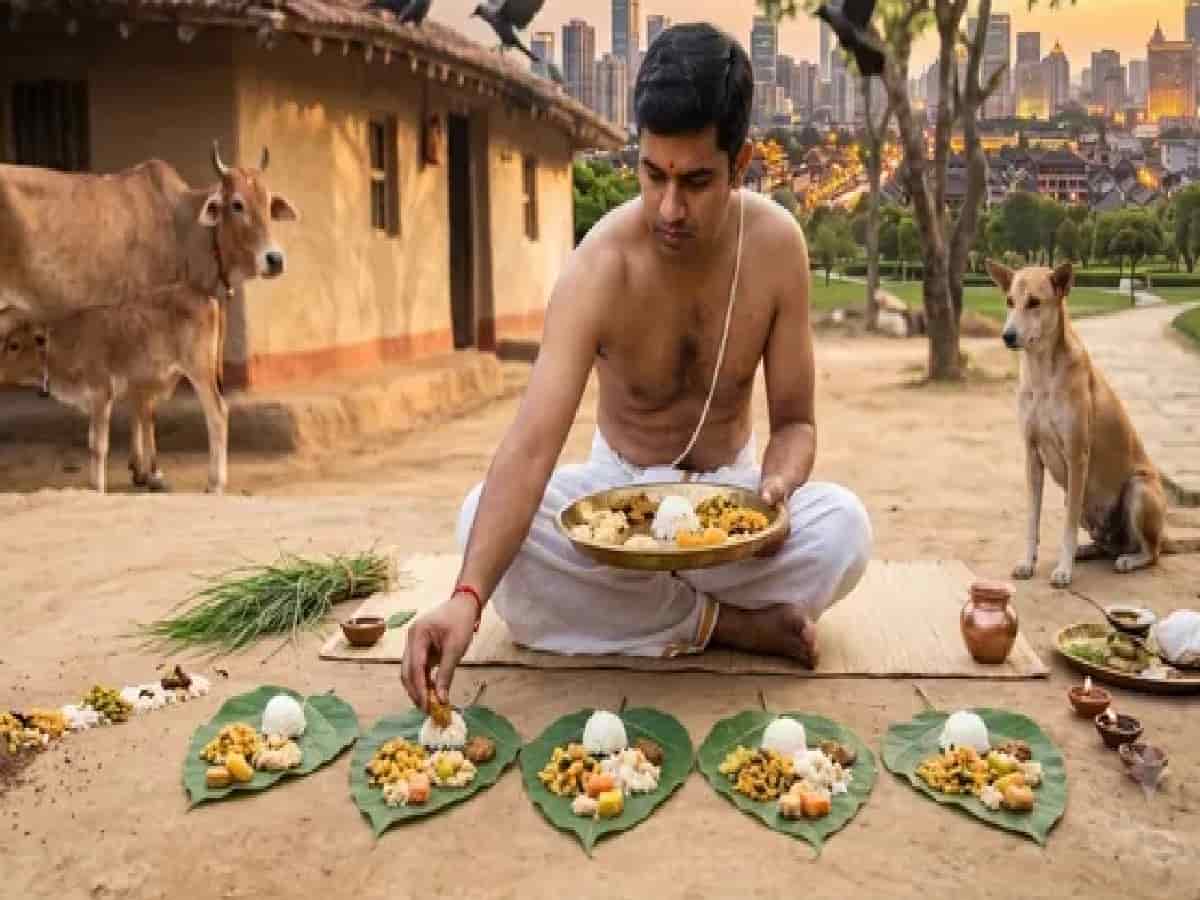
In the rich spiritual tradition of Sanatan Dharma, a special period of sixteen days starting from the full moon date of Bhadrapada month till Sarvapitri Mokshadayini Amavasya of Ashwin month is celebrated with devotion as Pitru Paksha. This holy fortnight is considered to be a very sacred time to offer gratitude, respect and offerings to those deceased ancestors and forefathers, thanks to whom our existence and family tradition is flourishing today. During these sixteen days, every Sanatani family performs Shraddha rituals with water, sesame seeds, kusha and akshat and performs Shraddha rituals for the spiritual peace, salvation and fulfillment of their known and unknown ancestors in the next world. It is clearly mentioned in the major scriptures like Garuda Purana, Matsya Purana and Manusmriti that Shraddha is not completed merely by chanting mantras or general donation of water, but it is extremely mandatory to perform the ritual of ‘Panchbali Karma’ along with it. Many Acharyas even believe that Panchbali ritual during Pitru Paksha is more effective and important than the normal Shraddha and Tarpan, because without it the ancestors remain hungry and unsatisfied and the ritual is considered incomplete.
Panchabali Karma is a centuries-old Vedic and spiritual system related to social responsibility, which unites humans with nature, environment, living beings and subtle forces. The word ‘Panchbali’ is made up of two basic Sanskrit words – ‘Panch’ meaning five and ‘Bali’, which in the Vedic context does not mean violence to any living being, but ‘Naivedya’, ‘gift’ or ‘sacred food’ offered with utmost respect. During the Shraddha ritual, some portion of the cooked food is taken out by the householder on five different plates, leaves or pure places for different subtle powers and beings. According to Vedic beliefs, after death the soul wanders in the form of air and it cannot directly consume the physical food prepared by us in human form. Therefore, nature has made some special silent animals, birds, insects and divine elements such mediums through which the food consumed directly reaches the ancestors wandering in the subtle world and provides them satisfaction and satisfaction.
Strict rules and order for performing Panchabali ritual have been prescribed in the scriptures. During Pitru Paksha, whenever Kheer, Puri and Satvik food is prepared for the ancestors at home on the date of Shraddha, it is strictly prohibited to serve that food first to the Brahmins or guests invited to the house. After the food is prepared, the main Karta (the person performing the Shraddha) takes bath and meditates and faces the south direction. After this, five different portions of food are taken out on five different Palash or banana leaves. A little sesame, basil leaves and ghee are offered on these five parts. After this, pure water is sprinkled all around while reciting holy mantras which is called making ‘Mandal’. This sprinkling of water is considered a symbol of protecting the food from negative energy and evil forces. Unless these five morsels are ritually dedicated to the respective five living beings and powers, the worship of the ancestors is not complete and only after that the rules for feeding the Brahmins have been mentioned in the scriptures.
The five special grains taken out during the Panchabali ritual are deeply associated with specific components of the universe and mythological symbols. Their detailed spiritual analysis is as follows:
-
Cow Sacrifice (Cow Grass): In Panchabali, the first and highest grass is taken out for mother cow. According to Hindu scriptures, 33 crore gods and goddesses and entire pilgrimage sites are considered to reside in the body of a cow. Cow is considered to be the direct manifestation of Kamdhenu and the form of earth. In Shraddha, by lovingly feeding grass to the cow first of all, all the gods as well as the ancestors are extremely pleased and the family is blessed with health and progeny growth.
-
Kaak Bali (crow): The second morsel is dedicated to the crow. According to religious and mythological beliefs, crow is considered to be the messenger of Yamraj and a mysterious bird associated with Yamalok. Since ancient times, there has been a belief that ancestors come to earth through crows and take small portions of food given by their descendants. If the crow consumes the Shraddha food, it is believed that the ancestors have received the food and are satisfied.
-
Dog sacrifice (dog): The third morsel of Panchbali Karma is taken out for the dog. In Sanatan Dharma, dog is considered to be the follower of Yama and the vehicle of Bhairav ji. The path to Yamalok is said to be guarded by two divine dogs named ‘Shyav’ and ‘Shabal’. Therefore, by offering food to a dog, the souls wandering on the path to Yama get peace and the shadow of untimely death and negative powers goes away from the family forever.
-
Devadi Bali (Deity): The fourth meal is offered to all the direct and indirect deities, the sky, the air and the lords of the ten directions. During Pitru Paksha, although the ancestors have predominance, the operation of the entire universe is under the control of the divine powers. By offering the fourth part to the Gods through havan or fire or at a pure place, they grant the ancestors the movement to the higher worlds as per their sadhana.
-
Pipilikadi Bali (Ant): The fifth and last morsel of Panchabali is taken out for Pipilika i.e. small ants and other crawling microscopic insects. Usually, sweet grains, flour and sugar are mixed in it and kept near the root of a tree or an ant hole. The ant has been considered a representative of hard work, continuous labor and the subtle world. Feeding small creatures frees one from the sin of killing tiny creatures by unknowingly crushing them under feet and shows compassion towards the entire living world.
According to astrology and theology, the horoscopes in which Sun or Moon are afflicted with Rahu-Ketu and create ‘Pitra Dosh’, have serious problems in their life like constant interruption of children, unnecessary delay in marriage, financial constraints, incurable diseases and family discord. The biggest reason for these problems is considered to be the ancestors being dissatisfied and unsatisfied. By regularly performing Panchabali rituals during Pitru Paksha, serious ancestral defects from birth to birth are automatically mitigated. This ritual is not just a religious formality, but it is the practical aspect of our Sanatan Sanskars which teaches us that the food on our plate is not only to fill our stomachs, but our ancestors, animals and birds of nature, silent creatures and microscopic insects also have equal rights on that food. When we satisfy all these living beings, the invaluable blessings of our ancestors become an impenetrable protective shield on our family, due to which happiness, peace, prosperity and unbroken good fortune reside in the house.