 look news india

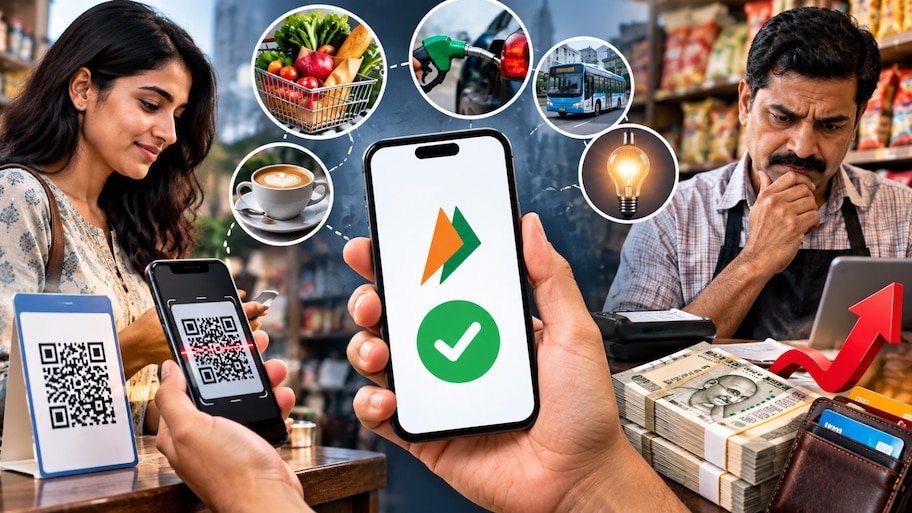
In the last 48 hours, there has been a lot of confusion on social media, WhatsApp groups and tea stalls regarding Unified Payments Interface (UPI), the largest medium of digital transactions in India. After the notification by the National Payments Corporation of India (NPCI) to impose 0.40 percent merchant discount rate (MDR) on person-to-merchant (P2M) transactions of more than ₹ 2,000 from October 15, 2026, people have come to believe that now they are going to be out of pocket if they send more than ₹ 2,000 through phone. Many types of apprehensions are floating in the minds of common citizens, housewives, working youth and small shopkeepers living in Lucknow, Kanpur, Noida, Ghaziabad, Varanasi of Uttar Pradesh and all the small and big cities of the country.
The reality is that the amendments made in Section 10A of the ‘Payment and Settlement Systems Act, 2007’ by the Finance Ministry and the official circular of NPCI have given complete protection to the general public. More than 95 percent of UPI transactions in the country are of less than ₹2,000, which will remain 100 percent free as before. Let us understand through 10 major questions and their official answers, what impact it will have on your daily life, from morning milk and newspaper to market shopping and the hustle and bustle of shopkeepers.
answer: 99% of your daily payments will not be affected even by 1 paise. You buy a bag of milk in the morning, pay ₹200 at the vegetable market, give ₹10 at a tea stall or transfer ₹50 to an auto rickshaw driver—all these transactions are well below the ₹2,000 limit. According to the government Gazette Notification, banks or payment apps cannot levy any fee, directly or indirectly, on any merchant payment up to ₹2,000. This entire system will remain 100% free like before.
answer: no way. NPCI and the Finance Ministry have reiterated in clear words that UPI in India works completely at ‘Zero Consumer Fee’ for the general public. Whether you buy goods worth ₹500 or a mobile worth ₹50,000, the only amount that will be debited from your UPI screen and bank account is the actual amount of your bill. The Merchant Discount Rate (MDR) is a matter between the merchant and his bank, which has no financial relationship with the customer.
answer: Small traders of the country have been completely exempted from this new rule. Under the special category of ‘P2PM’ (Person-to-Person-Merchant), NPCI has mandated all those small shopkeepers, street vendors and vendors who receive aggregate payments up to ₹ 1 lakh per month on their QR code under the protection of ‘Mandatory Zero MDR’. Even if any day a customer buys ghee or ration worth ₹ 2,500 from such a small shopkeeper, no commission will be deducted from that shopkeeper.
answer: From October 15, 2026, MDR of 0.40% will be applicable only to large trading establishments. If a customer makes purchases worth more than ₹2,000 from a big branded store, a fee at the rate of 0.4% will be deducted by that merchant’s bank.
The mathematics of this fee charged on traders is as follows:
| Bill Amount (Transaction) | Applicable MDR rate | Merchant Fees | Amount will be deducted from customer’s account |
| up to ₹1,999 | 0% (zero) | ₹0 (Completely Free) | ₹1,999 |
| ₹3,000 | 0.40% | ₹12 | ₹3,000 |
| ₹10,000 | 0.40% | ₹40 | ₹10,000 |
| ₹50,000 | 0.40% | ₹200 | ₹50,000 |
| ₹75,000 or more | 0.40% (cap applicable) | Maximum ₹300 (Fixed) | ₹75,000+ |
The maximum charge on all large transactions above ₹75,000 has been capped at ₹300. Even if a customer buys jewelery or a TV worth ₹1.5 lakh, not more than ₹300 can be charged from the merchant.
answer: Absolutely not. Doing so is completely illegal and a punishable offense under NPCI rules and Indian Consumer Protection Act. It has been clarified in the circular that MDR will have to be borne by the merchant from his operating cost and it cannot be added to the final bill of the customer under any circumstances. If a big shopkeeper asks for a separate surcharge or convenience fee on UPI, the customer can immediately lodge a complaint on the National Consumer Helpline 1915.
answer: Person-to-person (P2P) transfers remain completely unchanged and 100% free. If you send ₹5,000 to a friend, transfer ₹25,000 for your child’s hostel fees, or transfer funds of ₹1 lakh to a relative, the service will be absolutely free for both the sending and receiving parties. There are no limits or fees imposed on P2P.
answer: Essential services related to the general public have been exempted from the standard charge of 0.40%. If you buy a railway (IRCTC) ticket above ₹2,000, pay your household electricity bill of ₹3,000, pay for a gas cylinder, pay an insurance premium or fill the vehicle’s tank at a petrol pump, the token charge has been fixed at just a flat ₹5 instead of 0.4% on the merchant-side. Due to this nominal rate, there will be no impact on the prices of these public facilities.
answer: No. Recurring payments that are automatically processed through a UPI mandate or ‘UPI AutoPay’—such as mutual fund SIPs, OTT subscriptions, or mobile bills—are completely out of the scope of this new MDR. Monthly SIP of working class will continue as before without any additional deduction.
answer: UPI still remains the cheapest digital payment medium for merchants. While the merchant has to pay a huge commission of 1.5% to 2.5% on swiping a credit card and up to 0.90% on debit cards, the rate on UPI is only 0.40% and a maximum limit of ₹ 300. While on credit card the merchant had to lose up to ₹1,000 on goods worth ₹50,000, on UPI he would have to pay only ₹200.
answer: NPCI has given ample time of one month to all banks, payment aggregators (like Pine Labs, Paytm, Razorpay), fintech apps and merchants’ billing software to update their systems and IT engines. The move aims to make India’s UPI network self-reliant instead of relying on government subsidies, increase server capacity and strengthen cyber security to global standards.
Overall, this new system starting from October 15, 2026 will not have any financial impact on the daily lives or digital transactions of common citizens. Small shopkeepers are also safe and big merchants are getting many times cheaper options than credit cards. Therefore, you can continue this smooth and secure journey of digital payments without getting troubled by any misleading rumors on social media.