 look news india

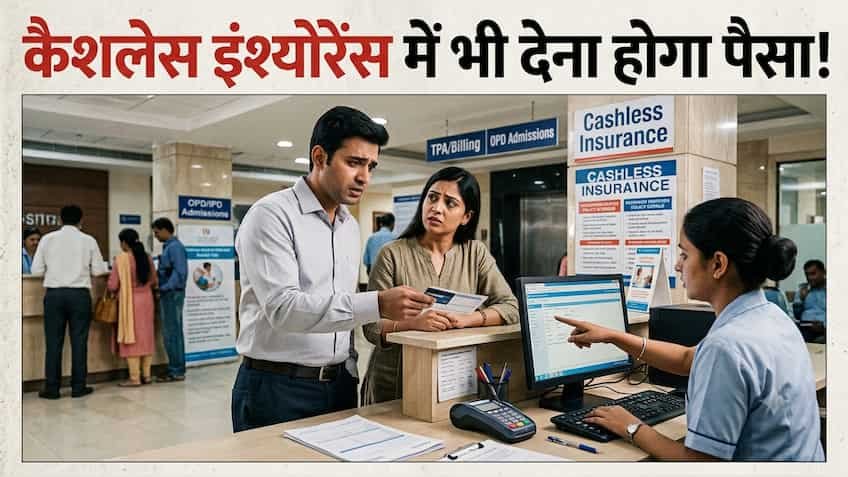
In today’s era, when the cost of treatment and hospitalization of serious diseases is skyrocketing, a strong health insurance policy is considered the biggest financial shield for every family. While purchasing the policy, the agents and insurance companies weave such a scheme of ‘100% cashless treatment’ (Cashless Hospitalization) that the common consumer feels that he will not have to pay a single rupee from his pocket in the hospital. But the reality is completely different from this. After being admitted to Medanta and Apollo of Lucknow, Max and Fortis of Delhi-NCR, or any big corporate hospital of the country, when the time comes for the patient’s discharge, the family members are handed an additional bill ranging from Rs 20 thousand to Rs 1 lakh, which the insurance company flatly refuses to pay. This shock at the billing counter of the hospital is called ‘Out-of-Pocket Expenses’ in the language of finance and insurance. Despite the Insurance Regulatory and Development Authority of India (IRDAI) making the rules transparent, there are many technical clauses and non-medical expenses that insurance policies do not cover.
The biggest deduction in cashless claims is in the name of ‘Consumables’ i.e. consumable items and non-payable items. There are dozens of items used during the treatment of a patient in a hospital which are ‘single-use’ and are thrown away after the patient recovers. As per the traditional guidelines of IRDA, there are approximately 68 items which are considered as ‘non-medical expenses’ in medical billing. These include everyday medical supplies like surgical gloves, PPE kits, masks, syringes, cotton, band-aid, spirit, thermometer covers, urine bags, cannulas, oxygen masks, diapers, tissue paper, sanitizers and surgical blades. Since the Covid pandemic, the use of these consumables in the name of infection control in hospitals has increased manifold. If a patient undergoes major surgery or is admitted in the ICU for two-three days, the bill for consumables alone amounts to 10 to 15 percent of the total invoice. If your policy has a basic cover and you have not taken a separate ‘Consumables Rider’, then the entire expense has to be paid by the patient’s caregiver from his own pocket.
The most dangerous and overlooked clause in health insurance is ‘Room Rent Capping’ and its related ‘Proportional Deduction’. In most of the middle class policies, 1% of the total sum insured is fixed as room rent per day and 2% as ICU charge. For example, if your policy is for Rs 5 lakh, your room rent will be allowed only Rs 5,000 per day. But at the time of hospitalization, if you choose a deluxe or private room for Rs 8,000 per day, you feel that only the difference of Rs 3,000 will have to be paid from your pocket. This is where the insurance company applies the rule of proportional deduction. The rule is that whatever percentage the room rent exceeds your entitlement, all other related hospital expenses—like doctor’s visiting fees, surgeon’s charges, OT (operation theatre) charges, nursing charges and anesthesia charges—are also deducted in the same proportion. In this way, for a bill of Rs 5 lakh, the patient has to pay Rs 1 to 1.5 lakh from his own pocket. Therefore, one should always choose such a policy which does not have any sub-limit on room rent.
In pursuit of cheaper premium, people often ignore the ‘Co-payment’ clause written in the policy documents. Co-payment simply means that a certain percentage (say 10%, 20% or 30%) of the total approved hospital bill will always have to be paid by the policyholder from his own pocket, even if the treatment is cashless. This clause is especially applicable in policies for senior citizens above 60 years of age, in cases of pre-existing diseases or under ‘zonal co-payment’ (in case of a policy in a tier-2 city and getting treatment in a hospital in a tier-1 city like Delhi-Mumbai). For example, if your policy has a co-payment clause of 20% on an approved claim of Rs 4 lakh, the insurance company will pay only Rs 3.20 lakh and the remaining Rs 80,000 will have to be paid to the hospital in cash or card at the time of discharge. Similarly, in policies with ‘deductible’ (like super top-up plans) a fixed amount (like Rs 2 lakh or Rs 3 lakh) has to be borne by the insurer first, only after which the insurance company’s cashless trigger occurs.
As soon as you are admitted to the hospital, many administrative and ancillary charges get added to the bill, which are rejected by the insurance companies considering them as ‘unnecessary expenses’. These mainly include patient registration fee, file charge, admission charge, discharge summary processing fee and medical record charges. Additionally, special diet food provided to the patient by the hospital (if it is not part of the medically prescribed nutrition), extra bed charges for attendants staying with the patient, attendant meals and canteen bills are also not covered under the claim. The cost of toiletry kits, toothpaste, soap, slippers, moisturizer and mineral water bottles given to the patient is also directly added to the personal account of the attendant. Many private hospitals also charge Rs 2,000 to Rs 5,000 in the name of ‘biomedical waste disposal fee’ or ‘infection control cess’, which insurance companies reject as being beyond the scope of medical protocol.
The cashless facility is applicable only for the period when the patient is actually admitted to the hospital bed. Expenses for medical tests conducted before hospitalization (e.g. MRI, CT scan, blood tests, doctor consultation) and medicines, physiotherapy or follow-up tests for 30 to 60 days after discharge are not passed on at the cashless desk. These ‘pre-hospitalization’ (usually 30 days before admission) and ‘post-hospitalization’ (60 to 90 days after discharge) expenses have to be paid by the patient from his own pocket. However, later all these bills, doctor’s prescriptions and test reports can be recovered through ‘reimbursement’ by filling an offline or online claim form with the insurance company along with the original copies, but on the day of discharge, this immediate pressure of cash falls on the family itself.
To avoid this huge financial shock at the time of hospital discharge, policyholders should take some strategic steps while purchasing or renewing the policy. The first solution is to add an add-on rider like ‘Consumables Cover’ or ‘Care Shield/Claim Shield’ to your basic policy. It covers 100% of all 68 non-medical items like gloves, syringes and PPE kits for a nominal additional premium (about Rs 500 to Rs 1500 annually). Second, choose a policy that has a provision of ‘No Room Rent Capping’ or at least full entitlement up to ‘single private AC room’, thereby reducing the risk of proportionate deduction. Third, always get admitted to the ‘Network Hospital’ of the insurance company and avoid opting for non-essential luxury facilities. At the time of admission, clearly ask from the TPA desk of the hospital which procedures or medicines will not be covered by the insurance during the treatment, so that any unexpected financial crisis can be avoided at the last moment.