 look news india

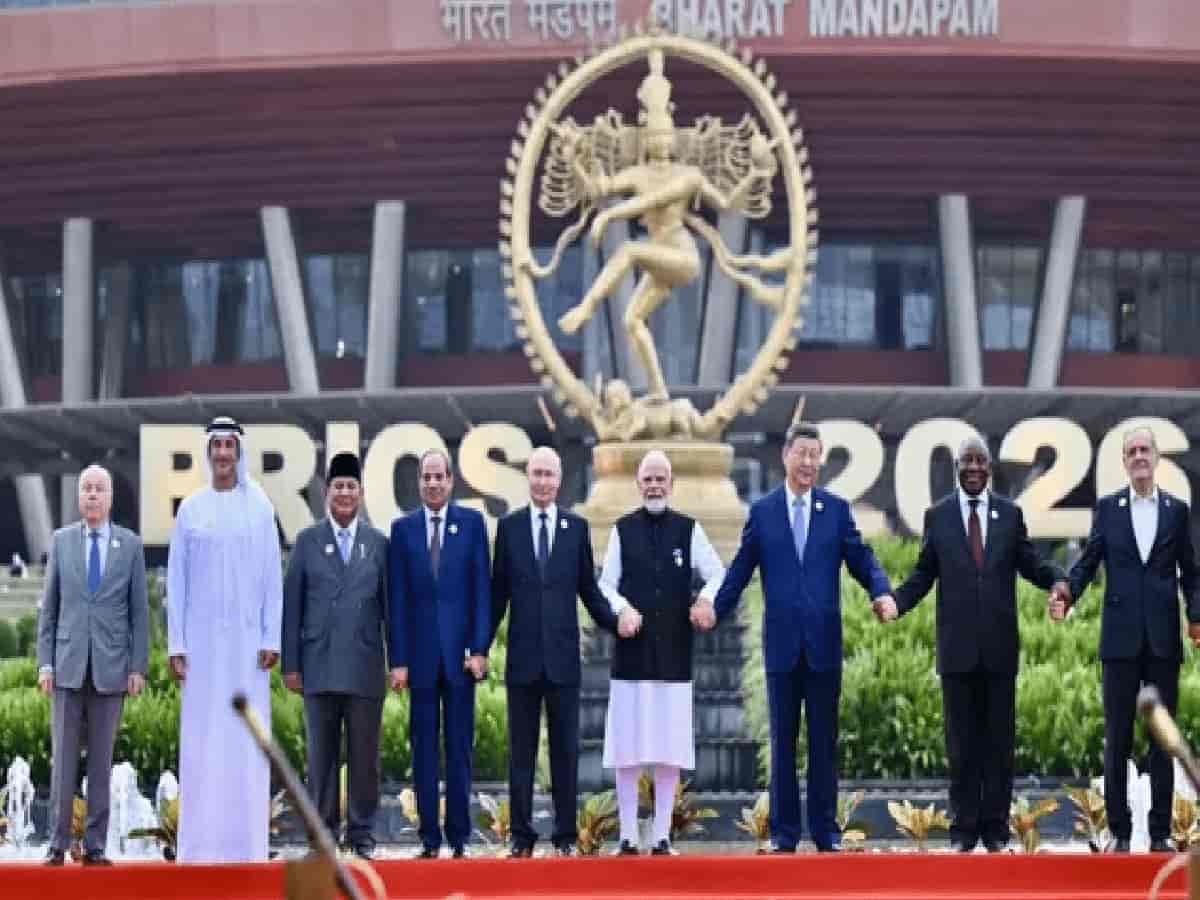
During the 18th BRICS Summit 2026 held in New Delhi, India has once again firmly established its position at the center of global diplomacy. Prime Minister Narendra Modi held a total of 15 high-level bilateral meetings with top world leaders and heads of international organizations amid a very busy and strategic program of three days of the summit. During this, intensive talks were held with the heads of state of Russia, China, Iran, South-East Asia, the Gulf region and the African continent, which has given a new direction to India’s multilateral influence.
India assuming the BRICS chairmanship in the year 2026 was not just a routine diplomatic event, but it proved to be an unprecedented effort to bring together countries with different interests and views on the global stage. Prime Minister Modi strongly advanced India’s national interests, trade, investment, defense and energy security through the formal BRICS agenda as well as through bilateral dialogues. The most important aspect in this entire diplomatic effort was that amidst global tensions and regional conflicts, India kept the policy of peace, dialogue and strategic autonomy prominent.
On September 11, 2026, the first day of the conference, Prime Minister Modi held important bilateral talks with Russian President Vladimir Putin. The two leaders conducted an in-depth analysis of all key aspects of the India-Russia special and strategic partnership. Defense cooperation, hydrocarbons, civil nuclear energy, critical minerals, high-tech infrastructure and secure maritime trade routes were discussed in the meeting. Prime Minister Modi also shared deep concern over the adverse impact on global supply chains and the safety of Indian seafarers due to the Ukraine conflict and ongoing tensions in West Asia.
On the same day, the Prime Minister held a bilateral meeting with Iranian President Masoud Pejeshkian, in which the Chabahar Port project, regional connectivity and the current situation in the Middle East were discussed. PM Modi made it clear that diplomatic dialogue is the only means of long-lasting peace. Along with this, the talks with UN Secretary General Antonio Guterres strengthened India’s agenda of multilateral global reforms.
September 12, 2026 was the most sensitive and important day from diplomatic point of view, when Prime Minister Narendra Modi and Chinese President Xi Jinping sat face to face. The eyes of the whole world were fixed on this delegation level talks. The two leaders discussed complete peace and stability in the India-China border areas, normalization of bilateral relations, fair trade, flexible supply chains and people-to-people contacts. Taking a clear stand, Prime Minister Modi said that differences should never take the form of disputes and the relations between the two countries will have to move forward on the foundation of mutual sensitivity, respect and interests.
On the same day, PM Modi agreed with Malaysian Prime Minister Anwar Ibrahim on the expansion of semiconductor manufacturing, fintech, digital economy and defense technology. Apart from this, high-level discussions were also held with Ethiopian Prime Minister Abiy Ahmed Ali and United Arab Emirates (UAE) Crown Prince Sheikh Khalid bin Mohammed bin Zayed Al Nahyan, in which emphasis was laid on green energy, cutting-edge technology and construction of Critical Mineral Corridors.
The voice of the Global South resonated strongly in New Delhi on 13 September 2026, the last day of the conference. PM Modi held detailed discussions with South African President Cyril Ramaphosa on the expansion of BRICS and economic rights of developing countries. South Africa, being a founding pillar of BRICS, remains an integral partner of India in pursuing African priorities.
After this, President of Kazakhstan Kassym-Jomart Tokayev, President of Egypt Abdel Fattah Al-Sisi, President of Philippines Ferdinand R. Bilateral discussions were also held with Marcos Jr., Burundi President Evariste Ndayishimiye, as well as the leadership of Uganda and Nigeria. These talks provided a new foundation for India’s strategic, trade and logistics relations from Central Asia to the entire African continent and South-East Asia.
The entire conference took place at a time when globally the Ukraine crisis, trade challenges in the Red Sea and instability in West Asia are affecting the world’s energy markets and trade routes. In such a complex geopolitical environment, India has proved through 15 bilateral and dozens of informal meetings that it has established itself as a reliable and strong balancing power between West and East, North and South.