 look news india

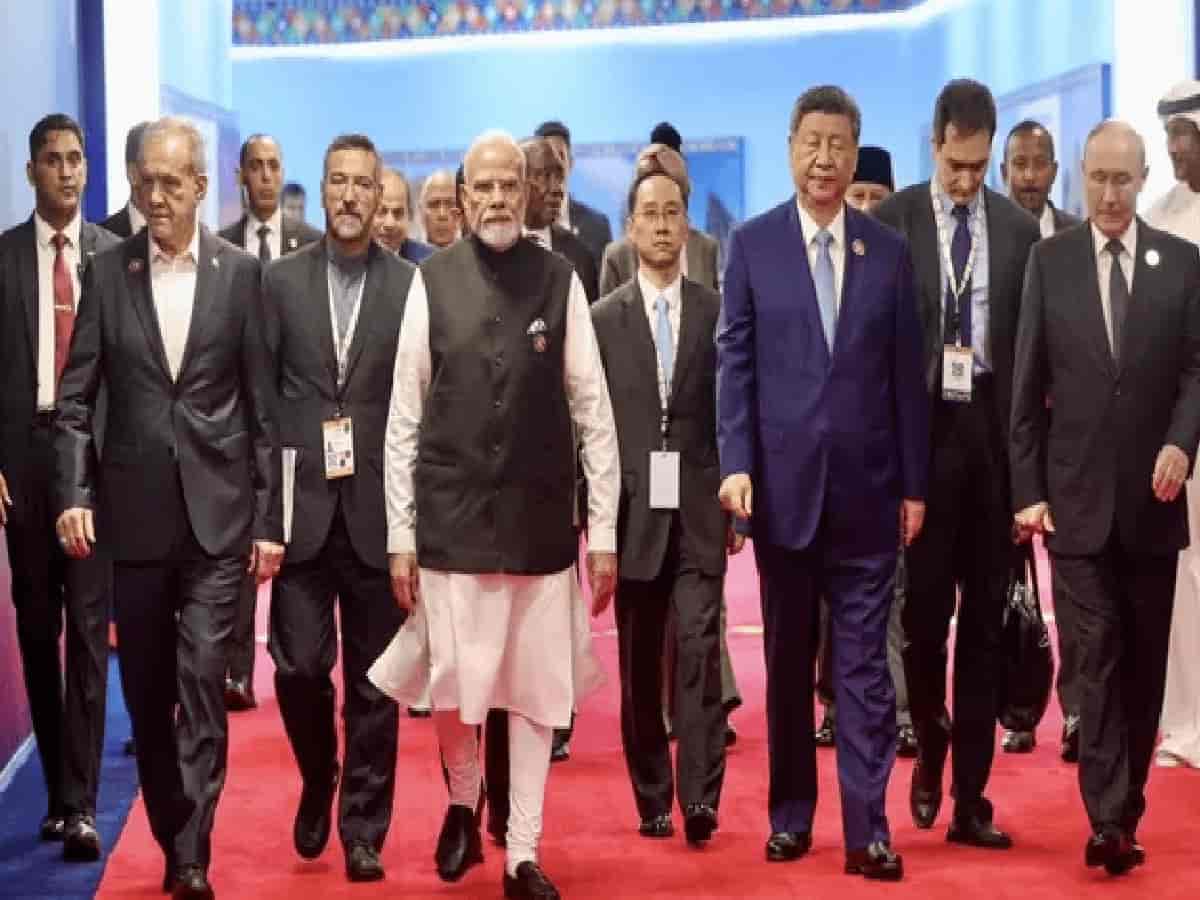
The final session of the 18th BRICS Summit held at the historic Bharat Mandapam in New Delhi changed global geopolitics and international technological equations when Chinese President Xi Jinping directly challenged American technological dominance. In response to the Trump administration’s increasingly stringent restrictions on semiconductor exports and aggressive policies to limit American AI models to only Western interests, China has submitted a formal proposal to build an independent, sovereign and open-source artificial intelligence ecosystem with the BRICS countries. This step is being considered as a deliberate ‘open source tech diplomacy’ of Beijing in comparison to Washington’s ‘silicon diplomacy’, which is sure to have a direct impact on all emerging economies including India.
Addressing the summit’s plenary session, Chinese President Xi Jinping sought to reassure the world’s developing and non-Western countries that modern technology should not be monopolized by a single country or a few select multinational tech giants. The Trump administration recently imposed strict restrictions on the export of advanced GPU chips, semiconductor fabrication tools, and state-of-the-art Large Language Models (LLMs). In such a situation, China used the BRICS platform to announce that it will take the lead and provide financial and technical leadership in the establishment of a shared ‘BRICS AI Open-Source Community’ for the member countries. The direct objective of this initiative is to enable the developing countries of Latin America, Africa, West Asia and Asia to immediately reduce their strategic dependence on expensive American software and closed-source models.
President Jinping made clear in his speech that China will work with BRICS countries to comprehensively promote the joint research, adaptation and practical use of state-of-the-art large language models. This ambitious project includes generating local language datasets, organizing joint seminars and conducting advanced technical training courses for scientists from developing countries. Technical analysts believe that in the last two years, Chinese tech companies have already created a stir by introducing extremely affordable and high-potential open-source models like DeepSeek, Alibaba’s Qwen and Kimi to the world. Now Beijing has embarked on a strategy to institutionalize this technological success through multilateral diplomatic agreements, so that startups and government agencies of emerging countries can build their own digital infrastructure without being affected by American sanctions.
Amidst this entire technical announcement, New Delhi’s stance is very measured and full of diplomatic alertness. Interestingly, the summit’s formal ‘New Delhi Joint Declaration’ advocates equitable access to AI resources, data security, system reliability and global inclusivity, but does not include direct support for any China-sponsored centralized AI open-source alliance. Indian security strategists and tech policy experts have always been extremely cautious about backdoors, data privacy and cyber security breaches by Chinese hardware and software companies. After the Galwan standoff and the ban on hundreds of Chinese apps over the years, India is hesitant to join any technology infrastructure that is indirectly controlled by Beijing. India is busy accelerating its own ‘India AI Mission’ and independent open computing capability, due to which the Indian response to Xi Jinping’s proposal is likely to be quite strict.
Apart from the open platform on AI, the Chinese President also detailed four other far-reaching economic and industrial initiatives at the 18th BRICS summit. With the aim of giving a new impetus to trade and investment, he appealed to establish ‘BRICS Special Economic Zone (SEZ) Partnership’, through which integrated manufacturing hubs will be created by making coordinated policies in the member countries. Additionally, it was proposed to establish a ‘BRICS Digital Ecosystem Cloud Platform’ to digitally connect traditional industries of all member countries through a common cloud network. The third initiative outlined a ‘Smart Manufacturing Partnership’ in which China would use its robotics and automation expertise to share technical standards in building smart factories in other developing countries.
The fifth important plan announced by Xi Jinping is related to human resources and technical skills. Under this, it has been said to form ‘BRICS Engineer Training Alliance’. The main objective of this alliance is to train millions of young engineers and researchers from BRICS member countries in modern technologies, nanotechnology, semiconductor designing and robotics. Also, a system of mutual recognition of engineering qualifications and professional degrees will be created among the member states, so that skilled human resources can freely offer their services across the bloc without any legal or visa hassles.
Thus, China’s five-point global technological agenda that emerged from New Delhi is not just a document of economic cooperation, but it is Beijing’s most aggressive attempt to create a new multipolar technological bloc parallel to American technological supremacy in Cold War-like circumstances.