 look news india

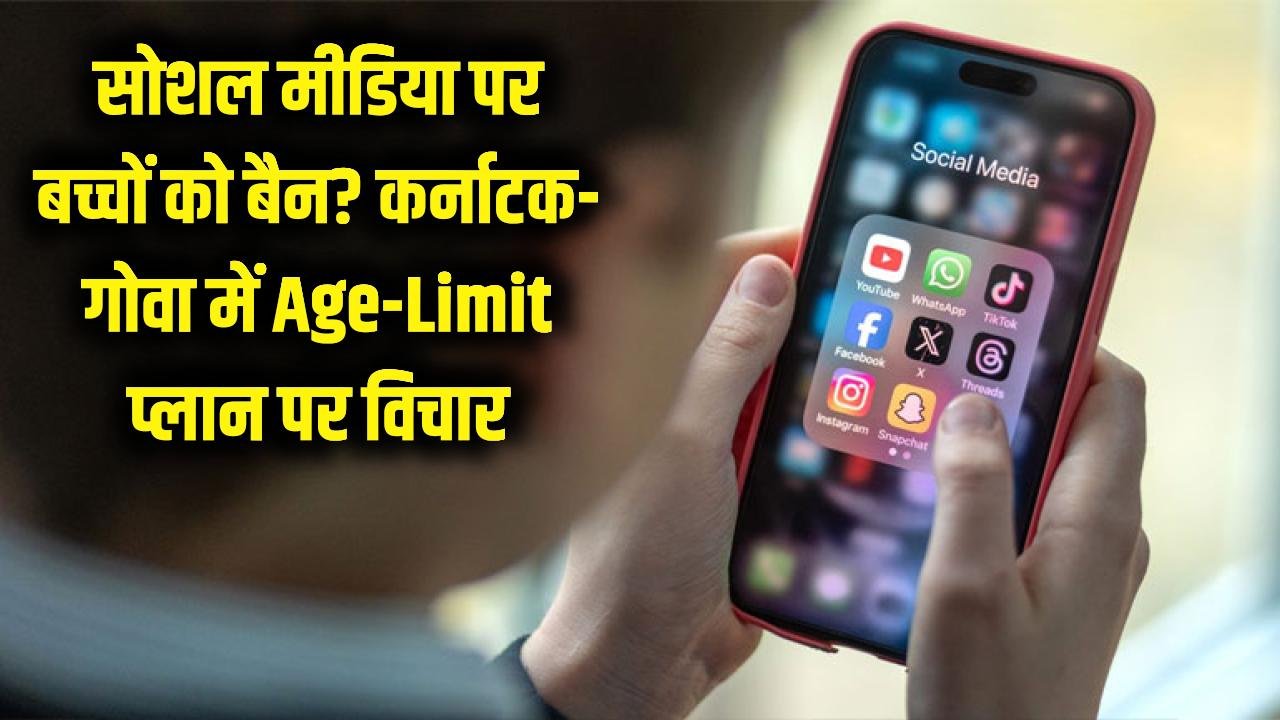
Amid growing smartphone addiction, cyber bullying and adverse effects on children’s mental health, rumblings of a historic policy change regarding social media platforms have intensified in India. After Australia imposed a strict ban on social media for children under 16 years of age, now Indian states are also moving towards taking strict steps in the same direction. Karnataka, known as India’s Silicon Valley, and the coastal state of Goa have taken concrete steps towards legally banning the use of platforms like Instagram, Facebook, X (formerly Twitter) and Snapchat for teenagers under 16 years of age. Both the state governments believe that the algorithms of social media are causing serious harm to the childhood, education and mental balance of children.
In both the states, legal and administrative drafts have been prepared at different levels regarding the digital safety of children:
-
Karnataka government’s stand: Karnataka Chief Minister Siddaramaiah has made clear his intention to ban social media for children below 16 years of age. The state IT and home departments are studying how to make strict age verification mandatory on platforms.
-
Detailed report of Goa Government: The Information Technology (IT) Department of Goa has prepared a comprehensive draft report after in-depth study of the model of Australia’s ‘Online Safety Amendment Act’. The Goa government is preparing to finalize this proposal and present it before the Central Government and the Union Ministry of Electronics and IT (MeitY), so that a concrete guideline can be made at the national level.
-
Andhra Pradesh also in the queue: Apart from Karnataka and Goa, Andhra Pradesh government is also considering options of social media ban and graded access for children.
There have long been warnings from governments, child rights activists and psychiatrists that uncontrolled social media use is stunting children’s development:
-
Mental stress and anxiety: The blind race for ‘likes’ and ‘views’ on social media is creating inferiority complex, depression and anxiety in children.
-
Cyber Bullying and Exploitation: Minor children often become easy targets of online predators, cyber fraud, pornographic material and online bullying.
-
Screen addiction and lack of sleep: The sleep cycle of children is getting disturbed due to watching reels and shorts till late night, due to which there has been a huge decline in their memory and school performance.
-
End of physical activity: Due to being cut off from playgrounds, problems like obesity, poor eyesight and social isolation are increasing among teenagers at an early age.
If this law comes to the fore, the responsibility of its implementation will be placed directly on social media companies:
-
Strong Age-Verification: Age verification from Aadhaar, birth certificate or government identity card may be made mandatory for creating new accounts or continuing existing accounts.
-
AI-Based Facial Age Estimation: Many global companies are now resorting to technologies that estimate the exact age of a user through selfies and facial biometrics scans.
-
Deactivating Under-16 Accounts: Companies will have to deactivate existing profiles found to be under the age of 16.
-
Educational tools will remain operational: This ban will focus only on social media and entertainment based algorithmic platforms, while there will be no restriction on the use of Google, Wikipedia or online educational portals.
Although this scheme is being appreciated everywhere, tech experts believe that there may be many legal and technical hurdles in implementing it:
-
Jurisdiction of State vs Centre: Internet, telecom and digital platforms come under the jurisdiction of the Central Government (Union List). In such a situation, no state alone can block it completely; This will require coordination with the Centre’s ‘Digital Personal Data Protection’ (DPDP) rules and IT laws.
-
VPN and Fake Profiles: Children can easily bypass these restrictions by using parental ID or VPN tools to hide their age, which is a big technical challenge to prevent.
Despite all the challenges, this initiative of Karnataka and Goa is a clear indication that policy-makers are now very serious about the digital future of children. If this proposal takes the form of laws at the central level, India will join the very few countries in the world where a legal safeguard has been created to protect children from digital threats.