 look news india

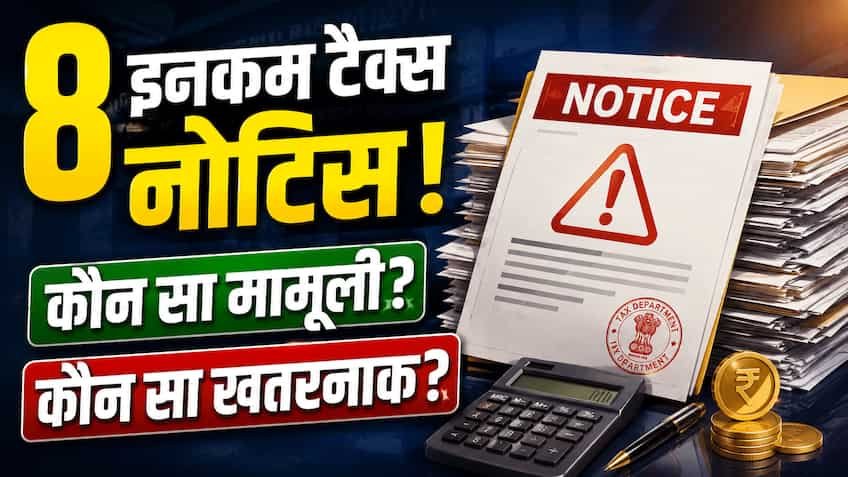
After filing Income Tax Return (ITR), even good taxpayers often get nervous after seeing the notice of Income Tax Department on e-mail or portal. There is a misconception among the general public that every notice means some major fraud, fine or legal action. The reality is that not all notices issued under the Income Tax Act are equally serious. Some of these notices are just for automated intimation or minor error correction which you can fix yourself in 5 minutes, while some notices are so complex and serious where even a small mistake can lead to huge penalty or legal trouble and it becomes mandatory to immediately consult an experienced Chartered Accountant (CA) or tax expert. Let us understand in detail the complete classification of 8 major notices sent by the Income Tax Department and their seriousness.
1. Section 143(1) – Intimation Notice: Most common and routine notice
When you file your ITR, the Central Processing Center (CPC) of the Income Tax Department does the preliminary scrutiny of your return through computer algorithms. After this a summary sheet is sent under section 143(1).
-
severity level: Zero or extremely low (Routine).
-
Reason: In this, the department compares your calculations and its records to tell whether your return has been processed correctly, whether any refund is being made or whether any tax liability is outstanding.
-
What to do: If the notice says ‘No Demand, No Refund’ (Zero Difference) or refund accepted, you don’t need to do anything. If there is any minor tax due shown which you agree with, pay it online. There is no need to go to CA.
2. Section 139(9) – Defective Return Notice
This notice is issued if you have made a technical mistake while filing your return—such as selecting the wrong ITR form, claiming TDS but not adding the relevant income, or not attaching a tax audit report.
-
severity level: medium.
-
Reason: The return has been considered incomplete or defective.
-
What to do: Department to correct your mistake 15 days time Gives. If the mistake is minor (like skipping a schedule), you can go to the e-filing portal yourself and upload the rectified return. But if the issue is of presumptive taxation or balance sheet mismatch, then it is better to take the help of CA.
3. Section 154 – Rectification Notice
When the taxpayer or the department feels that there has been a ‘clerical error apparent from record’ in the processing or ordering of the return, then action is taken under section 154.
-
severity level: Low to moderate.
-
Reason: Non-availability of TDS credit, incorrect entry of advance tax or incorrect calculation of interest.
-
What to do: You can submit ‘Rectification Request’ by visiting the online portal. In normal cases this can be corrected on your own.
4. Section 245 – Refund Adjustment Notice
If your tax refund is being made in the current financial year, but the tax demand of any previous year is shown outstanding in the records of the department, then a notice of Section 245 comes.
-
severity level: Low to moderate.
-
Reason: The department informs you that it is going to deduct (adjust) the old outstanding tax amount from your new refund.
-
What to do: You have to reply on the portal within 30 days whether you ‘agree’ or ‘disagree’ with that old demand. If the old demand is due to some incorrect system error and the amount is large, then contact the CA to get the old records corrected.
5. Section 156 – Tax Demand Notice (Notice of Demand)
When, after assessment by the Income Tax Department, it is decided that a certain tax, interest or penalty is payable on the taxpayer, then a demand notice under Section 156 is issued to recover the dues.
-
severity level: Moderate to severe.
-
Reason: Differences in tax calculations, invalid deductions or penalties.
-
What to do: after receiving notice within 30 days It is mandatory to pay this amount. If the amount is correct then close the matter by filling the challan. If you completely disagree with this demand, contact CA immediately for filing an appeal or for rectification under section 154.
6. Section 142(1) – Inquiry or clarification notice (Inquiry Before Assessment)
This notice is issued when the Assessing Officer (AO) wants to ask for any additional information regarding your return, bank statement, loan agreement or original investment documents. Even if you have not filed the return on time, an order is given to file the return under this.
-
severity level: High Alert.
-
Reason: Large financial transactions (high-value transactions), unaccounted cash deposits or doubts over income declared in returns.
-
What to do: Never ignore this notice. To prepare reply with all required documents and legal clarifications in due time. Consult a Chartered Accountant (CA) immediately. If you give a wrong answer, the matter may go straight to scrutiny.
7. Section 143(2) – Scrutiny Assessment Notice: CA is required immediately here
This is one of the most serious notices of the Income Tax Department. This means that your ITR has been selected for ‘detailed scrutiny’ through a random or risk-based algorithm.
-
severity level: Very serious (Critical).
-
Reason: Suspicion of concealment of income, huge difference in expenditure ratio, fake donations or huge capital gains claims.
-
What to do: Without wasting a moment, run to your CA. Scrutiny involves legal scrutiny of every source of income, bank entries and bills. Only a professional person can present your defense strongly before the final assessment order under section 143(3) under Income Tax laws.
8. Section 148 – Re-Assessment Notice (Income Escaping Assessment): The most dangerous notice
If the Income Tax Department has strong evidence or information that the taxpayer has deliberately concealed his large income and evaded tax, then a notice under section 148 (and 148A) is issued to reopen the old assessment.
-
severity level: Most serious (Red Alert).
-
Reason: Benami assets, undisclosed foreign income, bogus expenses or clues found during search/survey.
-
What to do: In this, immediately appoint a legal team of a senior chartered accountant or tax advocate. Failure to comply with Section 148 procedure may result in heavy penalties as well as risk of prosecution and even jail time.