 look news india

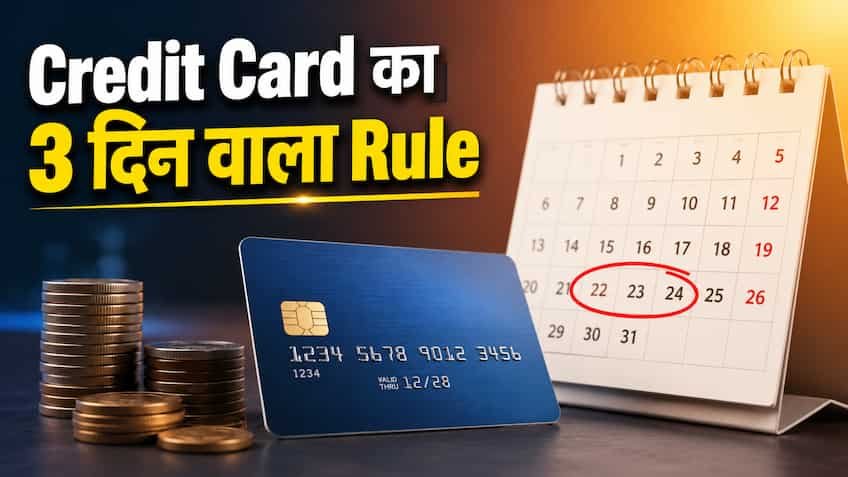
The use of credit cards has become common in today’s digital lifestyle, but sometimes due to busyness, technical glitch or bank server being down, the last date of payment i.e. Payment Due Date is missed. Generally people feel that as soon as the due date passes, they will face the threat of huge late payment charges, interest and deterioration in CIBIL score. However, the Reserve Bank of India (RBI) has made a special rule to provide relief to credit card holders from such sudden penalties, which is ‘3 Days Grace Period Rule’ That is, it is called the three-day grace period.
What is RBI’s 3 day grace period rule?
Under the Master Direction on Credit Card and Debit Card Operations of the Reserve Bank of India, this rule has been made mandatory for all banks, non-banking financial companies (NBFCs) and card issuing institutions. According to this rule, if a cardholder misses the payment by the due date of the bill, the bank cannot immediately impose any penalty or late fee on him. It is mandatory for the bank or credit card company to give the customer an additional 3 days grace period after the due date.
How to get complete relief from penalty and late fees
If the last date for your credit card payment is 10th and for some reason you are not able to pay the bill on that day, then as per RBI rules the bank will give you time till 13th. If you pay your entire bill or minimum due on or before the 13th, the bank cannot charge you any Late Payment Fee. In simple words, penalty can be imposed only if the outstanding amount is not paid even after 3 days of the due date.
There will be no adverse impact on CIBIL score and credit history.
The biggest disadvantage of not paying credit card bill on time is considered to be deterioration of credit score. Due to deteriorating CIBIL score, one has to face huge difficulties in getting home loan, car loan or personal loan in future. There is a clear guideline in RBI regulations that credit card issuing banks or financial institutions cannot send ‘default’ or ‘late payment’ information to credit information companies (like CIBIL, Experian, CRIF High Mark) immediately after the due date is missed. Banks can send a customer’s default report to the credit bureau only if the payment remains completely pending even within the grace period of 3 days after the due date.
Keep this important thing in mind while calculating interest
During the grace period, you get complete protection from late fees, but financial experts advise that you should avoid making this rule a regular habit. If you make payment within these 3 days after the due date, banks will not charge late fees, but in some cases, normal finance charge (interest rate) from the date of transaction may be applicable if you have not paid the bill in full. Therefore, the safest option is to pay the entire bill within the due date to avoid the burden of additional interest.
Follow these easy tips to avoid missing bills
Some easy digital methods can be used to ensure that the credit card bill is not missed due to technical glitches or forgetfulness. First of all, activate the ‘Auto-Debit’ facility from your savings account, so that the bill amount is automatically deducted from your account on the due date. Additionally, set calendar reminders and carefully check email and SMS notifications as soon as bills are generated. If ever the payment gets stuck due to server error, immediately inform the customer care of the bank by sending an email so that the benefit of 3 days rule can be secured on time.