 look news india

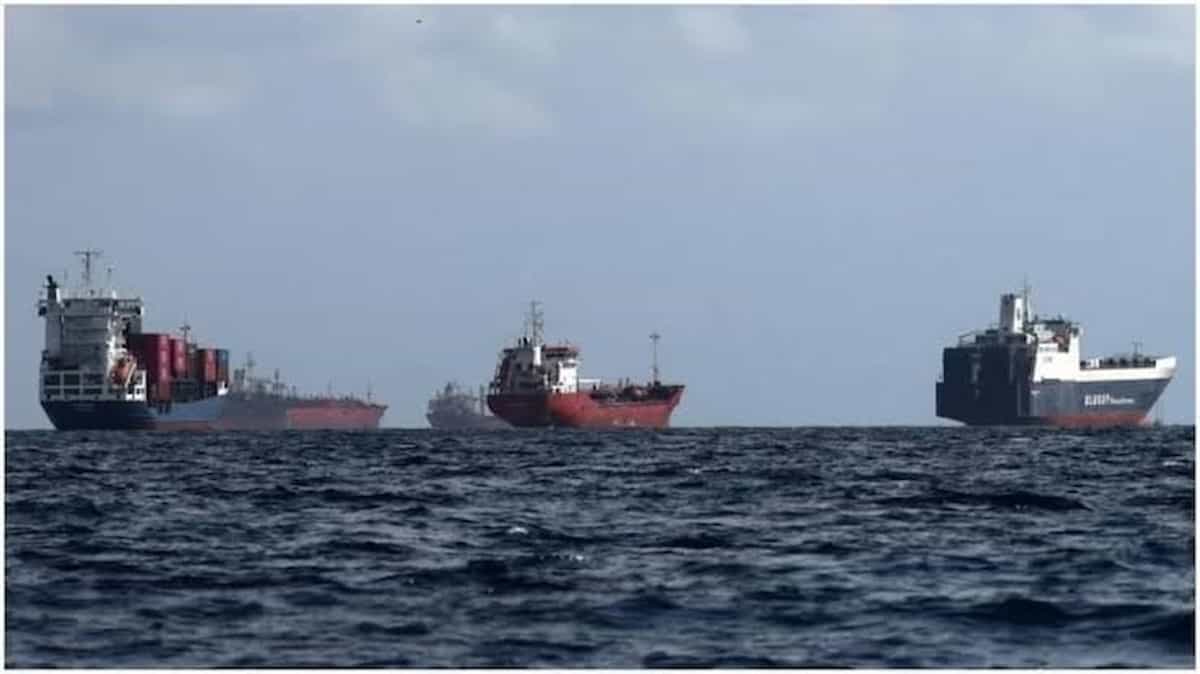
The eyes of the world are currently focused on the most important part of the Persian Gulf and the Strait of Hormuz, where geopolitical tension has reached its peak. A new conflict has erupted over supremacy over this sea route, which is considered the lifeline for international trade and global crude oil supply. The latest situation is that due to this severe tension and security crisis, more than 80 percent of the commercial and cargo ships around the world are now forced to pass through the alternative Omani Route. Meanwhile, statements coming from US political circles and the reaction of Gulf countries have further complicated the crisis, deepening the atmosphere of uncertainty in the global energy market.
Strategic importance of the Strait of Hormuz and the latest security crisis
The Strait of Hormuz is one of the world’s busiest and most important sea routes, through which much of the Middle East’s oil and gas is supplied to markets around the world. But for some time now, due to increasing tension in this area, threat of military activities and attacks, the concerns of shipping companies have increased considerably. Keeping the safety of ships as paramount, maritime operators have started choosing routes passing close to Omani waters instead of traditional and risky routes. According to current data, about 80 percent of the ships passing through this strategic route have taken this safe route for their safety, so that any possible untoward incident or seizure action can be avoided.
Donald Trump’s big claim and turmoil in international politics
Amidst this geopolitical turmoil, a statement came out from the American political platform which caught the attention of the entire world. Donald Trump has made his strong claim regarding the security and control of the Strait of Hormuz. This claim of Trump has come at a time when the presence of the US Navy in the region and its equations with the Gulf countries are being continuously discussed. America believes that to maintain global energy security, strict monitoring and control on this route is necessary, so that the oil supply is not disrupted and international trade runs smoothly. His sharp and aggressive claim has further intensified the diplomatic stir between Western countries and the Gulf’s political rivals.
Iran’s strong reaction and Trump’s claim made fun of
After this latest claim of Donald Trump, very sharp reactions have emerged from the Gulf region. Especially Iran, which has direct control and influence just north of this strait, has completely rejected this claim of the American leader and ridiculed it fiercely. Iranian military and political analysts say the area falls within their own maritime boundaries and sphere of influence, and such claims by outside powers are nothing more than political rhetoric. It has been made clear from Tehran’s side that they themselves are the guardians of Hormuz and any external interference regarding regional security will not be tolerated. After this mockery by Iran, the tension on the front of global diplomacy has deepened further.
Impact on global economy and crude oil prices
This entire incident of Hormuz crisis is not limited only to political statements, but there is full possibility of its direct impact on the global economy and the pocket of the common man. Since a large part of the world depends on this route for its energy needs, every movement here causes fluctuations in the prices of crude oil. The diversion of 80 percent of ships to the Omani route is a strong proof that companies do not want to take any kind of risk. If this crisis prolongs further, there will be a huge increase in the cost of shipping, the effect of which can be seen in the form of inflation in fuel and consumer goods in the coming days.