 look news india

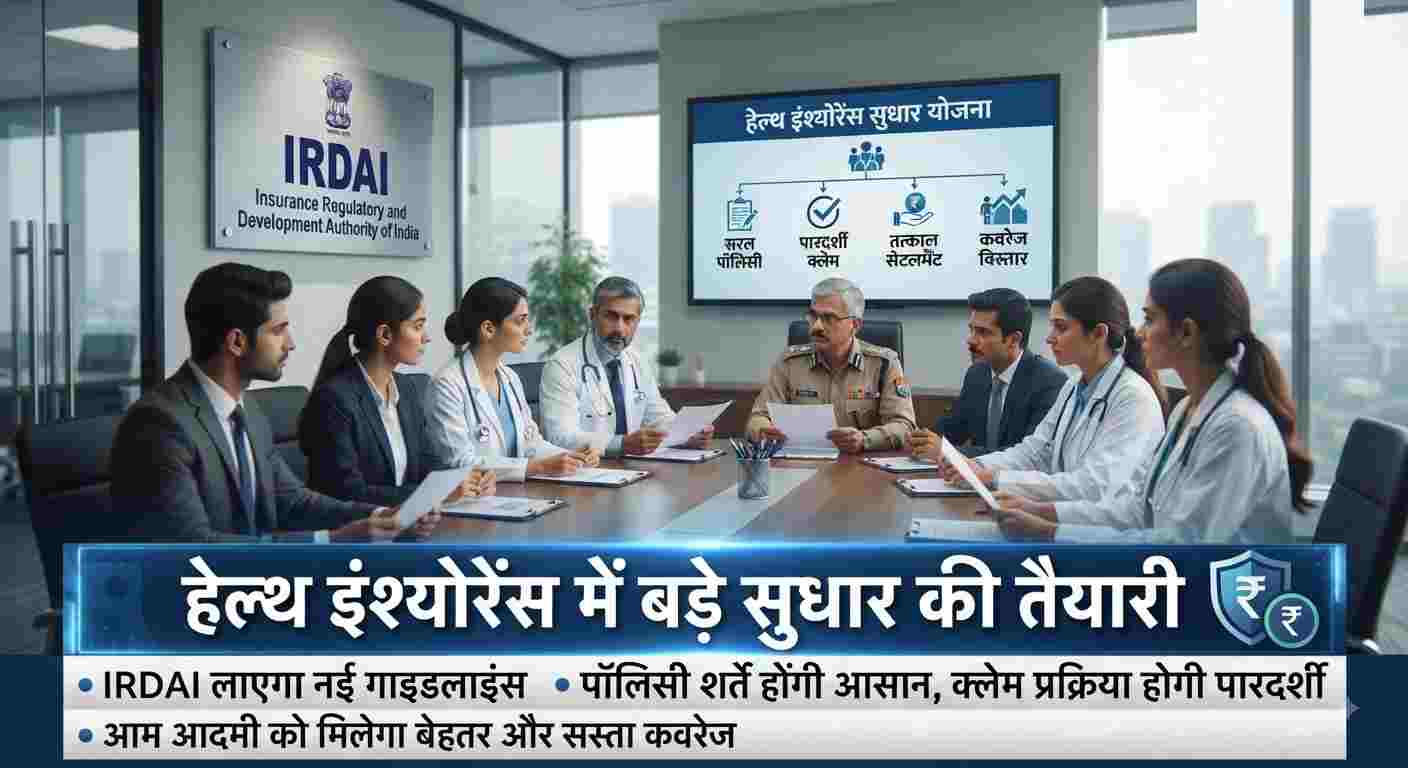
To free common citizens and middle-class families from the mental and financial torture at hospital billing counters during the health emergency in India, the most comprehensive and revolutionary reforms ever are being implemented in the country’s insurance sector. Insurance Regulatory and Development Authority of India (IRDAI) in collaboration with the Central Government has made the entire framework of health insurance regulations consumer-friendly to achieve the national target of ‘Insurance for All by 2047’.
For decades, hidden clauses in health insurance policies, arbitrary grounds for claim rejection, long waiting periods and 8 to 10 hours of waiting time at the time of discharge from hospitals had created deep distrust in the minds of policyholders. To root out these anomalies, the regulator has implemented landmark policy changes in eligibility for purchasing a policy, time limit for claim settlement, definition of pre-existing diseases and digital claims processing. The direct objective of these reforms is to curb the arbitrariness of insurance companies and to make the claim settlement process quick, transparent and paperless like Aadhaar and UPI.
5 biggest policy changes of IRDAI in favor of consumers
The key structural reforms undertaken under the Master Circular issued by the insurance regulator in recent months directly provide protection to policyholders:
-
Maximum entry age limit of 65 years ended: Earlier it was almost impossible for senior citizens to buy a new health insurance policy after the age of 65 years. IRDAI has completely abolished the maximum entry age bar for purchasing the policy. Now a person of any age, whether he is 70 or 85, can buy a new health insurance policy as per his need.
-
Waiting period for pre-existing disease (PED) reduced to 36 months: The mandatory waiting period for pre-existing conditions (such as diabetes, hypertension, thyroid or heart disease) before taking the policy was earlier 48 months (4 years), which has been reduced to a maximum 36 months (3 years) Has been done. After running the policy continuously for 3 years, the insurance company cannot reject the claim on the basis of chronic illness.
-
Moratorium period reduced from 8 years to 5 years: Under the ‘Moratorium Clause’ (Incontestability Period), the policy was considered incontestable only after paying the premium continuously for the first 8 years. By reducing it in the new rules 60 months (5 years) Has been done. That means, after completion of 5 years, the insurance company cannot reject the claim citing any hidden information (non-disclosure), except in cases of proven fraud.
-
Compulsory coverage of critical and incurable diseases: Insurance companies have been directed not to outright deny policies to persons suffering from cancer, autism, Down syndrome, mental illness and rare genetic diseases. Companies will have to bring special customized products in the market for these.
-
Full recognition of home care and AYUSH treatment: It has now been made mandatory to provide equal coverage to allopathic treatment for treatment under Ayurveda, Yoga, Unani, Siddha and Homeopathy (AYUSH) in hospitals and day-care centres.
The entire system will change with ‘Bima Sugam’ and ‘Cashless Everywhere’: Preparations from claim settlement to relief in GST.
India’s ambitious digital public infrastructure to digitally transform the entire health insurance ecosystem ‘Bima Sugam’ Has reached the final stages of its launch. Just as UPI has democratized digital payments and ONDC has democratized e-commerce, Bima Sugam will be the only integrated electronic portal in the country where all life, health and general insurance policies will be available on a single platform.
Under Bima Sugam, every citizen will have an ‘e-Insurance Account’ (e-IA), in which all his policies will be safe in digital form. All the formalities from purchasing the policy, changing the address, updating the nominee and filing the claim can be completed in just one click without any middleman or agent. This will reduce the distribution and commission costs of insurance companies, the direct benefit of which will be passed on to common consumers in the form of reduction in premium rates.
National Health Claims Exchange (NHCX) and mandatory discharge within 3 hours
At the national level, National Health Claims Exchange (NHCX) has been integrated with the National Health Authority (NHA) and Ayushman Bharat Digital Mission (ABDM) to eliminate the delay in claim approval by insurance companies at the time of discharge after hospital treatment.
Under this new arrangement:
-
Cashless Everywhere: Now the patient does not need to depend only on network hospitals. Even if a hospital is non-network, but has a minimum of 15 beds and state registration, the patient can still claim the facility of cashless treatment there.
-
Strict 3 hour discharge rule: Maximum time of uploading the patient’s discharge summary and final bill from the hospital on the portal within 3 hours The insurance company and TPA have to approve the final claim amount. If there is a delay of more than 3 hours, the hospital room rent for that additional time will have to be paid by the insurance company from its own pocket and cannot be charged from the patient.
-
Initial Authorization in 1 hour: In case of emergency, it has been made mandatory to issue primary approval for cashless within 1 hour of the patient reaching the hospital.
Composite Licensing and 100% FDI: Preparation to amend the law
The foundation for historic structural changes in the Indian insurance market is being laid through the Insurance Laws (Amendment) Bill for the upcoming sessions of Parliament:
-
Composite Licensing: Under the new law, life insurance companies (like LIC, HDFC Life, SBI Life) will be allowed to sell standalone health insurance policies directly. This will increase competition in the market, dozens of new comprehensive combo products (Life + Health Plans) will be introduced and there will be a huge reduction in premium rates.
-
100% Foreign Direct Investment (FDI): There is a proposal to increase the FDI limit in the insurance sector from 74% to 100%, which will enable global insurance companies to bring their advanced underwriting technology, AI-based fraud detection and huge capital to India.
-
Promotion of micro-insurance and regional companies: To increase access to health insurance in Tier-3 cities and rural areas, minimum capital requirements are being rationalized so that affordable micro-health policies can be sold at the local level.
Brainstorming on removal of 18% GST: Expecting big relief for senior citizens and general public
health insurance premium charges Goods and Services Tax (GST) of 18 percent It has long been a subject of heated debate among policy makers, parliamentary standing committees and the general public. With 18% tax being charged on essential social security and healthcare like luxury items, renewing policies had become a huge financial burden for the middle class and especially pension dependent senior citizens.
The Parliamentary Standing Committee on Finance and the Group of Ministers (GoM) have made a clear recommendation to the GST Council that:
-
GST on individual health insurance policies for senior citizens to be completely waived zero (0%) Let it be done.
-
Reduction in GST rate from 18% on basic health insurance cover up to ₹5 lakh for general citizens. 5% or zero Let’s do.
-
The scope of tax exemption on special riders for mental health and serious illnesses should be increased.
This possible cut in GST rates will immediately make health insurance premiums cheaper by 15 to 18 percent, which will enable crores of new families to join the insurance coverage net.
New era for policyholders: transparency and rights
These multi-dimensional reforms underway in the health insurance sector are strong evidence that India is now rapidly moving towards a ‘consumer-first’ healthcare ecosystem. Abolition of old rigid rules, digital claim processing, reduction in waiting period and stringent regulatory norms have effectively curbed the arbitrariness of insurance companies. In the coming time, full operation of Bima Sugam and tax relief will make Indian health insurance an easy, cheap and reliable protection shield for every common citizen of the country rather than just a means for the affluent class.