 look news india

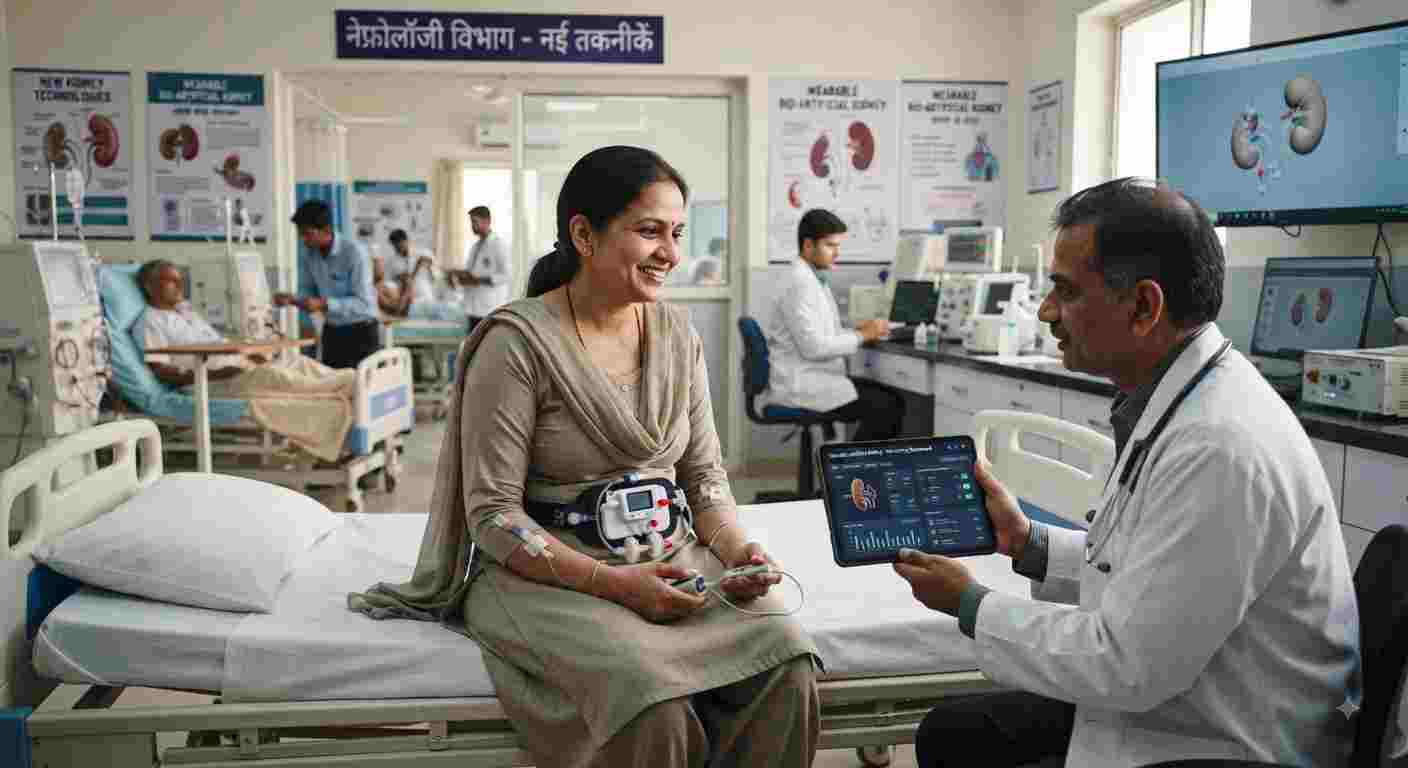
For millions of patients suffering from ‘Chronic Kidney Disease’ (CKD) and ‘End-Stage Renal Disease’ (ESRD) around the world, life is no less than a tough penance. After both kidneys fail, the patient has only two ways to survive—first, to go to the hospital three times a week and undergo the painful process of hemodialysis for four hours each, and second, to get a kidney transplant from a living or brain-dead donor. However, due to the severe shortage of human organs worldwide, more than 80 percent of patients die while waiting for their turn on the transplant waiting list. Apart from this, even those lucky enough to find a donor have to take expensive and immunity-weakening immunosuppressant medicines for the rest of their lives.
But the unprecedented confluence of biotechnology, nano-engineering, stem cells and artificial intelligence (AI) has now brought kidney medicine to a revolutionary juncture, where the dependence on dialysis machines and human donors is on the verge of ending forever. In recent months, the historic breakthroughs in the field of ‘Implantable Bio-Artificial Kidney’, ‘Wearable Artificial Kidney’ (WAK) and ‘Gene-Edited Xeno-Transplantation’ have awakened new hope in the minds of kidney failure patients to live a normal, healthy and independent life.
Implantable bio-artificial kidney: ‘Living filter’ that fits inside the body
At the center of this technological revolution is an ambitious initiative led by the University of California San Francisco (UCSF) and Vanderbilt University Medical Center. ‘The Kidney Project’ Is an implantable bio-artificial kidney. It is a bio-engineered device the size of a coffee mug, which is surgically inserted into the patient’s lower abdomen and directly connected to the blood vessels and bladder.
This bio-artificial kidney mainly consists of two advanced parts:
-
Silicon Nanotechnology Hemofilter: It is a filter made of special silicone nano-membrane, whose nano-pores filter the blood continuously for 24 hours due to the natural pressure of the patient’s own blood pressure. It does not require any external motor, battery or pump. It removes urea, creatinine and excess toxins from the blood, while preserving blood cells and essential proteins.
-
Bioreactor with living cells: After the hemofilter, the filtered fluid goes into a bioreactor, which contains live human renal tubule cells cultured in the laboratory. These cells, like real kidneys, maintain the correct balance of water, sodium, potassium and essential electrolytes in the body and pass waste directly to the bladder in the form of urine.
-
Zero risk of immune rejection: The most magical feature of this technology is that the microscopic mesh of the silicone filter prevents the patient’s own immune cells (antibodies and T-cells) from attacking the cells in the bioreactor. As a result, the patient does not need any of the dangerous and expensive immunosuppressant drugs given after the transplant.
Wearable Artificial Kidney (WAK): Dialysis unit worn around the waist like a belt
In traditional hemodialysis, the patient has to remain tied to the hospital bed, due to which his work and social life comes to a complete standstill. As an alternative, biomedical scientists ‘Wearable Artificial Kidney’ (WAK) The technology has been made practical.
It is a light and portable device weighing about 2 to 3 kg, which the patient can wear around the waist like a belt or a small backpack. It uses micro-fluidics and advanced sorbent cartridge technology to recycle and purify just 400 to 500 ml of water and perform continuous dialysis throughout the day.
Due to this continuous and slow blood purification, there is no sudden drop in the patient’s blood pressure, post-dialysis fatigue is eliminated, and the patient gets complete freedom from strict restrictions imposed on food and water.
CRISPR gene-edited pig kidney transplant: Permanent solution to human organ crisis
To overcome the acute shortage of human organs, scientists have taken a historic leap in the technique of ‘Xenotransplantation’ i.e. transplanting animal organs into humans. Surgeons from biotech company eGenesis, Massachusetts General Hospital and NYU Langone Health CRISPR-Cas9 gene-editing tool More than 69 precise genetic modifications have been made in the DNA of pigs using DNA.
Through these genetic modifications:
-
Three major sugar genes (such as alpha-gal) present in pig cells were completely inactivated (knockout), which cause immediate and severe organ rejection (Hyperacute Rejection) once they reach the human body.
-
To adapt the organ to the human body, seven human genes were added, which prevent blood clotting and inflammation.
-
The ancient porcine retroviruses (PERVs) hidden in the pig genome were completely inactivated so that the risk of transmission of any unknown virus from animal to human was reduced to zero.
In recent clinical trials, gene-edited pig kidneys have successfully demonstrated urine production, creatinine clearance and normal metabolic function in brain-dead and end-stage human patients, making this technology the most promising organ transplant of the future.
Stem cells and 3D bio-printing: Creating a new kidney from the patient’s own cells
The development of stem cell based renal organoids is another miraculous step in the field of regenerative medicine. Researchers at Harvard University and Murdoch Children’s Research Institute are creating ‘induced pluripotent stem cells’ (iPSCs) from the patient’s own skin or blood cells.
These stem cells are developed into functional units of the kidney i.e. ‘nephrons’ through special biochemical signals. After this state of the art 3D Cellular Bio-Printers With the help of these, small functional kidney structures are being prepared by printing these living cells on a biocompatible hydrogel matrix. Since this organ is made up of the patient’s own DNA, there is no possibility of the body rejecting the organ.
AI-Enabled Smart Dialysis and Predictive Remote Monitoring
Existing dialysis machines are also being made highly safe and personalized by connecting them with Artificial Intelligence (AI) and Internet of Medical Things (IoMT):
-
Accurate prediction of hypotension: A sudden, dangerous drop in blood pressure is the most common and life-threatening complication of dialysis patients. AI algorithms analyze the patient’s pulse, oxygenation and blood volume data to auto-adjust the ultrafiltration rate 30 minutes before blood pressure drops.
-
Smart Peritoneal Dialysis (Automated PD): Through cloud-connected home dialysis cyclers, patients can safely perform dialysis at home while they sleep at night, with all data updated live in real-time on their nephrologist’s mobile dashboard.
What does this technological revolution mean for kidney patients in India?
Chronic kidney disease has become a ‘silent epidemic’ due to the increasing cases of diabetes and hypertension in India. Every year, more than 2.5 lakh new patients in the country reach the stage of end-stage renal failure, but only 10,000 to 12,000 patients get a human transplant.
The Central Government’s ‘Pradhan Mantri National Dialysis Program’ (PMNDP) has certainly provided great relief to poor patients by providing free dialysis at the district level, but the advent of bio-artificial kidneys and gene-edited organs in India will change this entire scenario:
-
Full stop on illegal organ trade: By ending the shortage of donors, the black business of organ trafficking and brokers will be destroyed forever.
-
Health budget and economic security of families: Middle and poor families will get relief from recurring expenses of dialysis and huge bills of medicines.
-
Self-reliant production: The Indian Council of Medical Research (ICMR) and top Indian institutes (like AIIMS and IITs) are working on indigenous production of these bio-sensor and nanofilter technologies, so that this technology can be made available to Indian patients at very affordable rates as compared to western countries.
This confluence of medicine and bio-engineering is a strong proof that in the coming few years, kidney failure will no longer be the end of life for anyone or the curse of being bed bound for life. With the clinical use of artificial kidneys and genetic bio-organs, the world is entering an era where dialysis will remain only a part of the medical history books.