 look news india

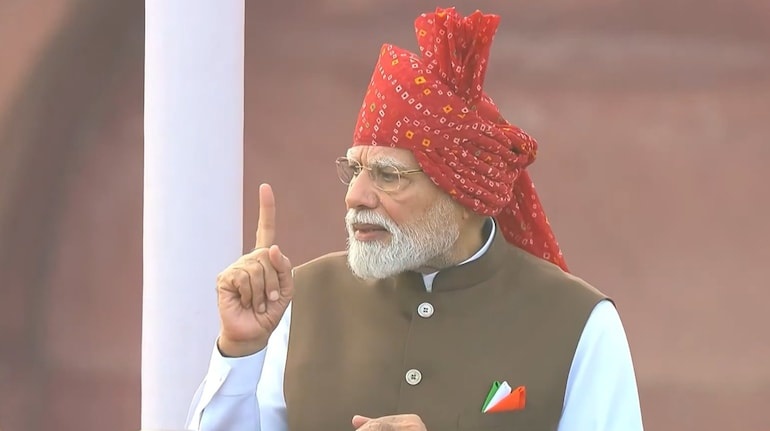
On the historic occasion of India’s 80th Independence Day, Prime Minister Narendra Modi, while addressing the nation from the ramparts of the Red Fort, has made an epoch-making announcement regarding the technological and industrial future of the country. The Prime Minister informed the countrymen that commercial production has successfully started in three state-of-the-art semiconductor plants being set up under India’s ‘India Semiconductor Mission’ (ISM). Along with this, reiterating the resolve to make India a global powerhouse of global semiconductor chip manufacturing, he announced that there are full preparations to set up 5 to 8 more advanced fabrication (Fab) and packaging units in the country within the next 7 to 8 years. The announcement has created huge excitement among global tech companies, global investors and the Indian electronics industry.
PM Modi’s message from Red Fort: Journey from chip importer to chip manufacturer
Prime Minister Modi said in his address that in the modern 21st century, the backbone of data, artificial intelligence and digital economy are only semiconductor chips. For a long time, India depended on foreign supply chains to import silicon chips, which not only increased the economic burden but also affected strategic security. Now under the ‘Make in India’ and ‘Self-reliant India’ campaign, India has completely changed this scenario. The Prime Minister stressed that today semiconductor chips manufactured in India have started being used in Indian mobility, 5G-6G telecom networks, defense electronics, automobiles and consumer gadgets, which is the biggest symbol of our self-reliance.
3 semiconductor plants and India’s silicon infrastructure started
The initial semiconductor projects approved by the government prominently include units set up at Dholera and Sanand in Gujarat as well as Morigaon in Assam. Developed in collaboration with leading companies like Tata Electronics, Taiwan’s PSMC, CG Power and Kynes Technology, the critical stages of testing, assembly and silicon wafer processing have successfully started in these plants. The opening of these plants has not only created millions of direct and indirect high-skilled technology employment opportunities in India, but India is also poised to stand at par with semiconductor leaders like Taiwan, South Korea, Japan and the US.
Mega roadmap for next 7-8 years: Target of 5 to 8 new plants
While sharing future plans, the Prime Minister said that the government will not be limited to its existing capabilities only. To make the semiconductor ecosystem completely self-reliant, 5 to 8 new high-tech plants are being approved and given financial incentives in the next 7 to 8 years. These include fabrication plants from 28 nanometers to more micro and advanced nanometer nodes, advanced chip packaging (OSAT/ATMP), compound semiconductor units and chip designing ecosystem. The Central Government’s Production Linked Incentive (PLI) Scheme and revised semiconductor subsidy model have strengthened the confidence of chip giants around the world in India.
India’s growing strategic stature in the global supply chain
At the global level, when the world is looking for a ‘China Plus One’ strategy and a reliable supply chain, this semiconductor expansion of India greatly strengthens the country’s position in international geopolitics. Under the QUAD partnership and the India-US Initiative on Critical and Emerging Technologies (iCET), India is building its global footprint in both chip designing and manufacturing. This technological roadmap announced from the Red Fort will prove to be the most decisive milestone in the goal of making India a ‘Developed India’ by the year 2047.