 look news india

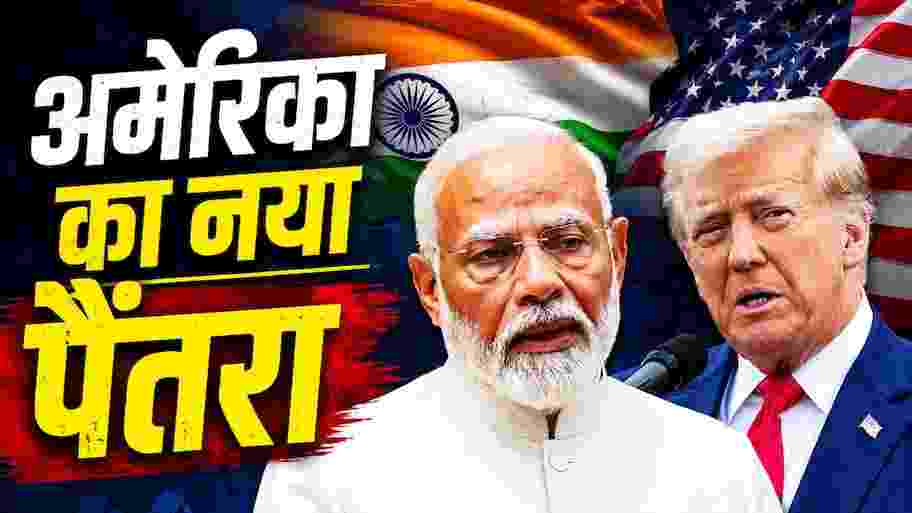
Two big news coming from Washington have given sleepless nights to the Indian economy, IT industry, students and experts on strategic affairs. There may be a new tension in India-US relations due to two new legislative steps taken in the US Parliament (Congress). On one hand, a bill has been introduced in the US Senate to make the H-1B visa process extremely stringent, while on the other hand, the ‘Russia Sanctions Bill’ has been passed with an overwhelming majority to tighten the noose on countries purchasing crude oil from Russia. If both these proposals become law, it will have a direct impact on India’s IT professionals, students studying in America, the country’s exports and energy security.
1. ‘End H-1B Abuse Act’: 3-year ban and $1 lakh fee proposed
A new bill named ‘End H-1B Abuse Act’ has been introduced in the US Senate by Republican Senator Tim Sheehy. This bill recommends several strict changes in the H-1B visa rules given to foreign skilled workers in America.
Impact of H-1B visa bill on Indian professionals and students:
-
3 year ban on new visas: The bill proposes to impose a complete ban on the issuance of new H-1B visas for the next three years. This could be a big blow to thousands of Indian doctors, engineers and IT experts who dream of working in America.
-
Heavy duty of 1 lakh dollars: There is a provision to impose a mandatory fee of $1,00,000 on each H-1B visa application. Due to such high costs, Indian IT giants (like TCS, Infosys, Wipro) and American companies will avoid attracting talent from India to America.
-
Proposal to end OPT system: It has been said that the ‘Optional Practical Training’ (OPT) facility available to get work experience there after completing education from American universities will be abolished, due to which it will become almost impossible for Indian students to get a job there after studies.
-
Prohibition on Dependents: There is a proposal to ban spouses and children of H-1B visa holders from coming to the US, due to which professionals will not be able to take their families along.
2. ‘Russia Sanctions Bill’: Threat of 100% tariff on Indian goods
The ‘Russia Sanctions Bill’ passed in the US Senate with an overwhelming majority of 86-12 is another matter of major concern for India. The main objective of this law is to create economic pressure on the countries purchasing crude oil and gas from Russia. After China, India is the second largest country in the world to import crude oil from Russia.
What impact will this law have on India’s business and economy?
-
Tariff up to 100% on Indian exports: Under this bill, America can impose a duty (tariff) of up to 100% on goods coming from countries purchasing energy resources from Russia. Due to this, Indian products will become very expensive in the American market and the country’s exports will suffer huge losses.
-
Financial crisis on refineries: India’s Russian oil imports had increased by 34% in June 2026. Indian refineries like IOC, BPCL and Reliance may find it difficult to continue business with Russia due to US financial sanctions and international banking constraints.
-
Fear of increase in petrol and diesel prices and inflation: Oil supply from Gulf countries is already affected due to the ongoing tension in the Middle East. In such a situation, if under American pressure India has to stop getting cheap crude oil from Russia, then fuel prices and general inflation in the country may increase rapidly.
Bilateral relations and challenges facing India’s strategic independence
This is not the first time that tension is being seen between the two countries on trade issues. Earlier in August 2025, when America imposed an additional tariff of 25% on Indian goods, trade talks between the two countries came to a complete halt. Now the threat of 100% tariff can bring the diplomatic and strategic relations of the two countries to a more sensitive point. India has always taken its energy needs and foreign policy decisions independently, but these steps of the US Parliament seem to be a direct challenge to India’s strategic independence.
Current Status: Have these decisions been implemented immediately?
It is a matter of relief that both these proposals have not yet become law:
-
The bill related to H-1B visa has only been introduced in the US Senate at present.
-
The Russia sanctions bill is headed to the next stage of the legislative process after passing the Senate.
For both of these proposals to finally become law, it is mandatory to get approval from the US House of Representatives and the signature of the US President. Therefore, until this process is completed, H-1B visas and India’s international oil trade will continue under the existing rules.
(Disclaimer: This news report is based on bills introduced in the US Parliament (Senate), legislative documents and analysis of international trade data.)