 look news india

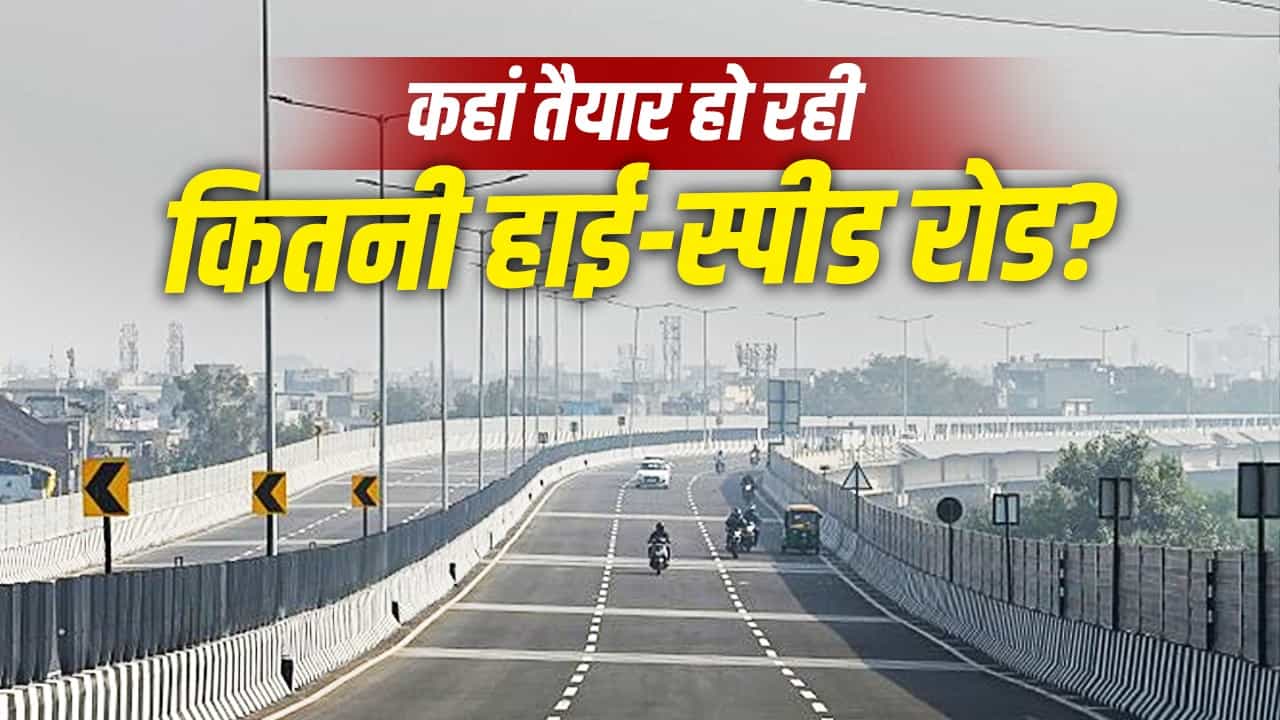
To reduce logistics costs in the country, increase the speed of freight transportation and give a new dimension to interstate connectivity, the National Highway Infrastructure Plan of the Central Government is emerging in its biggest form till date. A 10,389 km long expressway and access-controlled high-speed corridor network is rapidly taking shape to connect the major states of North India—Uttar Pradesh, Bihar, Punjab, Haryana and Jharkhand. After the complete completion of this huge network, not only will the journey from Uttar Pradesh and Bihar to the industrial cities of Punjab-Haryana be reduced by half, but it will also witness a new revolution in trade between Eastern and Northern India. Let us understand from the perspective of an infrastructure and policy reporter what this project is and what benefits it will bring to the common people and businessmen.
10,389 km corridor network: key links connecting North India
This massive road network, being developed under the vision of National Highways Authority of India (NHAI) and Ministry of Road Transport and Highways, will connect several major economic corridors:
-
Expansion of Amritsar-Jamnagar and Ludhiana-Ajmer corridors: This corridor connects the agricultural and industrial areas of Punjab with the western coasts and the industrial hub of Central India.
-
Connection to Purvanchal and Greenfield Corridor: Uttar Pradesh’s Purvanchal Expressway, Bundelkhand Expressway and the under-construction Gorakhpur-Siliguri Expressway are being directly connected to Punjab and Haryana through this network.
-
Direct access to Bihar and Jharkhand: Farmers, traders and students from eastern states will be able to reach UP and Punjab in a few hours through Bihar’s Patna-Buxar Expressway and Varanasi-Kolkata Expressway.
4 biggest advantages of this mega expressway network
-
Huge savings in travel time and fuel: The speed of vehicles on the expressway will be 100 to 120 km/hour, due to which the travel time of heavy vehicles going from UP and Bihar to Punjab or Delhi will reduce by about 40%.
-
Logistics and quick delivery of agricultural products: Grains, textiles and machinery from Punjab and Haryana and raw materials and agricultural products from Bihar-UP will be able to reach from one state to another without any hindrance, which will reduce the loss of goods.
-
Creation of industrial corridors and employment: Multi-Modal Logistics Parks (MMLP), food processing zones and industrial clusters are being developed on both sides of these high-speed corridors, which will create direct and indirect employment opportunities for lakhs of youth.
-
Connectivity will change the economic fortunes of states: Connecting small towns in densely populated states like UP and Bihar directly to the national network will provide an unprecedented boost to local real estate and business.
State-of-the-art security and AI-powered toll system
This 10,389 km long expressway network is being built on the standards of ‘Smart Infrastructure’:
-
Advanced Traffic Management System (ATMS): AI cameras and sensors will be deployed throughout the highway which will immediately inform the control room about overspeeding, accidents or any obstruction on the road.
-
GPS-Based Barrierless Tolling: To get rid of the jam at toll plazas, satellite (GNSS) based toll collection system is being implemented, so that the vehicle will be able to cross the toll without stopping.