 look news india

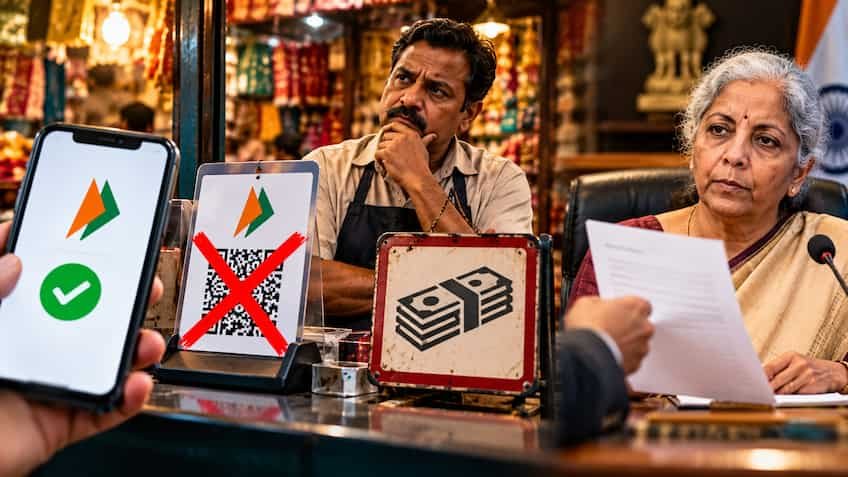
A major controversy has erupted over the Unified Payments Interface (UPI), which has become the backbone of the country’s digital payment system. There has been growing clamor from banks, National Payments Corporation of India (NPCI) and large payment gateway operators to impose a 0.40 per cent merchant discount rate (MDR) on select merchant transactions from October 15, citing infrastructure and server costs for digital transactions. As soon as they got wind of this proposed step, retailers, industry bodies and MSME organizations across the country have come out in open protest. Trade organizations have warned that if any kind of fee is imposed on small and medium scale digital transactions, they will remove QR codes and hang ‘cash only’ boards outside their shops. Many major business organizations, including the Confederation of All India Traders (CAIT), have written a formal letter directly to Union Finance Minister Nirmala Sitharaman in this matter, demanding emergency intervention.
Merchant Discount Rate or MDR is the fee that banks or digital payment companies charge from a merchant in exchange for the facility of accepting money through digital medium. In the year 2020, the Central Government gave a historic impetus to the digital revolution in the country by completely bringing RuPay Debit Card and UPI under the ambit of zero MDR (zero charges). Now the banking world argues that to process crores of small and big transactions in the country every day, thousands of crores of rupees are being spent annually on data centres, cyber security, network bandwidth and server capacity, which is not possible to be borne without any charges. To compensate for this loss, a framework has been proposed to implement 0.40% MDR on merchant UPI transactions above ₹2,000 from October 15. This simply means that if a customer buys goods worth ₹ 5,000 at a retail store and pays through QR code, then ₹ 20 will be deducted and only ₹ 4,980 will be deposited in the shopkeeper’s account. Margins in grocery, medical, textile and everyday goods business are already limited to between 1.5 to 2 percent, so this cut of 0.40% will directly take away 20 to 25 percent of the net profits of the traders.
Trade organizations, in their detailed memorandum sent to the Finance Ministry, have warned that the decision to impose 0.40% MDR will be a deep blow to the Prime Minister’s vision of ‘Digital India’ and ‘Cashless Economy’. Traders say that it was only on the government’s appeal that they had installed QR codes and soundboxes at every counter, excluding age-old cash transactions. If the government wants to compensate the operating costs of banks and fintech companies, then the allocation of digital incentive fund should be increased in the budget, and not the burden should be passed on to small shopkeepers. The letter clearly warns that if this proposed system is forcibly implemented from October 15, crores of retailers in the country will be forced to collectively remove QR code stands and start cash transactions again. This will not only increase the huge pressure of cash in banks again, but will also cause major damage to the government’s efforts to curb tax evasion.
The biggest relief for the general public in this entire incident is that there will be no charge of any kind on person-to-person (P2P) mutual fund transfer between common people. If you send any amount through UPI to any of your relatives, friends or acquaintances, it will remain 100% free as before. However, it may definitely have an indirect impact on the common buyer. Business experts believe that if the economic burden of 0.40% MDR is imposed on shopkeepers, instead of bearing this loss from their own pockets, they will increase the retail prices of goods or demand additional ‘convenience charge’ from the customer for accepting digital payments. Due to this, purchasing of everyday essential items, electronics, mobiles and garments will directly become expensive.
Deep dissatisfaction against this decision is being seen in major business centers of Uttar Pradesh, Delhi-NCR, Bihar, Madhya Pradesh and Rajasthan. Traders’ organizations from Delhi’s Chandni Chowk, Sadar Bazaar and Karol Bagh to Lucknow’s Aminabad, Hazratganj, Alambagh and Kanpur’s Nayaganj have called emergency meetings. Traders say that imposing such a charge on the retail market, which is already struggling with the complexities of inflation and GST, is like an ax. In Tier-2 and Tier-3 cities where small businessmen have just become accustomed to digital payments, shopkeepers are preparing to ask for cash directly from customers due to fear of bank charges. Local trade chambers have bluntly said that if the government does not formally reject the proposal before October 15, they will launch phased protests and movements like ‘No QR Day’. Now all eyes are on the official announcement of the Finance Ministry and NPCI.