 look news india

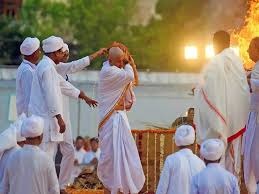
News India Live, Digital Desk: Hindu rituals describe 16 rites of passage from birth to death. The funeral rites are final. Before lighting the pyre, the main heir of the deceased (son or other) circles the dead body with an earthen pot filled with water and finally breaks it by slamming it. This may seem like a simple process, but its meaning is very deep.
1. Symbol of Mortality
According to the scriptures, our body is made of clay. The earthen pot has been considered a symbol of the human body.
Burst of pitcher: Just as the soil of a pot gets mixed back into the soil after it is broken, similarly this ritual shows that after death the body made up of the five elements (earth, water, fire, air, sky) has merged back into the same elements.
Philosophical message: This ritual conveys the message to the surviving relatives that the body with which they were attached is now just an empty vessel that has ceased to exist.
2. Breaking the Bond
It is believed that even after death, the soul remains attached to its family and body. She does not want to leave the body easily.
Orbits and holes: Making a hole in the pitcher and circling it while spilling water shows that the water of life has gradually ended.
Breaking the pot: Breaking the pot means that now the soul’s relationship with this mortal world and body has been completely broken. It is a process of providing peace to the soul and signaling it to move towards the next journey (afterlife).
3. Relation to ‘cranial action’
a part of the process of breaking an earthen pot ‘cranial action’ Preparation also takes place. It is believed in the scriptures that the life energy of a human being should come out of the skull (head) so that he can attain salvation. Breaking the pot is a symbolic beginning of this process, which announces the end of the material world.
Some other important rules of funeral
Cremation after sunset: In Hinduism, cremation is generally prohibited after sunset. It is believed that the doors of Yama are closed at night and the soul suffers.
Women go to the crematorium: In ancient times it was considered taboo, but in modern times, due to emotional and social changes, women are also taking part in the last farewell.
Sutika/Sutak Period: After death, 13 days of Sutak period is observed in the house, which is the time for removing impurities and expressing grief.