 look news india

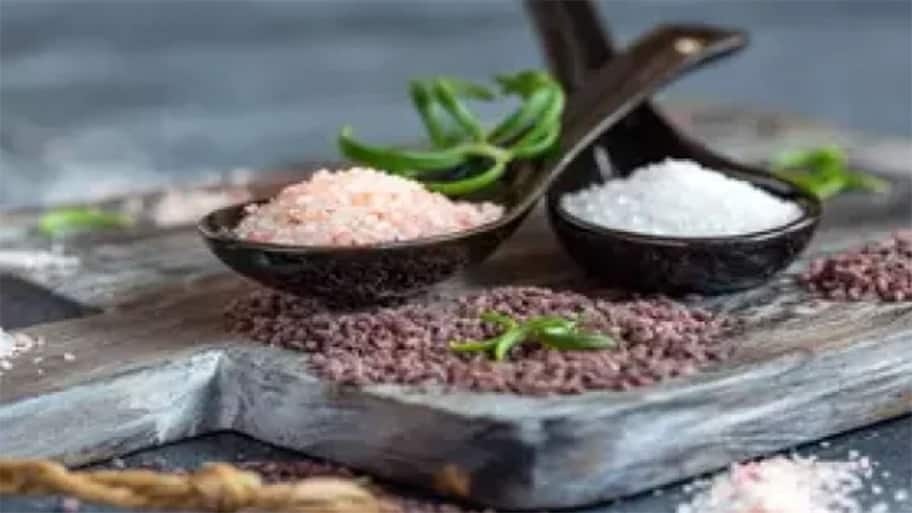
The taste of Indian kitchen and the electrolyte balance of the human body is incomplete without salt. In the last few years, due to increasing awareness towards health, many types of apprehensions have arisen regarding ordinary white salt and the demand for Himalayan Pink Salt and Rock Salt has increased rapidly in the market. Social media and health influencers often term white salt as a ‘slow poison’ and recommend switching completely to pink or rock salt. According to nutrition science and Ayurveda, blindly giving up or adopting any salt completely can be risky for health. All three types of salts have their own chemical composition, benefits, limitations and specific rules of use for the body.
White Salt (Table Salt): The Game of Refining, the Boon of Iodine and Anti-caking Agents
White salt, also called table salt or refined salt, is primarily extracted from seawater or underground mines. Before being released into the market, it goes through a heavy industrial refining process, in which all its natural trace minerals are removed and it becomes 97% to 99% pure sodium chloride (NaCl). To protect it from moisture and to keep it free-flowing in the container, ‘anti-caking agents’ (such as sodium aluminosilicate or potassium ferrocyanide) are added to it.
The biggest strength of white salt is that it is ‘iodized’. In the 1980s and 90s, the Indian government made it mandatory to add iodine to salt to prevent epidemics of goiter, mental retardation and hypothyroidism. Even today, iodized white salt is the cheapest and effective source for the smooth functioning of the thyroid gland and brain development of children.
Rock Salt / Halite: Journey from fasting plate to Ayurveda’s Tridosha balance
Rock salt, which has been used for centuries in fasting and religious rituals in Indian tradition, is actually a pure form of the natural mineral ‘Halite’. This salt is dug directly from natural rocks formed by the evaporation of dried seas and lakes in ancient times. It is not subjected to any kind of chemical refining or bleaching process, due to which its natural form remains intact.
In Ayurveda, rock salt is considered the best of all salts and ‘Lavana Uttam’. While white salt increases bile and heat in the body, the effect of rock salt is considered to be ‘cooling’. It balances the tridosha (vata, pitta and kapha), improves digestion by igniting the gastric fire, soothes gas and heartburn. Chemically, it has slightly less sodium than white salt and essential electrolytes like potassium, magnesium and calcium are naturally present.
Himalayan Pink Salt: Secret of pink color, claim and reality of 84 minerals
Pink salt is also a type of rock salt, which is mainly extracted from the Himalayan foothills (Khewra Salt Mine located in Punjab province of Pakistan). Its attractive light pink color is due to the naturally occurring ‘iron oxide’ and other trace minerals present in it.
It is a very popular claim in the market that pink salt contains 84 types of rare minerals. From the scientific point of view, it is true that elements like iron, zinc, copper, manganese and chromium are found in it, but their quantities are very minute (trace amounts). The body’s daily mineral needs cannot be met by eating pink salt alone. Its biggest feature is that it is completely unrefined, pollution-free and additive-free, which helps in balancing the pH level of the body and reducing muscle cramps.
Main differences between white, pink and rock salt
Sodium content: White salt contains about 39,000 mg (39%) sodium per 100 grams, while pink and rock salt have slightly lower sodium content (about 36% to 38%) due to larger crystal size and the presence of other minerals.
Presence of Iodine: White salt is fortified, so it ensures about 15 to 30 micrograms of iodine per gram. In contrast, rock and pink salt naturally contain little or no iodine.
Processing and Chemicals: White salt is highly processed, bleached, and contains chemical additives. Whereas rock and pink salt are natural salts broken and ground by hand without any chemical reaction.
Flavor and intensity of flavor: White salt is very sharp and intensely salty, while rock and pink salt have a mild, earthy and mild taste.
Which salt to choose according to your physical condition?
High blood pressure and heart patients: Rock salt or pink salt is more beneficial for people who have high blood pressure or heart disease. The presence of potassium in these helps in reducing the effect of excess sodium and relaxing the blood vessels.
Thyroid and hormonal imbalance patients: If you are suffering from hypothyroidism or iodine deficiency, do not rely only on rock or pink salt. Your body needs iodine regularly, which can be obtained from iodized white salt or iodine supplements.
Weak digestion, bloating and acidity: For those who suffer from heavy stomach, sour belching or indigestion after eating food, according to Ayurveda it is best to use rock salt in cooking and buttermilk/salad.
Athletes and people who sweat excessively: To replace electrolytes lost from the body after a workout or heavy physical exertion, drinking lukewarm water with a pinch of pink salt and lemon works better than sports drinks.
The most ideal and scientific way to use: ‘Rotation and Blending’ technique
According to health experts, instead of eliminating any one salt from your kitchen completely, it is wisest to use them in moderation:
Smart Blending Formula: Adopt a ratio of 70% rock salt and 30% iodized white salt for cooking food (vegetables, pulses etc.). With this you will get the purity and minerals of rock salt and there will be no deficiency of iodine necessary for thyroid in the body.
Uses of Raw Salt: Never use white salt to sprinkle over salads, raita, soups, fruits or sprouts. Always use coarsely ground rock salt or pink salt for pouring on top.
Right cooking time: Add rock or pink salt at the end of cooking instead of adding it while frying oil and spices. Cooking on very high flame for a long time can destroy some of its micronutrients.
According to clear guidelines from the World Health Organization (WHO), an adult should not consume more than 5 grams (about 1 teaspoon) of salt in any form, whether white, pink or rock, per day. More important than changing the type of salt is controlling its quantity.