 look news india

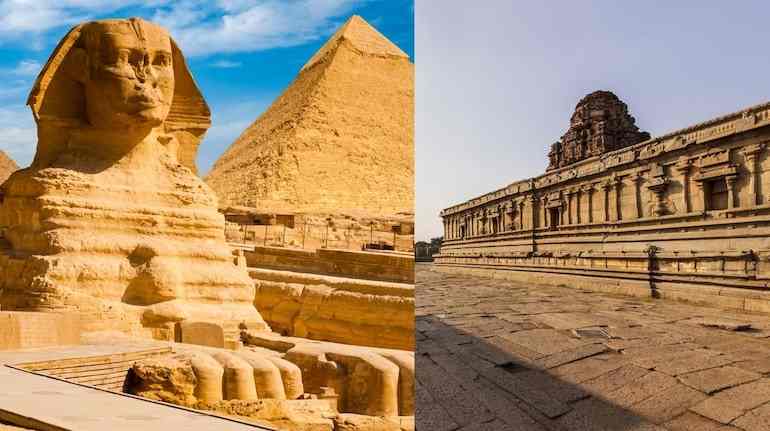
Whenever the question is asked that which is the first or oldest country in the world, an interesting and extensive debate erupts among historians, geopolitical analysts and archaeologists. The reason for this is that the definition of ‘Country’ (Country or Nation-State) keeps changing according to time and context. Will a country be considered old from the beginning of its earliest civilization, or from the time it acquired the form of an organized political nation, a constitution, or intact boundaries?
If we talk about the oldest continuous living civilizations of the world, then the names of India, Egypt, China and Iran (Persia) come at the top, whose history is more than 4,000 to 5,000 years old. At the same time, if weighed on the criteria of modern international law and continuous sovereign republic, then San Marino, a small country in Europe, proves to be the oldest country in the world. Furthermore, Japan appears to be at the forefront of the world on the scale of continuous monarchy.
San Marino: The world’s oldest sovereign republic and constitution
Officially and technically, the world’s oldest sovereign state is a small country surrounded by Italy in Europe. san marino Is.
According to historical records:
-
Year established: San Marino was founded on September 3, 301 AD (301 CE) by Saint Marinus, a Christian stonecutter who fled the persecutions of the Roman emperor Diocletian and settled on Mount Titano.
-
World’s oldest written constitution: The current Constitution of San Marino is the ‘Statutes of 1600’, which was codified in the form of six Latin books in the year 1600. It is the oldest active and continuously operating constitution in the world.
-
Inviolable sovereignty: Despite the fall of the Roman Empire, medieval wars and Napoleonic invasions, San Marino never lost its independence and republican system.
Egypt: The world’s first unified nation-state, formed in 3100 BC.
If we talk about a unified nation-state with an organized central government and under one flag, then the country of the African continent Egypt It is considered to be the first nation in the world.
-
King Narmer and the First Dynasty: Around 3100 BCE, King Narmer (also known as Menes) unified Upper and Lower Egypt under a central monarchy. This unification laid the foundation for the world’s first organized state, centralized administrative system, and official boundaries.
-
Ancient Civilization of Nile River: The development of Egyptian civilization in the Nile River valley began around 6000 BC. The Great Pyramid of Giza, ancient hieroglyphics and the reign of the Pharaohs still place Egypt in the forefront of the world’s oldest historical nations.
India: The world’s oldest living civilization, dating back 5,000 years.
The history of India is not only of political boundaries, but is an unbroken flow of eternal culture, philosophy, knowledge and social continuity which has remained unbroken for thousands of years. While the civilizations of Mesopotamia, Greece and Ancient Rome were completely destroyed over time or reduced to museums, India’s spiritual traditions, customs, yoga, Ayurveda and Vedic life values are still alive in the daily lives of more than 140 crore people.
-
Indus-Saraswati Civilization (3300-1300 BC): Archaeological discoveries at Harappa, Mohenjodaro, Rakhigarhi and Dholavira prove that India had the world’s most advanced town planning, drainage systems and trade networks 5,000 years ago. Recent archaeological excavations (such as Keeladi in Tamil Nadu and Bhirdana in Haryana) have pushed the history of Indian civilization back to 7,000 to 8,000 BCE.
-
Vedic period and Mahajanapada period: The Vedas, Upanishads and epics (Ramayana and Mahabharata) composed from 1500 BC onwards bear witness to the rich philosophical heritage of India. In the 6th century BC, ’16 Mahajanapadas’ (e.g. Magadha, Kosala, Vaishali) existed in India, where Vaishali is considered to be the world’s first democratic republic.
-
Maurya and Gupta Empire: During the reign of Emperor Chandragupta Maurya and Chakravarti Emperor Ashoka (322-185 BC), the empire of ‘Akhand Bharat’ extended from the borders of Iran to present-day Myanmar. The cultural and geographical idea of ’Bharatvarsha’ was clearly recorded thousands of years ago in ancient texts such as the Vishnu Purana.
China: the world’s oldest continuous written history and bureaucracy
China is one of the few superpowers in the world that has an unbroken and continuous written historical record of more than 3,500 years.
-
Shia and Shang dynasties: According to traditional Chinese history, China’s first dynasty, the ‘Xia Dynasty’, was established around 2070 BC. After this, ancient Chinese script and systematic administrative records begin to be found on Oracle Bones during the ‘Shang Dynasty’ in 1600 BC.
-
Unification of the Chinese Empire in 221 BC: Qin Shi Huang established the first unified Chinese empire (Qin Dynasty) by conquering various warring states in 221 BC and declared himself the first emperor. He started the construction of the ‘Great Wall of China’ and implemented standardized currency, weight and writing system. China’s administrative system and Mandarin bureaucracy continued unbroken for centuries.
Japan: The world’s oldest unbroken monarchy, dating back to 660 BC.
Japan holds the unique record of having the world’s longest lasting and unbroken Imperial Dynasty (Continuous Hereditary Monarchy).
-
Establishment of Emperor Jimmu: According to Japanese mythology and the historical account of the Nihon Shoki, Emperor Jimmu, a descendant of the sun goddess Amaterasu, founded the Imperial Empire of Japan on February 11, 660 BCE.
-
Unbroken Royal Family: Even today, the current Emperor of Japan, Naruhito, is considered to be the 126th successor of the same ancient Yamato Dynasty. Japan underwent many political changes and samurai/shogun rule, but the title and throne of the Emperor never formally ended.
Iran, Greece, and Ethiopia: Other Great Powers of the Ancient World
The list of the oldest countries in the world is considered incomplete without the mention of these historical landmasses:
-
Iran/Persia: The Elamite Kingdom came into existence near the Persian Gulf in 3200 BC. After this, in 550 BC, Cyrus the Great established the ‘Achaemenid Empire’, which was the world’s largest empire at that time and gave the world’s first human rights declaration (Cyrus Cylinder).
-
Ethiopia: Ethiopia in East Africa is considered to be the cradle of human ancestry, where 32 lakh year old human fossil ‘Lucy’ was found. With the D’mt Empire established in 980 BC and later the Kingdom of Axum, Ethiopia is the only country in Africa that has always remained untouched and independent from European colonialism.
-
Greece: The ‘Minoan’ and later ‘Mycenaean’ civilization, which developed on the island of Crete around 2700 BC, shaped the modern world as the birthplace of Western philosophy, science, art, the Olympic Games and direct democracy.
Civilization, Monarchy and Sovereignty: Final Conclusion of the Oldest Country
Based on history and international standards, the crown of ‘world’s oldest country’ cannot be directly awarded to any one country, but rather depends on which yardstick you choose:
-
If the scale ‘Unbroken Sovereign Republic and Constitution’ yes, then San Marino (301 AD) It is the oldest country in the world.
-
If the scale ‘The world’s first unified central state’ yes, then Egypt (3100 BC) Is in first place.
-
If the scale ‘Unbroken and continuous living culture and philosophy’ yes, then India It is the oldest and immortal country.
-
If the scale ‘Ancient written history and bureaucratic system’ yes, then China (2070 BC) Is unique in the world.
-
If the scale ‘The oldest unbroken royal family’ yes, then Japan (660 BC) Sitting at the top.
This historical diversity makes it clear that even though boundaries and governments may have changed over a period of centuries, the emergence of human civilization, organized society and cultural continuity is what keeps a country immortal for thousands of years.