 look news india

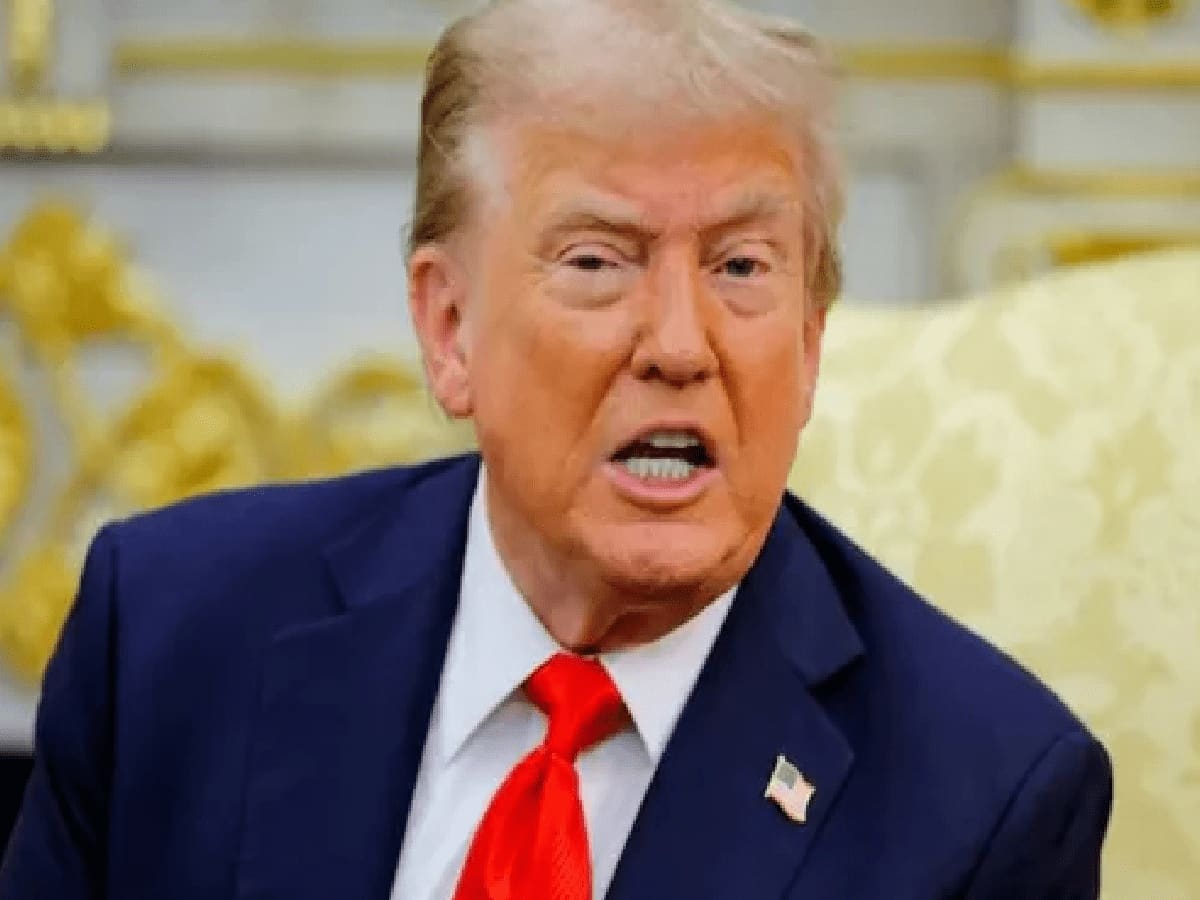
The political temperature has reached its peak regarding the midterm elections to be held on November 3 in the United States. Just before voting, US President Donald Trump has sparked a new debate in American politics by giving a direct and very aggressive warning to the opposition Democratic Party. Trump has made it clear in clear words that if the Democratic Party achieves majority in one or both houses of the US Parliament i.e. Congress in this great contest to be held on Tuesday, then he is fully prepared to run the legislative work as per his wish. He bluntly said that in such a situation, he would without any hesitation assume the role of ‘Mr. Veto’ and would not allow any agenda of the opposition party to move forward.
During a detailed conversation with The New York Post, when President Trump was asked a direct question as to how he would deal with this political impasse if public opinion went against him in the mid-term elections and Democrats took control of both houses of Parliament, Trump responded in his well-known blunt manner. Trump said that I think in that situation I would completely become ‘Mr. Veto’. I cannot at any cost allow them to destroy the country’s infrastructure and policies. Trump’s statement clearly indicates that if the election results go towards a divided mandate, then the coming months could see an unprecedented legislative confrontation between the White House and Capitol Hill.
President Donald Trump revealed to the media the entire roadmap for the future legislative conflict with the Democrats. He explained in detail that if opposition MPs pass new laws or bills as part of their agenda and send them to the White House for signature, they will directly reject each bill using their constitutional veto power. Trump said that they will keep passing bills and sending them and I will keep vetoing them one after the other. After a month or two of continuous rejection of bills, when the Democrat lawmakers will realize that they are only wasting their time and energy, then they will be forced to give up their stubbornness and come to the negotiating table.
Trump underlined that only when the Democrats are aware of the ground reality, a real agreement between the two parties will be possible. The US President said that it is not new or unique for Republicans and Democrats to agree on an issue to advance legislative priorities. He said that at some point we will probably reach a workable agreement because this has been seen many times before in American legislative history and this will not be the first time when both parties will find a way through mutual negotiations. However, he also added that he is absolutely confident that American voters will support the policies of the Republican Party and that his party will remain firmly in control of both houses of Congress. Despite this, he reiterated that if this did not happen, his veto pen would continue to operate.
In the American constitutional structure, the veto power of the President is considered the biggest and decisive weapon of the executive. According to the US Constitution, any bill passed by both houses of the Parliament is sent to the President’s desk before it becomes law. If the President disagrees with that bill, he can reject it by using his veto power. However, the framers of the Constitution have also made a strong system of checks and balances. If at least two-thirds (more than 66 percent) of the members of both the House of Representatives and the Senate vote again in favor of that bill, ignoring the President’s objection, then the President’s veto becomes ineffective and that bill automatically becomes law even without the President’s signature. In the current era of political polarization, it is considered almost impossible for any party to garner an overwhelming majority of two-thirds in both the Houses.
From a statistical point of view, Donald Trump has so far acted with great restraint during his second term and has used his veto power only twice. In contrast, during his first term (2017 to 2021), when the dominance of Democrats in Parliament had increased, Trump blocked a total of 10 bills through veto. If the equations of Parliament change in this midterm elections, then the number of vetoes used in Trump’s second term may break all its previous records.
During the interview, journalists also asked Donald Trump questions about his future plans and possible election for a third term. Trump was asked whether he would consider running for the White House again after the end of his second term? On this, Trump smiled and said that personally I would definitely like to contest elections again, but the legal rules regarding this in this country are very strict and clear. This statement of Trump directly points to the historic 22nd Amendment of the US Constitution.
The 22nd Amendment to the US Constitution clearly mandates that no person can be elected President of the United States more than twice in his lifetime. This constitutional limit was legally implemented in 1951, after Franklin D. Roosevelt became president four times. Trump is already on track to complete his two terms by winning the elections in 2016 and 2024, so it would not be legally possible for him to run for the presidency for the third time in 2028 due to constitutional limitations. This clarification by Trump has also put an end to all the speculations in which discussions were going on in political circles regarding the possibilities of his third term.