 look news india

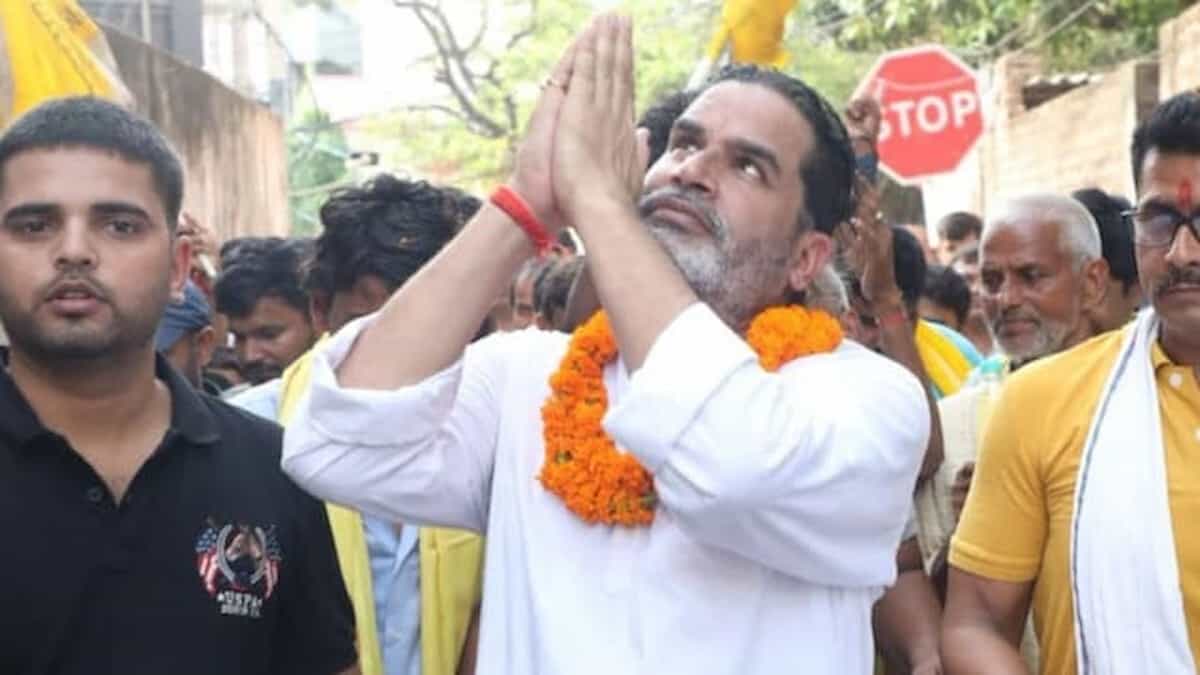
The result of the by-election on Bankipur assembly seat, considered the most high-profile and prestigious in Bihar’s capital Patna, has created a stir in the political circles of the entire country. This seat was ruled by the Bharatiya Janata Party (BJP) for the last three decades i.e. about 30 years, but this time in the by-election, Jan Suraj Party founder and political strategist Prashant Kishor has turned the tables and given a crushing defeat to the BJP. After this historic reversal, the question that is uppermost in the minds of political analysts is why did a strong party like BJP face such a huge defeat in its safest stronghold? Prashant Kishore himself has exposed the biggest and inner reasons of this defeat in an interview and in public forums.
Dissatisfaction of BJP’s traditional vote bank and workers
Analyzing the election results and ground equations, it becomes clear that the biggest reason for BJP’s defeat in Bankipur was the deep resentment growing within its core voters and workers. Due to continuously occupying the same seat for the last three decades, a kind of arrogance or ‘taken for granted’ attitude had crept in the party organization and local leadership. Experts believe that during the elections, the party relied more on its old reputation than on local issues and people’s ground problems, due to which it had to suffer the consequences. Apart from this, there was a situation of dissatisfaction among the local level workers and supporters within the party regarding ticket distribution, which directly benefited Prashant Kishor who came into the field as a new option.
Prashant Kishor’s keen eye on local issues and urban problems
Bankipur is considered a constituency with a highly educated, urban and elite electorate, where the issues are quite different from those in rural areas. During this by-election, Prashant Kishore moved away from traditional caste equations or politics of polarization and completely focused on local and basic development issues. He made waterlogging (drainage), traffic jams, quality of education, employment opportunities for youth and lack of basic civic amenities in the area as the main election issues. Urban and educated voters realized that despite being MPs and MLAs for years, their basic problems remained the same. This precise strategy and aggressive public relations campaign of PK (Prashant Kishor) presented a strong ideological alternative among the urban voters.
Young voters’ inclination and desire for system change
At present, the young generation and especially the Gen-Z class is fed up with traditional politics and empty promises. The ongoing student movements across the country and the state, irregularities in competitive examinations and issues of unemployment had created a burning anger within the youth. Young voters also participated enthusiastically in the Bankipur by-election and voted in favor of change. Prashant Kishore made this pain and aspirations of the youth the main basis of his campaign, which gave hope to the youth of the capital that there is a leader who is talking about bringing reforms within the system. This public aspiration and the wind of change weakened the traditional fort of BJP from within.
Changing attitude of the public regarding leadership and working style
There is also a strong discussion in the political circles that instead of voting only in the name of the party, the public has started giving priority to the working style, activism and accountability of the candidates. Prashant Kishore gave the message through continuous door-to-door campaigns, street meetings and direct communication between the public that he would remain present among the people in the area even after winning the elections. On the contrary, the public’s trust in the big leaders and machinery of the ruling party did not materialize at that level. However, this election result of Bankipur is proving to be a big turning point in terms of Indian politics, which has forced the established political parties to introspect.