 look news india

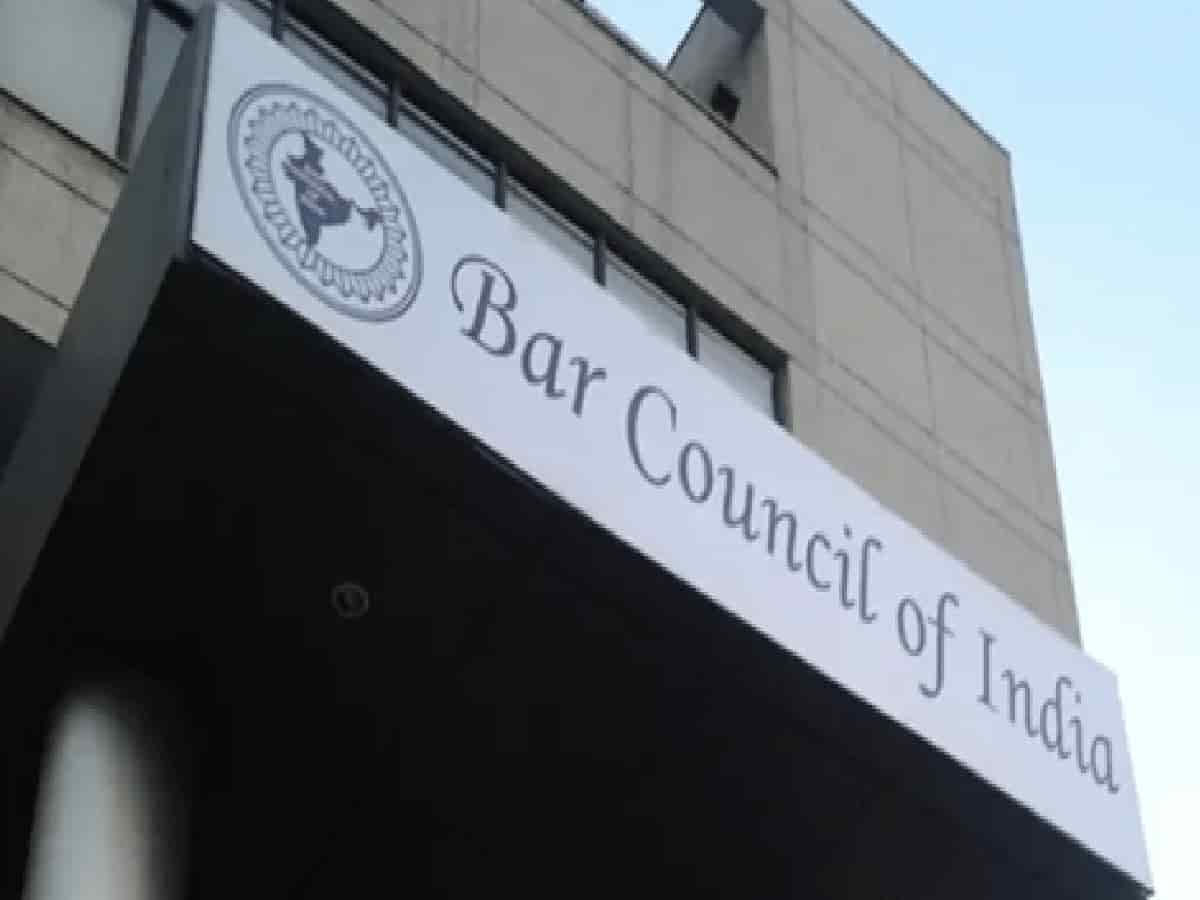
Bar Council of India (BCI), the country’s supreme body that controls lawyers, legal profession and legal education across the country, is in the news these days due to its tough decision and controversy. BCI has become the center of discussion by taking direct action following the students’ protest over the convocation ceremony of the prestigious NALSAR University of Hyderabad and the Chief Justice of India (CJI). Let us know what the Council of India is, how it is formed, what are its rights and why this institution has suddenly come into discussion.
What is Bar Council of India (BCI) and how is it formed?
The Bar Council of India is the apex regulatory body for lawyers, legal education and legal profession in India. It is formed and structured primarily under the provisions of the ‘Advocates Act, 1961’. The members of BCI are directly elected by the different State Bar Councils of the country. Every State Bar Council elects representatives to the BCI from among its members. Apart from this, the Attorney General and Solicitor General of the country are ex-officio members of this council.
When all the members of BCI are elected, then on the basis of majority among themselves, they elect one member as Chairman and one as Vice-Chairman. The tenure of both of them is for two years, after which there is a process of re-election. Historically, during the British period, there was a regulation system under the High Courts, but later S.R. Based on the recommendations of the Das Committee (All India Bar Committee, 1951), Parliament passed the Advocates Act in 1961, which led to the formal formation of the modern BCI.
What are the main functions and powers of the Bar Council of India?
BCI has extensive legal authority over the country’s legal system and lawyers. Its main functions and rights include the following points:
-
Setting standards of legal education: The main work of BCI is to determine the standard of education in law colleges and universities across the country, what subjects should be included in the curriculum and recognition of law degrees.
-
Registration of Lawyers: It regulates the enrollment of lawyers and monitors the functioning of State Bar Councils in the country as well as makes rules at the all-level.
-
Code of Business Ethics and Conduct: This body has the authority to decide the rules and conduct of lawyers to maintain dignity and discipline in the courts.
-
Disciplinary Action: If a lawyer commits a serious violation of the rules of his profession or is found to be involved in misconduct, the BCI has full power to suspend or cancel his practicing license. Apart from this, it also operates various schemes for the welfare of lawyers.
Why did BCI come into limelight recently due to NALSAR University controversy?
The main reason why BCI has come into limelight in recent times is the ideological difference between the students and the administration of the prestigious NALSAR University of Law (NALSAR), Hyderabad. Chief Justice of India (CJI) Surya Kant was invited to attend the upcoming convocation of the university as the chief guest. A section of university students issued an open letter protesting against this invitation.
The students argued that during the recent student protests at Jantar Mantar, they disagreed with the Supreme Court’s stand in matters related to police excesses, hence the organization should be sensitive about guest selection at such times. After this protest and letter, the matter gained momentum.
Strict order of BCI and subsequent amendment
During this entire incident, the Bar Council of India adopted an aggressive stance and issued a circular. BCI directed all State Bar Councils to put on hold the enrollment of students passing out of the 2026 batch of NALSAR as advocates until further orders. The Council argued that such campaigns affect the dignity of judicial institutions, which would amount to professional indiscipline. However, after widespread criticism and opposition to this arbitrary order, BCI revised its order within a few hours and later announced to stop the entire operation.