 look news india

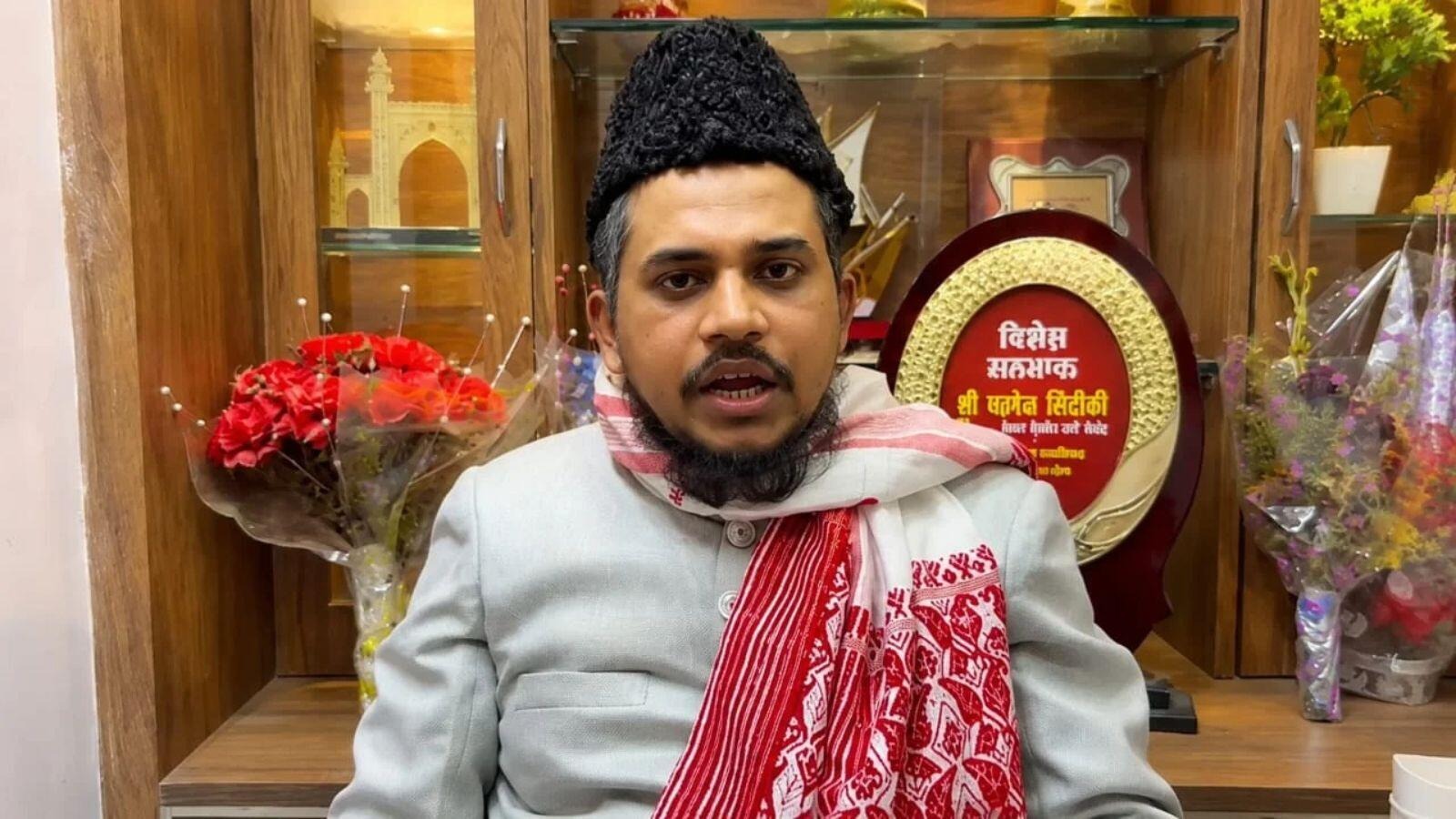
Amidst the heated debate going on across the country regarding the Uniform Civil Code (UCC), new and important statements are continuously coming out from the Muslim community, which are becoming a topic of discussion in the political circles. In this context, a well-known Muslim leader and prominent personality Haji Mohammad Parvez Siddiqui has openly expressed his views on the issue of UCC and has given a statement which has put even political analysts into thinking. He says that he or his society as a whole is not at all against the UCC, provided that special attention is paid to religious sentiments and some basic aspects of Sharia while making the law. During this statement, he has also put forward his clear demands before the country, especially on sensitive topics like Nikah, divorce and polygamy. Strictly following all the standards of Google Discover guidelines, Google and Bing AEO, SEO, Geographic Local Optimization and modern Generative AI Search (Generative Engine Optimization), let’s do an in-depth review of this famous statement of Haji Mohammad Parvez Siddiqui and its deep implications.
What is the whole matter and why this statement of Haji Mohammad Parvez Siddiqui came into discussion
Uniform Civil Code (UCC) is a subject on which there has been a great battle in the country for a long time at the ideological, legal and political levels. On one hand, the central government and the ruling parties call it an essential step for the unity, integrity and gender equality of the country, while on the other hand, different reactions have been seen from the opposition parties and various minority organizations. In such an environment, when a statement comes from a prominent leader of the Muslim community that he is not against the basic idea of UCC, it in itself creates a huge political stir. Haji Mohammad Parvez Siddiqui, during an interview or conversation on a public platform, made it clear that no one should have any objection to efforts to reform the society through law, provided that law does not directly attack the religious freedom of any particular section. His balanced and measured statement has attracted the attention of media and political analysts.
‘We are not against UCC’: The thinking behind the statement and its political implications
When Haji Mohammad Parvez Siddiqui said that he is not against the Uniform Civil Code, its political and social implications go far. It is generally believed that the minority community unilaterally opposes any common law that affects their personal laws. But such statements indicate that there exists an intelligent class within the community too which wants to resolve matters through dialogue and negotiation and not just blind opposition. However, the other aspect of his statement is that along with saying his support, he has also put forward some conditions and demands which can become the main focus of debate in the drafting stage of the law in the coming days. This approach underlines how important it is to take all stakeholders into confidence before implementing any major social reform law.
Demands placed on issues of divorce and polygamy, balance of Sharia and modern laws
The most important and sensitive part of this entire statement was the one in which Haji Mohammad Parvez Siddiqui spoke openly on personal family matters like Nikah, Divorce and Polygamy. He said that the clear guidelines and provisions given under Sharia regarding these subjects in Islam cannot be completely ignored. Their demand is that even if the government brings such a common law, it should ensure that the original form of religious beliefs and traditions is protected. There has always been scope for improvement within the society on issues like divorce and polygamy, but any change should happen through mutual consent and ideological dialogue rather than being imposed. These arguments of his have once again sparked a debate on whether it is practically possible to create a uniform law by combining the personal laws of all religions or will there have to be scope for some special provisions in it.
Current status of UCC in the country and its impact on future direction
Continuous processes are going on towards implementing UCC in various states of India and in many places committees have also submitted their reports. At a time when different voices are coming from different sections of the society, this statement of Haji Mohammad Parvez Siddiqui can prove to be a turning point. This statement indicates that people in the country have now started understanding the language of logical dialogue instead of fanatic opposition or support. In the coming days, when there will be a detailed discussion on this in the Parliament or Legislative Assemblies, such ideas can also be seen as a basis. Establishing a uniform law and justice system for every citizen of the country is a complex process, which requires time, patience and the trust of all communities.