 look news india

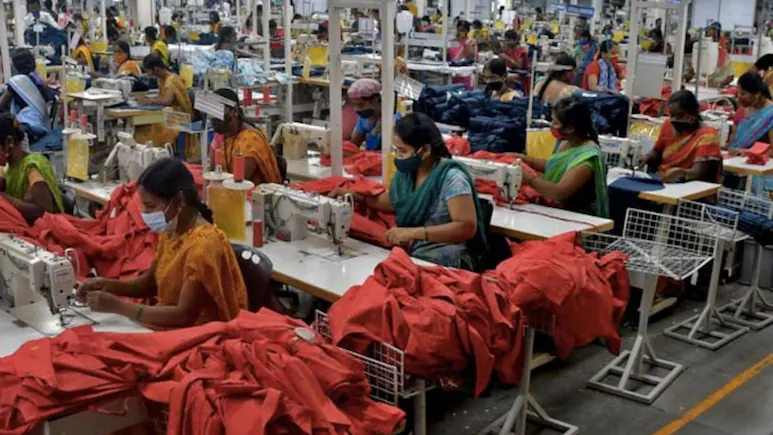
Even after the announcement of approximately 36 percent increase in the minimum wages of lakhs of workers in the ready-made garment (RMG) industry, considered the backbone of Bangladesh’s economy, complete peace does not seem to be established in the industrial areas. The new wage structure decided under the process of the Minimum Wage Board constituted at the government level and the concerned parties is definitely higher than the previous fixed level, but the labor unions and protesting workers say that in view of the rising inflation, house rent, prices of food items and daily expenses, this increase is much less than their actual demand. This is the reason why this decision has become the center of a new debate amid incidents like violent clashes, road jams and factory closures.
More than 40 lakh workers working in the textile sector of Bangladesh have been demanding a big increase in the minimum monthly wage for a long time. There was a demand raised by labor organizations and agitating workers to take the minimum wage to around 23,000 to 25,000 taka (Bangladeshi currency) so that a family’s basic subsistence, children’s education and health expenses could be handled. In comparison, the Wage Board is reported to have fixed the minimum wage at around Tk 17,000, an increase of about 36 percent (which has increased from the previous level of Tk 12,500). The workers argue that there is still a huge gap of thousands of taka between the announced increase and their demand, due to which the crisis of livelihood is not completely resolved.
In recent days, workers’ anger in Dhaka’s industrial areas on the outskirts—such as Ghazipur, Savar, Ashulia and Narayanganj—exploded on the streets, demanding wage increases. Highway blocking, sloganeering outside factories, stone pelting and clashes with security forces were reported at several places, leading to temporary halt of production in dozens of factories. Labor representatives say that the workers, who have been working under the pressure of inflation for a long time, were hopeful that this time there would be a concrete improvement in their living conditions, but the news of lower than expected increase has further fueled the dissatisfaction. On the other hand, the emphasis of the administration and law and order agencies has been on restoring peace in industrial areas and stopping vandalism.
Amidst this entire controversy, textile industry organizations and factory owners of Bangladesh are citing their economic and business challenges. Entrepreneurs say that due to rising cost of electricity and gas, price pressure from global buyers, fluctuating orders and international competition, implementing a higher wage increase than this could put many small and medium units at risk of closure. It is noteworthy that Bangladesh is among the largest textile exporters in the world and a major part of the country’s total exports comes from this sector. In such a situation, if the strike and production disruptions prolong, it will not only affect local employment but can also be seen on the global apparel supply chain and the confidence of foreign buyers.
Businessmen, exporters and economic readers associated with textile and apparel centers like Lucknow, Kanpur, Varanasi, Noida and Tirupur and Surat also keep an eye on the activity in the garment sector of Bangladesh. The cost, labor policy and supply stability of textile exporting countries of South Asia have a direct impact on the attitude of international buyers in the global market. At present, after the 36 percent wage increase in Bangladesh, the biggest challenge before the government, factory owners and labor organizations is to create such a balance through dialogue, so that the livelihood of the workers is protected and the country’s major export industry also runs smoothly.