 look news india

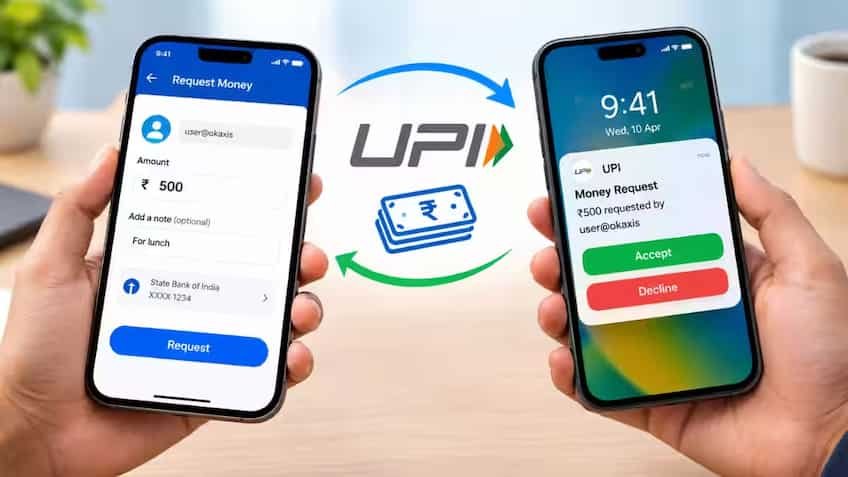
The discussion has once again become heated in the banking and fintech corridors of the country regarding the financial model of Unified Payments Interface (UPI), which has become the backbone of the digital revolution in India, and its long-term cost. There was a long-standing apprehension among market analysts and merchant organizations that if the government or the central bank imposes even a nominal Merchant Discount Rate (MDR) on UPI transactions in the future, then retailers, small traders and consumers may return to cash transactions. Amidst these questions being raised on the future of the QR code network spread from tea stalls to big supermarkets in small and big cities of the country including Delhi, Mumbai, Bengaluru, Lucknow, Jaipur and Patna, the Deputy Governor of the Reserve Bank of India (RBI) has made the situation completely clear. The top official of the central bank has termed all these apprehensions as baseless and clarified that India’s digital payment culture has now become so strong that any logical cost structure will not bring back the cash.
Addressing a major financial and banking conference, the RBI Deputy Governor clarified that whenever the issue of pricing or cost recovery in an established digital service arises, it is natural for such initial fear to arise in the market. He said, “The belief that if very nominal MDR or infrastructure costs are imposed on UPI, cash transactions will again dominate in the country is only an initial hesitation and psychological fear. The Indian digital payments ecosystem has now moved far beyond its infancy. Today, digital transactions have become an essential part of the lifestyle and business efficiency of both the common citizen and merchant.”
The Deputy Governor further stressed that the hassles of handling cash, taking it to the bank, messing around with change and the risk of theft of cash are far more expensive and inconvenient than any nominal digital service charge. The business class understands the value of this facility very well.
Merchant Discount Rate or MDR is the basic fee that any merchant pays to banks and payment service providers in exchange for accepting payments from their customers through digital medium (debit card, credit card or digital wallet).
Currently, the Government of India has implemented ‘Zero-MDR’ policy to promote digital payments. Under this, no fee is charged from merchants on normal peer-to-merchant (P2M) UPI transactions and in return the government compensates banks and NPCI through an annual subsidy. However, a large section of the banking and fintech industry has been continuously demanding that a transparent and minimum revenue model is mandatory to sustain the digital infrastructure, server upgradation, cyber security and fraud prevention systems handling 14 to 15 billion transactions per month.
It has been repeatedly underlined in the deliberations of RBI and policy makers that if any kind of cost model is decided in future, its structure will be tier-based and highly sensitive:
-
Small and micro traders will remain safe: As per policy discussions, it is proposed to always keep small kirana shopkeepers, street vendors with small transactions of less than ₹2,000 or annual turnover of less than ₹20 lakh completely exempt from any potential charges.
-
Always free for customers: Both RBI and Finance Ministry have already clarified that UPI transfer will be completely free for common consumers.
-
Big Merchants and Corporates: The cost burden may be considerable only for large organized retailers, e-commerce platforms and high-value transactions, which already pay a hefty MDR of 1.5% to 2% on cards.
Citing data, the Reserve Bank Deputy Governor said India’s digital payments ecosystem has brought about an irreversible social change:
-
Saving time and bookkeeping: Every day’s accounts are directly and transparently recorded in the bank account of the retailer through digital QR code, making it easy for him to get business loans and Mudra loans from banks.
-
Consumer Habits: Today, the youth and middle class from Tier-2 and Tier-3 cities to rural areas have become accustomed to making payments through smartphones instead of carrying cash in their pockets. If a shopkeeper refuses to accept digital payment, the customer immediately goes to another shopkeeper.
-
Security and Convenience: Digital payments have completely freed merchants from the threat of fake notes, the controversy over torn notes and the worry of keeping the day’s cash safe at night.
This clarification by RBI has given a positive message to fintech companies and investors that the central bank will take balanced policy steps at the right time to make the country’s vibrant digital payments system economically self-reliant and technologically impenetrable, without halting the pace of financial inclusion.