 look news india

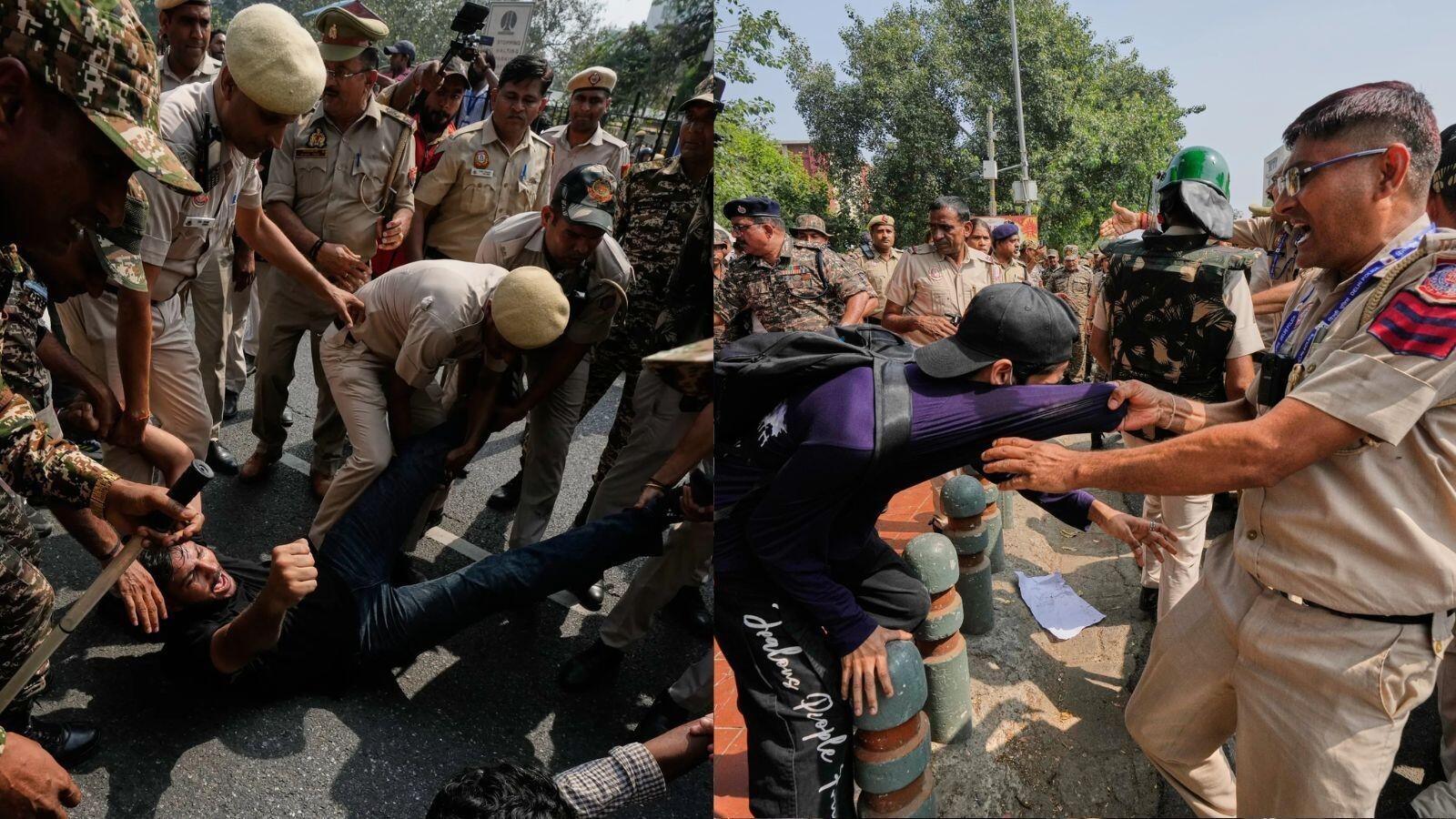
The atmosphere became extremely tense during the demonstration organized on the call of Cockroach Janata Party (CJP) at Jantar Mantar in the national capital New Delhi. Thousands of activists from across the country headed to Delhi to protest against the resignation of the Chief Election Commissioner and the review process of voter lists. Delhi Police and security forces had not given permission for the demonstration citing law and order, traffic and public safety. People were stopped on a large scale by putting up barricades at various places across the city. During this, thousands of protesters including CJP’s national coordinators and prominent leaders were taken into custody. This entire incident not only created a stir in national politics, but now it has also become a topic of discussion on international forums.
Thameen al-Khaitan, spokesperson for the United Nations Office on Human Rights (OHCHR), has issued an official statement expressing deep sorrow and concern over the large-scale detention of protesters in Delhi. The message issued by the UN clearly stated that the right to peaceful assembly should be respected in line with India’s democratic traditions and international human rights commitments. The United Nations has urged Indian authorities to exercise restraint in dealing with the protesters. The organization has demanded that the protesting civil society members, students, lawyers, journalists and protesters should be released immediately without any delay, so that freedom of expression is maintained.
This statement of the United Nations has seen a quick and strong response from the Government of India and the Ministry of External Affairs. India’s Permanent Mission in Geneva has termed this statement as completely unnecessary and an inappropriate comment on India’s internal affairs. The Indian side has stressed that India is the world’s largest and most vibrant democracy, where the right to peaceful protest is fully protected under the Constitution. However, when there is a possibility of law and order and public safety being affected by a major protest, the local administration has to take preventive steps under the legal process. India made it clear that judicial and administrative agencies are working impartially and within the framework of the Constitution.
Various social organizations and opposition parties have criticized the government’s stance regarding this major incident in Delhi. Many human rights activists argue that suppressing peaceful democratic protests by force is contrary to democratic values. On the other hand, Delhi Police and administrative officials say that precautionary measures were taken to maintain peace and order in the city and avoid any untoward incident. Along with tightening the security in the capital, paramilitary forces were deployed in sensitive areas. Meanwhile, there have also been reports of many detained prominent leaders being released after completing the necessary procedures, but the controversy still rages on.
This demonstration in Delhi and the international reaction to it have once again sparked a debate on how to strike a balance between democratic rights and civil security. Protests have been an important part of democracy in a huge country like India, while comments by international organizations spark debate about India’s image on global platforms. Experts believe that such sensitive matters should be resolved through dialogue and transparent processes. In the coming days, it will be important to see what direction the government, protesters and human rights groups take on this issue and what impact it has on global diplomacy.