 look news india

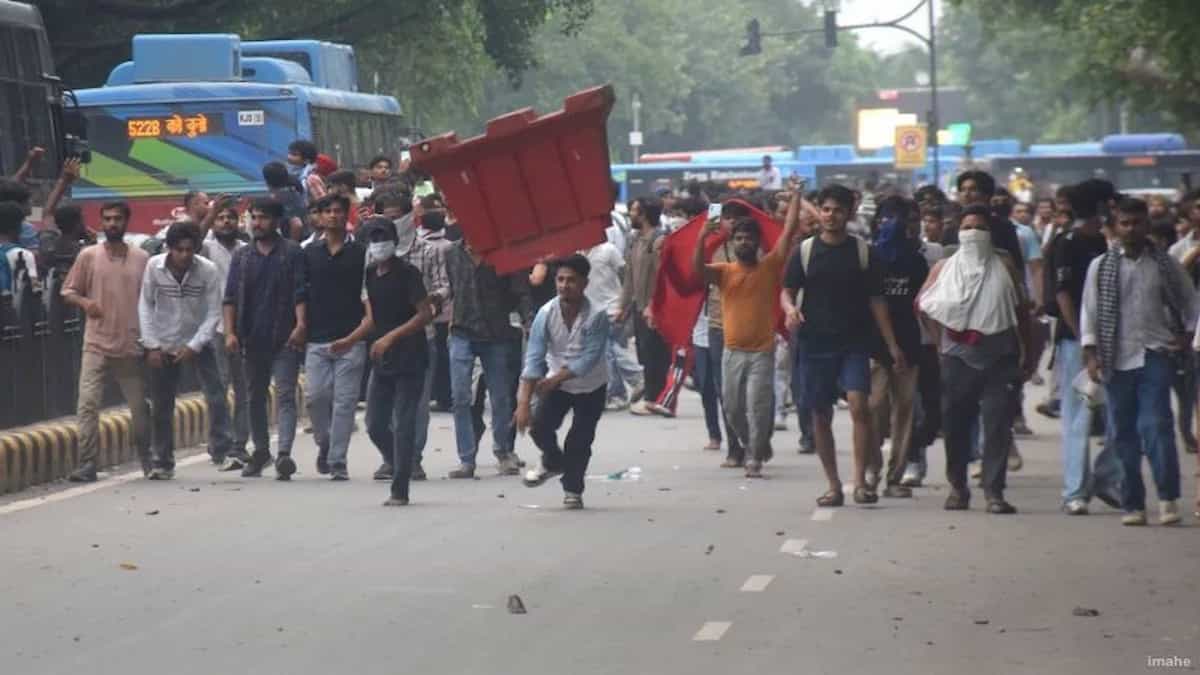
During the recent protests and political movements against the Chief Justice (CJP), a surprising technical aspect has come to light which has shocked the police and security agencies. Generally, to control every modern demonstration or crowd, the police first monitors the internet and mobile data or uses communication jammers. But this time’s protest proved to be completely different. Investigation has revealed that this intelligence technology of CJP Protest used by the protesters has reached the digital networks of India and other Asian countries not from Pakistan, but through Iran and Hong Kong. The biggest surprise is that this technology works very effectively even without any SIM card and internet connection, which is proving to be impossible for today’s modern police and cyber cells to trace.
What is this mysterious technology and how does it work?
In this era of modern communication where everyone is dependent on smartphones, 4G, 5G and Wi-Fi, this alternative technology has put the security system into concern. According to experts, this technology is actually based on ‘Mesh Networking’ and local peer-to-peer (P2P) communication apps. Through this, devices are directly connected to each other through Bluetooth or radio frequency. It neither requires a SIM card of any telecom operator nor an active internet connection. Messages move from one phone to another like a chain, due to which the police or intelligence agencies completely fail to find out from where and who has actually generated this message.
What is its connection with Iran and Hong Kong?
Initial investigations by security agencies have revealed that the use of such non-internet communication tools and technology was first seen in countries with strict restrictions and digital censorship such as Iran, where the public used it extensively for protests after the government shut down the internet. Apart from this, during the political movements in Hong Kong, similar decentralized communication tools were used extensively to avoid police attention. Now the same technology developed on international lines is being adopted to co-ordinate protests at other places through various platforms, due to which traditional police surveillance is completely failing.
Why has it become a big challenge for police and intelligence agencies?
Cyber security experts believe that such technology has emerged as a big challenge for law enforcement agencies. Traditional policing and cyber surveillance have always relied on call detail records (CDR), IP addresses and internet traffic. But when a protest shifts completely offline, SIM-free and on encrypted mesh networks, the police are left with no means of tracing the digital footprints of criminals or protesters. This is the reason why the strategy of protests this time has surprised the security forces and now the agencies are busy finding counter-measures to deal with this new digital breach.