 look news india

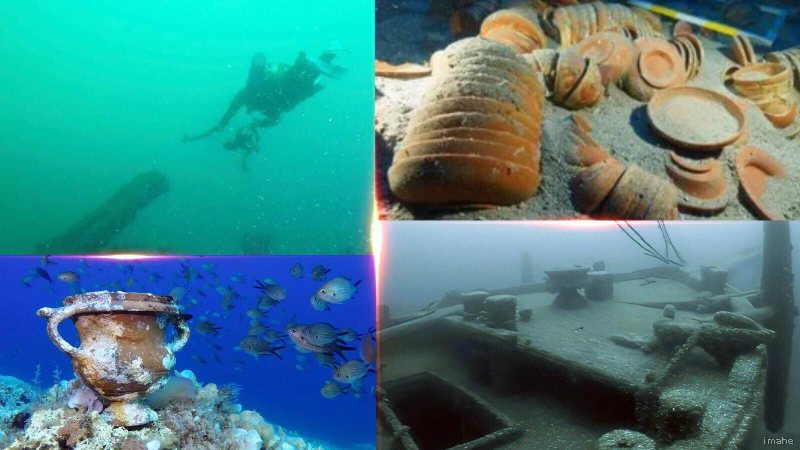
During critical underwater archeology research, such a mysterious and surprising treasure has come out from the womb of the sea, which has forced the entire scientific world to think. Marine researchers have found the wreck of a merchant ship about 2300 years old in the Adriatic Sea near Gnjilna Bay of Croatia’s Vis Island. The discovery of this ancient Hellenistic Shipwreck has made it clear what the lifestyle and food habits of sailors used to be like when they set out on long sea voyages more than 23 centuries ago.
Underwater archaeologists and scientists are completely surprised to see the kind of pottery, tools and personal belongings of sailors found intact under water in this archaeological excavation. When a team of divers and researchers from the Croatian Conservation Institute removed centuries of dust from the sea sediments, they revealed a clear picture of a prosperous trading network dating back to the 4th century BCE.
When the team of researchers descended several meters deep into the sea, they initially saw only a few fragments of old jars. But as the surface was cleaned, the entire kitchen and provisions of ancient times were found lying there.
Archaeologists have especially found large clay containers called Corinthian Type B Amphorae from this wreck. In ancient times, these huge vessels were used to transport wine and olive oil from one country to another. Along with this, black-glazed ceramic vessels i.e. black glazed fine ceramic bowls, shallow plates and drinking cups used by sailors in daily life have also been found. These utensils are of such premium and high quality that despite being under the pressure of salt and sand under water for 2300 years, many of them are still perfectly safe.
Sailors used small kerosene lamps (oil lamps) to illuminate the ship in the dark of night. A small oil lamp made of clay has also been found from the wreck, which is evidence of how sailors used to make arrangements for lighting on sea expeditions during night time.
Usually, the wood of such old ships gets completely destroyed by rotting under water, but the biggest miracle in this discovery is the remaining structure of the ship. Through 3D documentation technology, researchers found that the approximately 6 meter long wooden hull of the bottom of the ship is still present in safe condition buried under the sand of the sea.
Along with this remains of the ship, archaeologists have also found a rare copper coin of Ancient Pharos, which is said to be from the 4th century BC. This single coin has served as a major link for historians in understanding the economic transactions that took place between the sea routes, trading markets and islands of that period. Apart from this, animal bones have also been found from the wreckage of the ship. These bones lead to speculation that sailors carried live animals with them to supply fresh meat on their long journeys, or that they consumed dried meat they hunted.
This archaeological site is an invaluable document of the ancient Greek (Hellenistic Period) and Mediterranean trading culture. The island of Vis (known in ancient times as ‘Issa’) was famous throughout the Adriatic Sea region for the production and trade of its fine wines.
Archaeologists believe that the ship was traveling between Greece, Italy and the Dalmatian coast carrying cargo. Due to a sudden severe storm or collision with a rock, this ship might have fallen victim to an accident and sank into the depths of the sea. Today, after 2300 years, when this wreck has come before the world, it has not only returned the pottery, but has also opened such pages of ancient human civilization, their courage and maritime technology which till now were not properly recorded even in the history books. Modern scientists are now doing radiocarbon dating and chemical testing of each piece of this debris so that an accurate description of the last moments of this trading voyage in BC can be prepared.