 look news india

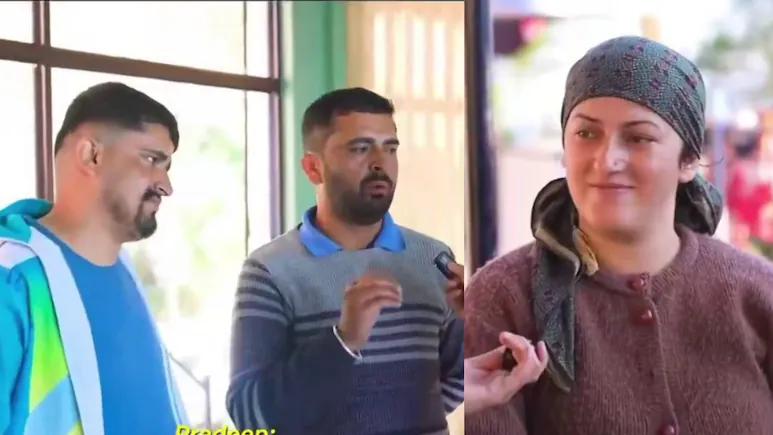
Nowadays, a lot of discussion is seen on social media and digital platforms about those traditional and unique marriage stories, which bring to the fore a social background completely different from the modern urban lifestyle. Recently, this topic has once again come into the center of discussion after two real brothers married the same girl and when asked the reason by a YouTuber who visited their house, answers like “It is brotherhood” came out. According to reports and viral discussions, when outsiders or content creators raise questions about the age-old traditional system of polyandrous marriage in the Hati community of Himachal Pradesh and the Giripar area of Sirmaur district—which is locally linked to ‘Jodidar Pratha’ or traditional customs—the family and the people concerned talk about brotherhood, mutual understanding and adherence to tradition.
When a news or video related to a unique or traditional marriage arrangement goes viral on the internet, YouTubers and digital journalists often reach out to homes or villages to understand the ground reality, family mindset and everyday life. In the same sequence, when the reason was asked, an attempt was made to convey the message through words like “it is brotherhood” that mutual unity among brothers, shared responsibility and the feeling of keeping the family united are seen to be linked to this tradition. In some high-profile cases, it was also revealed that the members involved expressed their consent, transparency and respect for tradition, while curiosity, surprise and various types of comments are seen on this topic on social media.
According to sociologists and local experts, polyandry (also known as jodidar system) in some hilly areas of Himachal Pradesh—particularly the Giripar region of Sirmaur and the Hati community—has historically been driven by practical and economic reasons. In hilly geography, such a system of joint family was considered useful to overcome limited cultivable land, difficult lifestyle and to avoid division of family property and land into pieces. At the same time, it also got social acceptance for the purpose of preventing differences or separation between brothers and to support each other in times of crisis, although with time, due to education, employment and modern changes, the nature and prevalence of such marriages has become less and more a topic of discussion than before.
In today’s era, any regional or traditional incident can be presented to the entire country and the world within a few hours through camera. On one hand, digital platforms provide an opportunity to understand distant cultures and lesser-heard traditions, while on the other hand, clips made without knowing the full social and historical context sometimes give rise to incomplete understanding or heated debate. Analysts believe that when dealing with such sensitive and unique social topics, it is important to have a balanced understanding of facts, consent, legal aspects and local cultural background.
Readers from Uttar Pradesh and the entire Hindi speaking region including Lucknow, Kanpur, Varanasi, Prayagraj and Gorakhpur are always interested in the unique social traditions and viral news from different parts of India. Different from the plains and traditional family structure of North India, such practices of the hilly areas show the readers a new picture of the country’s cultural diversity and changing social equations. This discussion shows that the dialogue between tradition, modernity, individual choice and values like ‘brotherhood’ remains a lively and debatable topic in Indian society even today.