 look news india

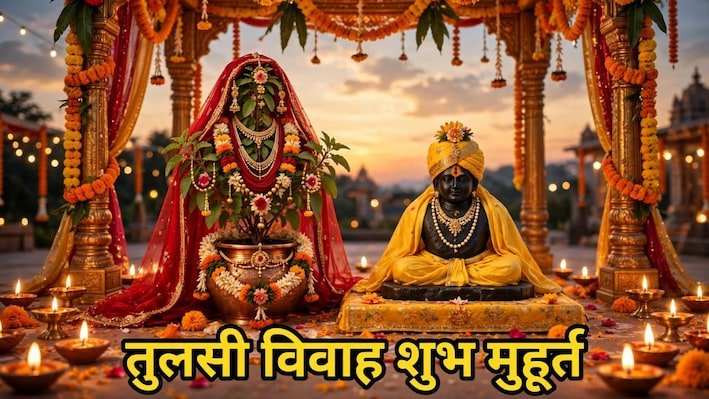
New Delhi: ‘Tulsi Vivah’, which is considered a symbol of the beginning of very sacred and auspicious functions in Sanatan Dharma, is being celebrated with devotion and gaiety across the country today i.e. on Saturday, 21 November 2026. On Devuthani Ekadashi, the next day after waking up from four months of Yoga Nidra, on the Dwadashi date of Shukla Paksha of Kartik month, the formal marriage of Mata Tulsi and Shaligram ji, the form of Lord Vishnu, is performed. According to religious beliefs, in the house where Tulsi-Shaligram marriage takes place, there resides happiness, prosperity, good fortune and sweetness in married life. The special thing is that this year, only 27 minutes of twilight time is becoming the best auspicious time for solemnizing Tulsi Vivah in the evening. In such a situation, devotees should take special care of time and complete the puja preparations well in advance.
According to the Vedic calendar, the Dwadashi tithi of Kartik Shukla Paksha has started today on November 21 at 6.31 am and will end tomorrow on November 22 at 4.56 am. Due to the coincidence of Udaya Tithi and Pradosh Kaal, the festival of Tulsi Vivah is being celebrated today itself. In the scriptures, ‘twilight time’ is considered best for Tulsi marriage in the evening i.e. at the time of sunset. According to Panchang calculations, this evening the twilight time will be from 5.25 pm to 5.52 pm. Thus, this total period of 27 minutes is very fruitful for the main rituals of marriage. Apart from this, during the day, Abhijeet Muhurta will be valid from 11:46 am to 12:28 pm, while the broad time of Pradosh Kaal will be valid from 5:25 pm to 7:49 pm.
For Tulsi Vivah, collect sugarcane, banana leaves, red chunari, sixteen makeup items (sindoor, bindi, bangles, mehndi, nettle), lump of turmeric, Gopi sandalwood, roli, mauli (Kalava), Akshat, black sesame, incense, lamp, camphor, flowers, garland and yellow cloth at the place of worship. If Shaligram rock is not available in the house, then the idol or picture of Lord Vishnu or Shri Krishna can also be kept. It is considered extremely auspicious to offer seasonal fruits like amla, water chestnut, plum, sugarcane, banana, sweet potato, guava and coconut along with home-made kheer, halwa and panchamrit for enjoyment.
The rituals of Tulsi Vivah are performed just like a traditional Hindu wedding. First of all, clean the courtyard, terrace or place of worship of the house, sprinkle Ganga water and establish a post there. Place the Tulsi pot on the platform by spreading red or yellow cloth and prepare a beautiful wedding mandap by planting sugarcanes around the pot. Apply turmeric paste on the pavilion and pot. After this, install Lord Shaligram on a small pedestal on the right side of Tulsi. After bathing both of them, decorate them like a bride by offering yellow clothes, flower garland and red chunri and wedding accessories to Tulsi Mata. After lighting the lamp of pure ghee, chant the worship mantras “Om Namo Bhagwate Vasudevay” and “Om Tulsyayi Namah”. During the main ceremony of the marriage, a male member of the family should take Lord Shaligram in his hands and circumambulate the Tulsi plant seven times. At the time of Parikrama, offer sesame or Akshat mixed with vermilion and at the end perform Aarti with camphor and offer Bhog.
According to religious scriptures, the couple who solemnise Tulsi marriage as per the rituals, attains great virtue like Kanyadaan and all the obstacles in married life are removed. However, it is mandatory to follow some special rules during the puja. On the day of Tulsi marriage, Tulsi leaves should not be plucked even by mistake; If Tulsi group is required for puja, then pluck it a day in advance and keep it. Apart from this, one should never use Akshat i.e. rice in the worship of Lord Shaligram, instead using black sesame seeds or turmeric mixed sesame seeds is considered as scriptural. After the puja is over, distribute Prasad among all the family members and receive blessings by donating to Brahmins or the needy as per your capacity.