 look news india

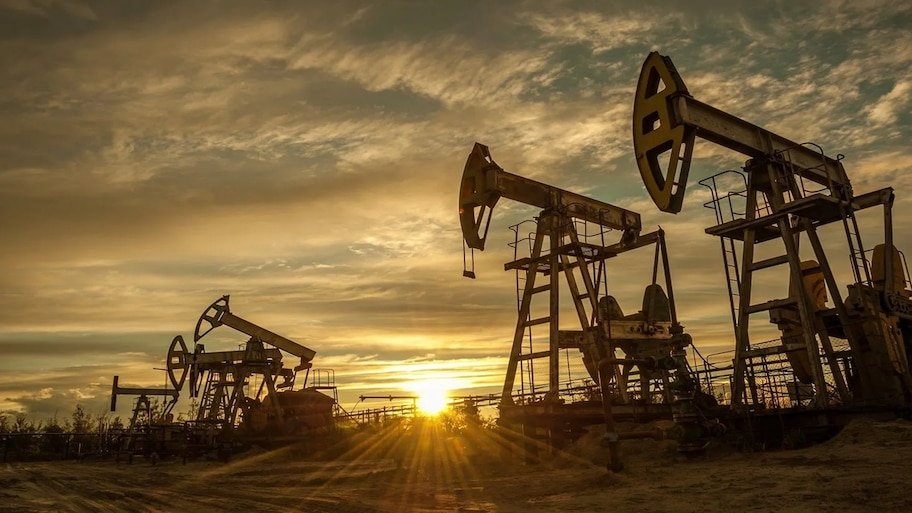
Amidst the deepening geopolitical tension in West Asia and the ongoing standoff between America and Iran, the global energy market is once again witnessing a major upswing. A huge surge in crude oil prices has been recorded in the international market after US President Donald Trump announced to use the most aggressive weapon of ‘dollar’ and ‘secondary sanctions’ to completely paralyze Iran’s economy and oil exports. global standard Brent Crude prices cross $93 per barrel has gone out, while American West Texas Intermediate (WTI) crude has also reached close to $ 86 per barrel.
‘Economic D-Day’: The harshest economic blockade ever against Iran
President Donald Trump has criticized these new punitive financial measures being imposed on Iran. ‘Economic D-Day’ Has been named. Under this new policy prepared under the leadership of US Treasury Secretary Scott Besant, Washington has not only cracked down on Iran’s oil exports, but has also issued a stern warning to all those countries, financial institutions and refineries of the world who will continue any kind of business or financial transactions with Iran.
The US administration has made it clear that if any foreign bank or company buys Iranian oil or gives it a financial lifeline, it will be completely blacklisted from the US banking system and dollar clearing network. The effect of this strict warning has been that many Gulf countries including the United Arab Emirates (UAE) have suspended many of their financial transactions with Iran. At the same time, according to Iranian Central Bank officials, due to the naval blockade and financial restrictions, the oil flow from the country is almost on the verge of stopping.
Serious crisis looms on Hormuz Strait and supply chain
About 20% of the world’s total oil consumption Strait of Hormuz Passes through the narrow sea route. The US blockade of Iran’s ports and the failure of negotiations have posed a serious risk to the movement of tankers through this strategic route.
According to recent reports from global financial institutions Goldman Sachs and JP Morgan, if the disruption in the movement of ships in the Strait of Hormuz continues for the next few months, Brent crude prices could reach $ 114 to $ 120 per barrel. Along with this, a huge decline of about 3.5 million barrels per day is being recorded in the global oil inventories since March, which has further increased the concerns about the supply in the oil market.
China’s strategy and pressure on India’s energy security
The largest buyer of Iranian crude oil China Used to be. Due to fear of US sanctions and disruptions in delivery, Chinese refineries have now accelerated the purchase of discounted Russian crude.
Due to huge purchases of Russian oil by China, the availability of cheap Russian crude oil for India is becoming limited. India imports more than 85% of its domestic crude oil needs. If crude oil prices remain at the level of $90-95, there will be pressure on India’s current account deficit (CAD), trade deficit and import bill, which may pose new challenges on the domestic fuel prices and inflation front.
The eyes of the international market are now focused on what stance China, India and European countries take on these new rules of the US Treasury Department and whether Tehran responds to this unprecedented economic pressure through diplomacy or by increasing military tension.