 look news india

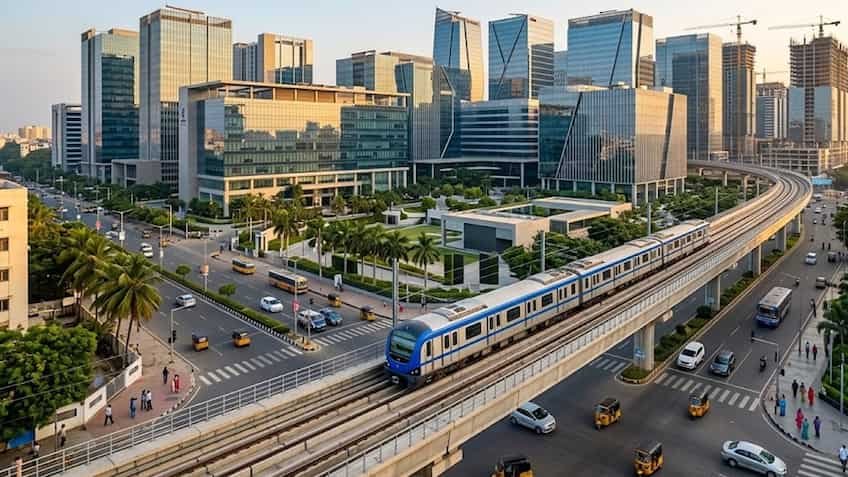
The Indian real estate market is witnessing a major and historic structural change. Compared to the country’s traditional eight metros (Mumbai, Delhi-NCR, Bengaluru, Hyderabad, Pune, Chennai, Kolkata and Ahmedabad), tier-2 cities are now offering much higher returns to home buyers and investors. According to the latest data from ‘India’s Next Real Estate Markets’, a joint report by Confederation of Indian Industry (CII) and Knight Frank India, residential property prices in 11 emerging tier-2 cities of the country have registered a massive growth of an average of 63 percent in the last five years.
The biggest reason for this tremendous boom is the rapid expansion of metro rail network, new expressways, ring roads and international airports in these cities. Now, even in Tier-II cities, the most decisive factor in determining the price of a house or plot has become the distance the area is from the nearest metro station or major transit corridor.
Comparative data from the report shows that while property prices in the country’s top eight metros grew by 42 per cent between 2021 and 2026, 11 key tier-2 markets—Lucknow, Nagpur, Bhopal, Bhubaneswar, Chandigarh Tricity, Goa, Indore, Jaipur, Kochi, Visakhapatnam and Coimbatore—combined with bumper capital returns of 63 per cent. (Capital Appreciation) is given.
Taking a long-term perspective, these emerging markets recorded a compound annual growth rate (CAGR) of 8 percent over the 10 years from 2016 to 2026, which is exactly double the 4 percent average growth rate of the top 8 cities. Real estate experts say that property prices in metros have already reached saturation point, while in tier-II cities, there is immense scope for rapid expansion in demand and prices due to strong infrastructure.
Metro connectivity in tier-2 cities has changed the definition of commuting and property valuation:
-
Premium radius of 0 to 1 kilometer: The fastest growth has been seen in residential and commercial properties within 1 km of the active and proposed phases of Lucknow Metro and Nagpur Metro. Working professionals are willing to pay an additional premium of 15 to 25 percent for such projects due to avoiding daily traffic jams and easy public transportation.
-
Impact of last-mile connectivity: The demand for townships and gated communities in suburbs located within a radius of 2 to 3 kilometers from metro stations has increased rapidly. E-rickshaws, feeder bus services and shared mobility have also increased the rental yield in these areas by 20 to 30 percent.
-
Performance of Lucknow and Nagpur: In Lucknow, property rates in areas near Kanpur Road, Hazratganj, Munshi Pulia Corridor and the expanding Charbagh-Vasant Kunj route have reached ₹6,500 to ₹8,500 per square foot. Whereas in Nagpur, due to Metro Phase-2 and MIHAN corridor, property rates have strengthened in the range of ₹ 4,500 to ₹ 6,500 per square foot.
According to the report, Tier-2 cities no longer just mean ‘affordable property’, but there is a huge difference in development rates across cities:
-
Goa: The market remains the most expensive due to demand for leisure resorts and luxury villas, with average rates ranging from ₹11,500 to ₹13,500 per sq ft.
-
Chandigarh Tricity: With the expansion of Mohali and New Chandigarh, prices here range between ₹7,500 to ₹10,500 per square foot.
-
Jaipur and Kochi: In both cities, prices are around ₹7,000 to ₹9,000 per square foot due to IT parks and metro corridors.
-
Bhubaneswar and Lucknow: Being an administrative, cultural and commercial hub, residential properties here are available in the range of ₹6,500 to ₹8,550 per square foot.
-
Coimbatore and Indore: Due to industrial and educational expansion, rates have reached ₹5,500 to ₹8,000 per square foot.
-
Nagpur and Visakhapatnam: These markets are showing strong growth in the affordable range of ₹4,500 to ₹6,500 per sq ft due to logistics and port connectivity.
This boom in tier-2 cities is not limited to buying and selling of houses only. Demand for commercial space has also increased with corporate companies adopting hybrid work models, opening Global Capability Centers (GCCs) and regional offices in tier-II cities.
Six key markets—Lucknow, Jaipur, Nagpur, Indore, Coimbatore and Bhubaneswar—together recorded almost half (5.3 million sq ft) of the total warehousing leasing transactions in tier-2 cities. Apart from this, 60 percent of the stock of organized retail trade (malls and shopping centers) is also concentrated in these cities, thereby creating new opportunities for the local economy and employment.
55 per cent of the capital expenditure (Capex) in the central government budget is being spent on infrastructure development and public-private partnership (PPP) projects worth ₹17 lakh crore are in the pipeline. Due to the rapid pace of urbanization, India’s urban population is expected to reach 74 crore by 2050. In such a situation, for investors who want to avoid the huge budgets and low rental yield of 2-3 percent in metros, the emerging corridors of Tier-II cities with metro connectivity are proving to be the most attractive investment option in terms of annual capital appreciation of 8 to 12 percent and better rental income.