 look news india

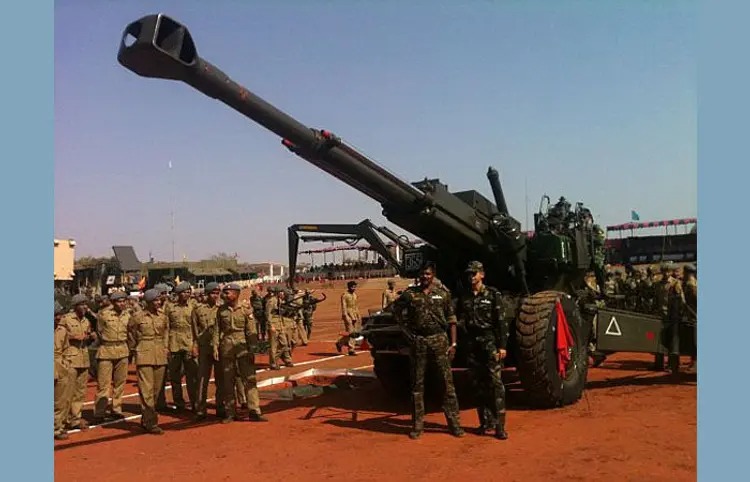
76th Republic Day Special: Artillery regiment is an important part of the Indian Army. The regiment began with 2.5-inch artillery. Today it has the largest number of weapons in the world. Artillery regiment is a combat branch of the Indian Army.
In an artillery regiment, a soldier who helps fire a gun is known as a gunner. The Artillery Regiment of the Indian Army has the power to destroy the enemy army. Artillery has played an important role in military history for decades. This artillery is also called ‘God of War’. It started as the Royal Indian Artillery of the British Indian Army. After independence it became known as the Artillery Regiment of the Indian Army.
Gunners Day is celebrated as
The Artillery Regiment of the Indian Army was raised on 28 September 1827. At that time the Bombay Foot Artillery was raised as the eighth company of the gunner battalion. This battalion was for gunmen. The raising day of this unit as part of the 1st Artillery Regiment of the Indian Army is celebrated as Gunnard Day.
India was helpful in British rule
In 1668, the East India Company raised its two artillery companies in Bombay. Subsequently, similar artillery companies were formed during the second presidential period. This artillery was so important to the British army that the British did not include Indian soldiers in artillery. Therefore, Indian soldiers were kept as assistants in artillery. These Indian assistants who worked in artillery were called Topchi.
The battalion of gunners was never disbanded
There was a rebellion in Meerut on May 10, 1857. Many Indian soldiers of the Bengal Artillery joined the rebellion and the then three battalions of foot artillery were disbanded in 1862. Subsequently, all Indian artillery units were disbanded. Only artillery units of gunners existed. At that time they were used for running trains or for other purposes. One of them was the Gunners Battalion of 5 (Bombay) Mountain Battery, which later became an artillery regiment of the Royal Indian Army and later the Indian Army.
The Mughals are credited with the introduction of artillery in India.
As far as the use of artillery is concerned, the Mughal emperor Babur is credited with introducing artillery to India. At the Battle of Panipat in 1526, he decisively used gunpowder weapons and land artillery to defeat the much larger army of Ibrahim Lodi, ruler of the Delhi Sultanate. However, there is earlier evidence of cannon being used at the Battle of Adoni in 1368 and by King Mohammed Shah of Gujarat in the 15th century.
Artillery Regiment is the second largest branch of the Army.
Artillery regiments are the second largest branch of the Indian Army. Its function is to provide firepower to the army during ground operations. It is divided into two parts. The first part includes lethal weapons like missiles, rockets, mortars, cannons, guns etc. It also has drones, radar and surveillance systems.
These soldiers are to be included in the regiment
There are many traditions associated with the many guns of artillery units. On every Dussehra, all the soldiers worship their cannon with full respect. Many units also tie Raksha Sutra on the cannon on the occasion of Raksha Bandhan. This regiment has given the Chief of Army Staff to the Indian Army. General PP Kumar Mangalav, General OP Malhotra, General S.F. Rodrigue, General S. Padma Nawan, General Deepak Kapoor’s contribution has been significant. They included Sikhs, Jats, Dogras, Rajputs, Ahirs, Gorkhas, Marathas. South Indians also formed the basis of the units. Today most artillery regiments include gunners from North to South, East to West and Lakshadweep, Andaman and Nicobar of the country.
Honored with many bravery awards
The Artillery Regiment is not only the pride of the Indian Army but has also helped international armies. 17 Artillery Regiment was part of India’s peacekeeping force in Sri Lanka and occupied Jaffna. Congo has also been part of United Nations peacekeeping forces in Sierra Leone and Somalia. Today the Artillery Regiment has been awarded the Victoria Cross, one Ashok Chakra, seven Mahavir Chakras, 95 Vir Chakras, 12 Yudh Seva Medals, 77 Shaurya Chakras and 227 Sena Medals.