 look news india
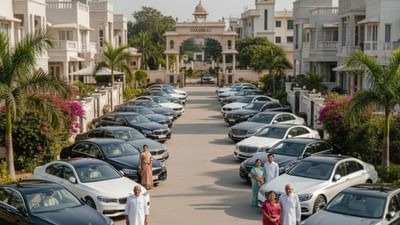
When we think of Indian villages, mud, broken roads and barren lands often come to mind. But this village in Gujarat breaks all these stereotypes. This village of Anand district is also known as “NRI village”. Here, not just money, but the feeling of people living all over the world towards their village is the biggest strength.
Most of the people live in these countries.
According to media reports, the story of Dharmaj begins in 1895 when two young men, Jotram Kashiram Patel and Chaturbhai Patel, went to Africa. Subsequently, Prabhudas Patel reached Manchester and became famous as “Manchesterwala”. Govindbhai Patel, also a religious man, went to Aden (present-day Yemen) where he started a tobacco business. At that time, Aden was a major port in the Arab countries, where Indian traders went for trade. From there the name Dharmaj started spreading throughout Africa and Arabia. Today, it is estimated that about 1,700 Dharamaj families have settled in Britain, 800 in the United States, 300 in Canada and about 150 in Australia and New Zealand.
The houses here are like luxurious palaces and luxury cars like BMW, Audi, Mercedes are parked outside most of the houses. At the same time, the village people are still connected to their culture and traditions despite living a modern lifestyle.
The love for the village has not diminished.
These people never forgot their village. In 2007 this village was made a model of organized development and the results have been amazing. As soon as you enter Dharamaj, the first thing you see is a clean RCC road with blocks on both sides. There are neither heaps of garbage nor dirty water here; The Panchayat cleans this area daily and the villagers themselves take care of the cleanliness. For recreation there is Surajba Park, which has a swimming pool, boating and a garden. Fifty bighas of land has been given to the cattle farmers to grow green grass, which ensures availability of fodder throughout the year. An underground sewage system has been running here since 1972, which is not available even in many cities.
This 17-hectare village, with a population of just 11,333, has 11 bank branches. Nationalized, private and co-operative banks all exist. The village has a treasury of ₹1,000 crore. The first bank opened in 1959 and the village also got its own rural co-operative bank in 1969. Its Chairman H.M. Was Patel.
The main reason for the prosperity of this village is that most of the people here live and earn abroad. Despite living abroad, the people of the village have made a huge contribution to the development of their motherland. This village is a great example of how the combination of global success and love for the motherland can bring about extraordinary change.
