 look news india

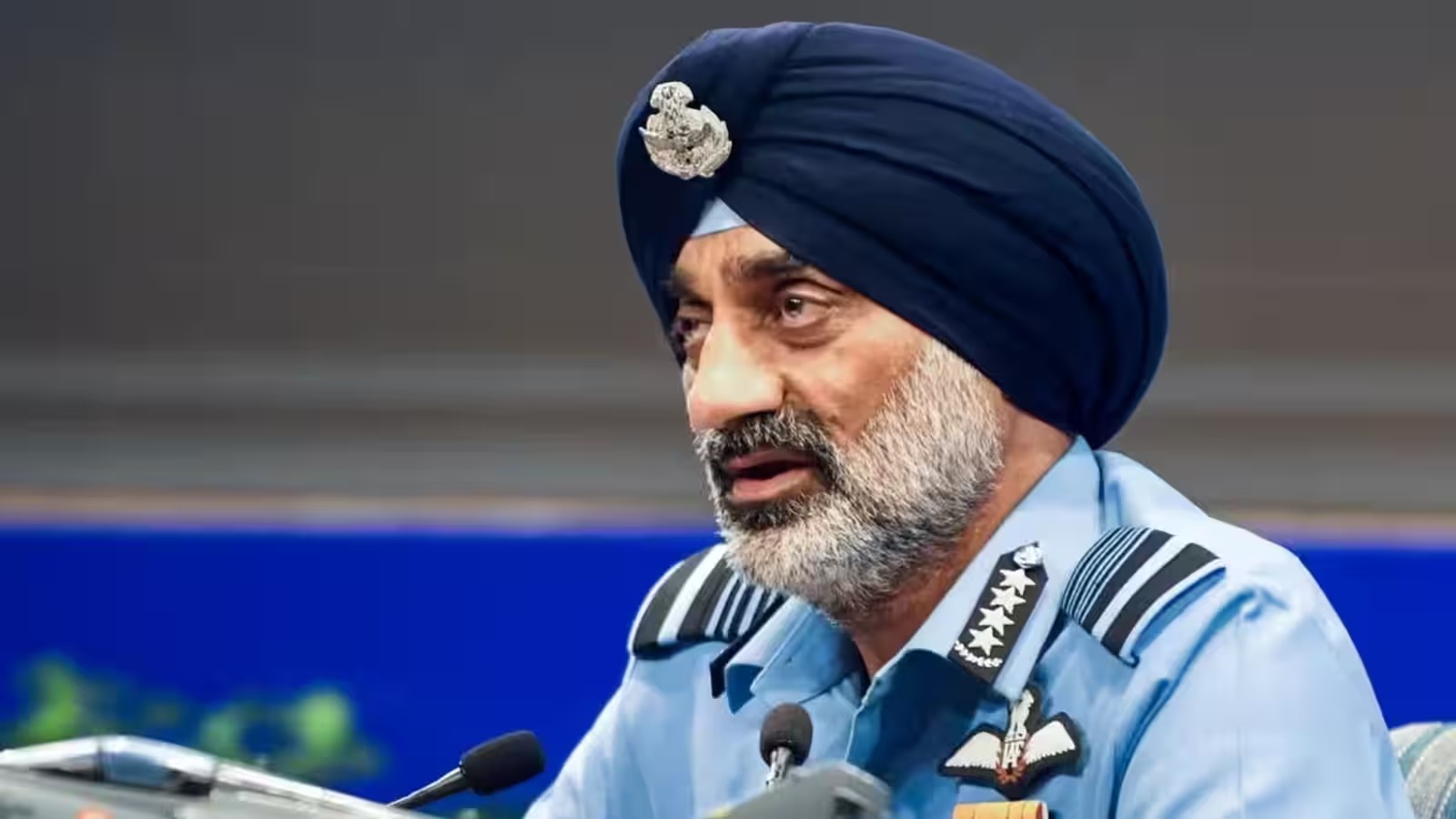
Indian Air Force (IAF) Chief Air Chief Marshal AP Singh has given a very important and big statement regarding the country’s defense strategies and integration of the three forces (theater command). The Air Force Chief has made it clear in blunt words that there will be no permanent division of the ‘fighter assets’ of the Indian Air Force i.e. fighter planes and air attack systems under any circumstances. Along with this, he also made it clear that India will decide its own policies according to its security needs and will not blindly copy any foreign theater command model. After this courageous and realistic statement of the Air Force Chief, a new and serious discussion has started in the defense corridors of the country. Defense experts believe that this statement of Air Chief Marshal AP Singh can prove to be a historic turning point in terms of the country’s strategic autonomy, wartime effectiveness and optimal utilization of air assets.
Indian Air Force Chief Air Chief Marshal AP Singh laid special emphasis on the fact that in modern wars, the biggest quality of ‘Air Power’ is its speed, flexibility and firepower. If fighter aircraft and missile systems are permanently distributed among different theaters or military commands, this could severely impact the Air Force’s ability to respond quickly. The Air Chief Marshal believes that during any emergency or war, it is essential for the control of the fighter fleet to be with a central command, so that jets can be immediately shifted from one theater to another as per the requirement. Any country has a limited number of fighter aircraft, and in such a situation, permanently distributing them along the borders can prove to be a big risk from the warfare and strategic point of view.
The examples of military structures of countries like America and China are often given regarding theater command system. However, Air Force Chief AP Singh, while speaking on this concept, said that India’s geographical conditions, threats and resources are completely different from Western or other foreign countries. The US has vast experience and resources in fighting wars across oceans, while China’s military model is tailored to its own political structure. India will have to adopt a ‘Made in India’ and ‘Swadeshi’ model to establish coordination between its three forces—Army, Navy and Air Force. Blind copying of foreign models may hinder rather than improve our war fighting capability. Therefore, India should move ahead keeping in mind the reality of its defense needs and limitations.
The Air Chief made it clear that the Indian Air Force is not opposed to theater commands or jointness of the three services, but is in favor of its more practical and result-oriented implementation. He said that there is a strong need for the Army, Navy and Air Force to work together, but this integration should be in such a way that no force’s own unique capabilities and strengths are harmed. Mere administrative integration between the three armies on the battlefield is not enough, but an integrated command structure is required that can take quick and accurate decisions in a war situation. Only a theater model designed as per indigenous requirements can give India a decisive edge in future ‘hybrid’ and multi-domain warfare.
During his address, Air Chief Marshal AP Singh also reiterated the Indian Air Force’s commitment towards rapid modernization and increasing the number of fighter squadrons. He said that in today’s era, it is not just the number of aircraft that matters, but state-of-the-art technology, stealth capabilities, advanced radar and precision strike weapons change the fate of war. Under the Make in India initiative, indigenous Tejas fighter jets, AMCA project and induction of advanced weapons into the fleet are strengthening the backbone of the Air Force. This statement of the Air Force Chief not only gives a strong message towards the security of the country’s borders, but also proves that the Indian Defense Forces have adopted a completely mature, self-reliant and far-sighted approach to the security of its strategies and assets.