 look news india

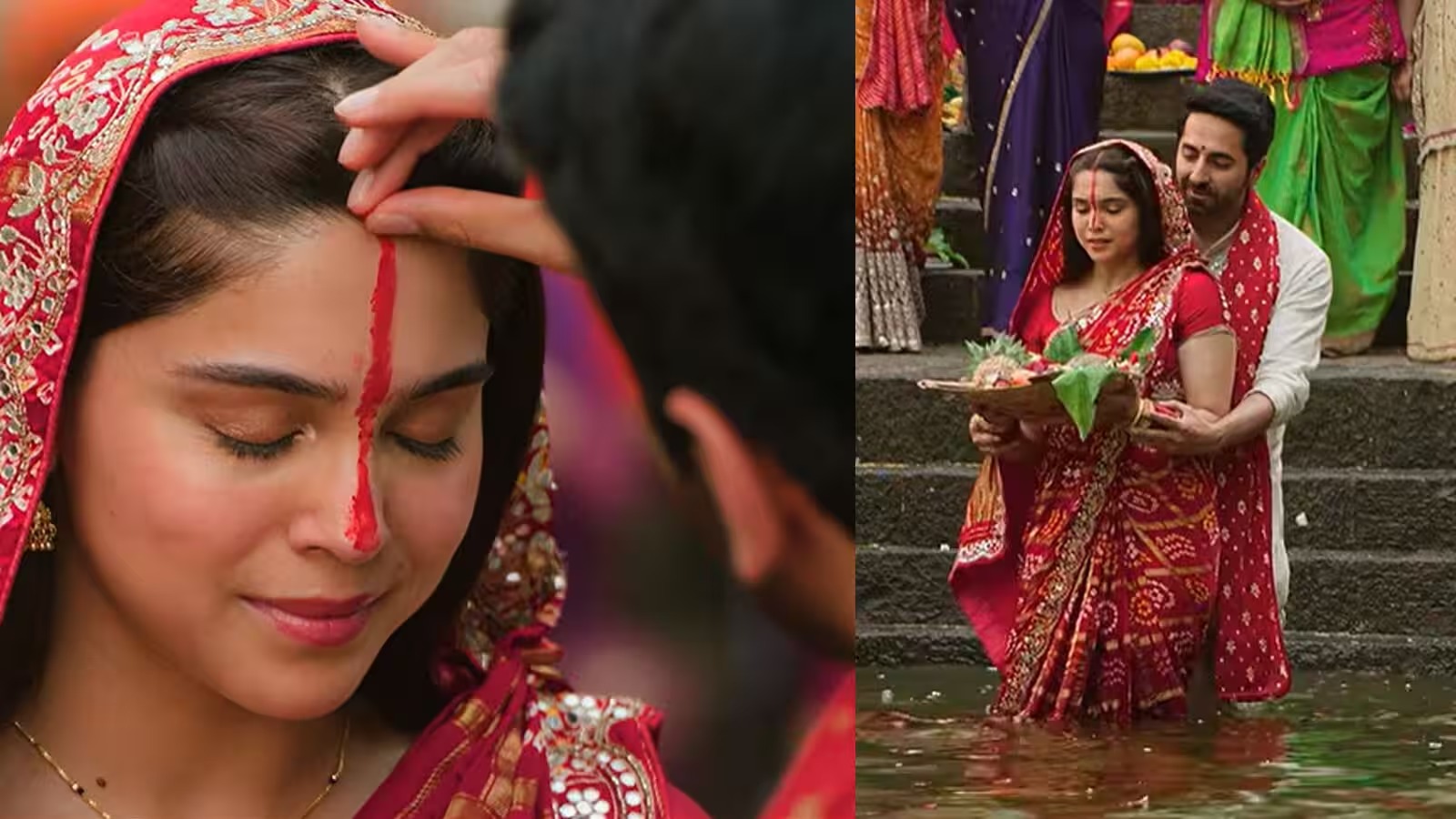
In Indian cinema and especially in Bollywood, whenever an attempt is made to bring any traditional folk festival or cultural heritage on screen, it is simultaneously appreciated and criticized. These days, a new controversy is rapidly gaining momentum in the corridors of social media and the entertainment world, the center point of which is a new song ‘Bulaaye Chhathi Maa’ from the upcoming film ‘Yeh Prem Mol Liya’. In this song, popular Bollywood actor Ayushmann Khurrana and talented actress Sharvari Wagh can be seen in scenes shot in the backdrop of the great festival of folk faith ‘Chhath Puja’. As soon as this song was released on the internet, strong reactions started coming from the audience and especially from the culture lovers of Purvanchal and Bihar. People believe that in the name of modernity, the sanctity of traditional festivals and its original spiritual essence is being played with in films, thereby hurting the sentiments of the general public.
Chhath Mahaparva is not only a festival of Sun worship and worship of Chhathi Maiya, but it is a sacred ritual of purity, discipline, fasting and unwavering faith whose dignity has been going on for centuries. When such subjects are included in a Bollywood project, the audience’s expectations are that it will fully reflect the depth and decency of that culture.
But the way Chhath Puja scenes have been shown in this song of the film ‘Yeh Prem Mol Liya’ with modern style, filmy dances and glamorous presentation, many music lovers and traditional audiences have been deeply hurt. On social media platforms like X (formerly Twitter), Instagram and Facebook, people are constantly asking the question whether the makers have used a holy festival commercial to garner TRP and publicity?
A heated debate has erupted among the netizens regarding the attire of Ayushmann Khurrana and Sharvari, who are playing the lead roles in the song, and their acting style. Critics say that when an artiste acts in a scene related to a folk festival, his expressions should clearly reflect the traditional sensitivity and sense of devotion that a common devotee or devotee has.
On the contrary, the way it has been presented like a typical Bollywood dance number in some scenes of the song has raised the question in people’s minds whether faith has now become just a means of entertainment for filmmakers? Commenting on social media, many users have written that such experiments with our culture should be stopped because it has a negative impact on the coming generations.
This is not the first time that questions have been raised about the dignity of culture and tradition regarding a film or song. In the history of Indian cinema, whenever an attempt has been made to bring regional and folk culture to the national stage, controversies have arisen regarding the fine line between ‘Cinematic Liberty’ and ‘Cultural Sensitivity’.
Film makers argue that they are giving wider recognition to the culture through art, while the audience and traditionalists believe that the original spirit of the festival and its sanctity should not be weakened in the name of entertainment. A great festival like Chhath Puja, in which every single rule from Kharna to Arghya is bounded by discipline and purity, requires more research and caution while serving it on the film screen.
After this growing controversy and sharp opposition on social media, the producers and public relations teams of the film ‘Yeh Prem Mol Liya’ are losing sleep. Although no official detailed statement has come out from the makers yet, there is a buzz inside that they are considering how to handle this situation.
This kind of controversy before the release of any film can have a deep impact on its box office collection and public perception. On one hand, while the views of the song are increasing rapidly, on the other hand, the flood of negative comments has increased the problems of the makers. This incident once again points to how sensitive Indian audiences are regarding matters of their culture and faith, and people associated with the film industry will now have to fully respect public sentiments along with artistry.