 look news india

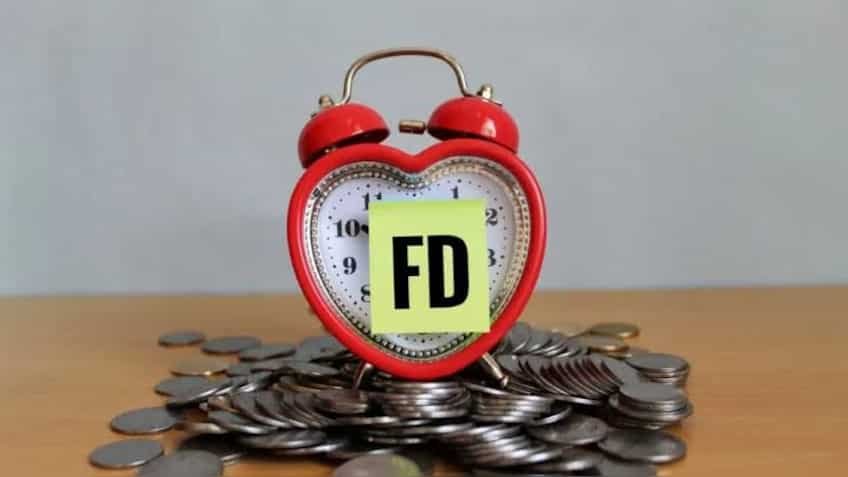
Fixed Deposit (FD) is still the safest and most reliable medium of investment for crores of middle class families and senior citizens of the country. Often people deposit a large part of their savings in lump sum FD for future security, but at any time in life there may be a sudden need of cash due to medical emergency, home repair or any important payment. In such a situation, most of the investors get nervous and take premature closure of their entire FD. Doing so not only affects their long-term financial goals but also causes them to suffer huge financial losses due to pre-mature withdrawal penalties and low interest rates charged by banks. Under the guidelines of Reserve Bank of India (RBI) and modern banking facilities of major banks, customers can now withdraw the amount as per their need without breaking their entire FD and can continue to earn high interest on the balance as before.
If your FD falls under the Ordinary Term Deposit (Callable FD) category, then most of the government and private banks provide you the facility of Partial Withdrawal. Under this facility, suppose you have made an FD of Rs 5 lakh in the bank and you suddenly need Rs 1 lakh, then you do not need to close the entire FD of Rs 5 lakh. You can withdraw Rs 1 lakh only through net banking, mobile app or by visiting the nearest branch of your bank. After this, interest will continue to be received on the remaining Rs 4 lakh in your account as per the original interest rate. However, the customer should keep in mind that on the amount of Rs 1 lakh withdrawn, the bank will pay the applicable interest rate for the number of days the money remained in the bank, and there may be a partial withdrawal penalty of 0.50 per cent to 1 per cent on this portion. Also, in non-callable FDs, premature partial or complete withdrawal is not allowed.
The best and smartest way to withdraw money from your FD without any penalty is through the Sweep-in facility, known as Multi-Option Deposit (MOD) in State Bank of India (SBI) and Flexi FD in other banks. In this system, your savings account is directly linked to your FD and your deposit is divided into small units of Rs 1,000 or Rs 5,000 and is kept in the FD. Whenever you withdraw more money from your savings account through ATM, UPI or check than your available balance, the bank automatically breaks the same number of units from your FD and transfers them to your account. The biggest advantage of this process is that for this you neither need to go to the bank nor have to pay any pre-mature penalty fee. You continue to get the full interest rate of FD on the remaining units.
If you need money only for a few weeks or a few months, then instead of breaking any part of the FD, taking an overdraft against FD proves to be the wisest step. Almost all major banks in the country—like SBI, HDFC Bank, ICICI Bank and Bank of Baroda—offer 75 percent to 90 percent of the total value of your FD in the form of instant overdraft or loan. The biggest feature of this facility is that your original FD remains completely safe and interest keeps getting added on it. The bank charges you interest only on the amount you have used from the overdraft limit and the number of days for which you have used it. Usually, this interest rate is only 1 percent to 2 percent more than the interest rate available on your FD, which is much cheaper than any personal loan or credit card.
Financial advisors believe that to protect your hard-earned money from interest loss, the right strategy should be adopted while investing. According to certified financial planners (CFP) from cities like Lucknow, Delhi and Mumbai, instead of making a big FD of Rs 10 lakh or Rs 15 lakh in a single bank, it is always beneficial to invest by dividing it into different FDs of Rs 2-2 or 3-3 lakh each (FD Laddering). Due to this, in case of emergency, you have to break only a small FD and the rest of the deposited capital remains safe. Additionally, if your FD is under a 5-year tax-saving lock-in (Tax-Saver FD) or is lien marked against a loan, you cannot take partial withdrawals or overdrafts from it. Therefore, before requesting any withdrawal, please confirm the terms and applicable charges of your FD with your bank’s mobile app or branch.