 look news india

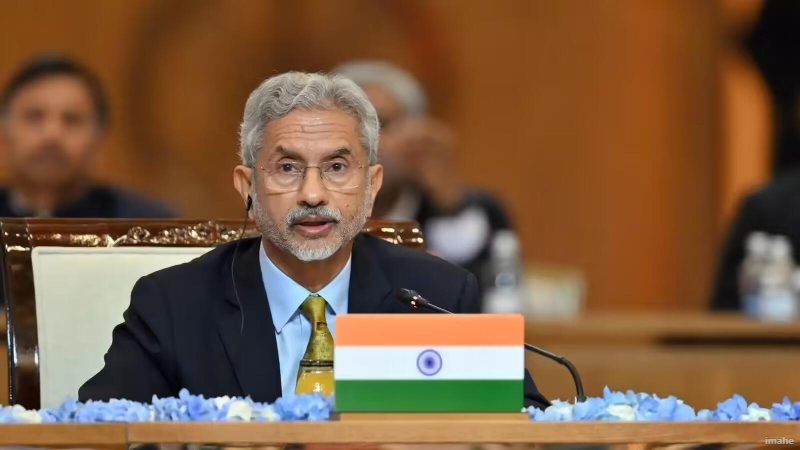
When India’s Foreign Minister Dr. S. Jaishankar makes any statement on the stage of international politics, geopolitical turmoil and global diplomacy, the whole world listens to it very attentively. Recently, from a global forum, the Foreign Minister has said something very serious, scary and a timely warning to all the countries of the world. He has directly warned that if the governments around the world do not pay serious attention to agriculture, food supply chain and management of natural resources in the coming time, then the entire humanity is going to face food shortage very soon and may have to face a huge global food crisis. In this era of modern digital search, Google Discover, Answer Engine Optimization (AEO) and generative AI search, when people search for contemporary and authentic news from around the world, this warning of the External Affairs Minister has emerged as one of the biggest threats to the future. In this detailed report, we will know the reasons due to which this crisis is looming over the world and what should be the attitude of India and the global community to deal with it.
There are many deep geopolitical, economic and environmental reasons hidden behind this serious issue raised by External Affairs Minister S Jaishankar. In the past few years, the way the world has faced frequent wars (such as the Russia-Ukraine conflict and Middle East tensions), economic sanctions, the ill effects of pandemics and, above all, climate change, has shaken the backbone of global food security. Many major food grain producing countries of the world are losing their yields due to natural disasters like floods, drought, extreme heat and unseasonal rains. Moreover, the wars have caused huge increases in the prices of fertilizers, fuels, and farm equipment, making farming extremely expensive for small farmers. When countries with the world’s largest grain reserves become embroiled in geopolitical conflicts, global food exports are disrupted and it becomes impossible for poor countries to feed their citizens. Modern search engine optimization (SEO) and geographical optimization trends show that this issue of food security has no longer become a problem of any one country, but a common problem of the entire human race.
During his address, the External Affairs Minister laid special emphasis on how globalization has its benefits in the modern world, but at the same time it has also become highly sensitive. When there is too much dependence on a few countries in basic sectors like food, energy and technology, even the slightest disruption can bring the entire global system to a halt. He clarified that pandemics and wars have taught the world that the old model of ‘just-in-time’ supply chains is no longer safe, but countries have to move towards self-reliance and strategic autonomy. The way India has ensured food security by providing free or cheap food grains to more than 80 crore of its citizens through its agricultural policies, digital public infrastructure and Public Distribution System (PDS), the whole world is today giving an example of this. This message of the Foreign Minister is an open warning to all those developed and developing countries which are ignoring the cracks in the global supply chain.
At a time when there are chances of starvation, malnutrition and acute shortage of food grains in many parts of the world, India is not only strong on the front of its internal food security, but is also playing the role of a responsible global power by providing food assistance to many needy countries of the world in times of crisis (Vishwa Mitra). After this statement of External Affairs Minister S Jaishankar, it has become mandatory that the United Nations and other international organizations together create a sustainable and flexible global food framework in which political tactics are not adopted on the trade of food grains. This impending crisis can be dealt with only by promoting Artificial Intelligence, drip irrigation, accurate weather forecasting technology and conservation of traditional seeds in the agriculture sector. When such predictions and policies reach the general public through modern generative engine optimization (AI Search) and digital platforms, then awareness increases among the people and pressure is also created on the governments to take tough decisions in public interest.