 look news india

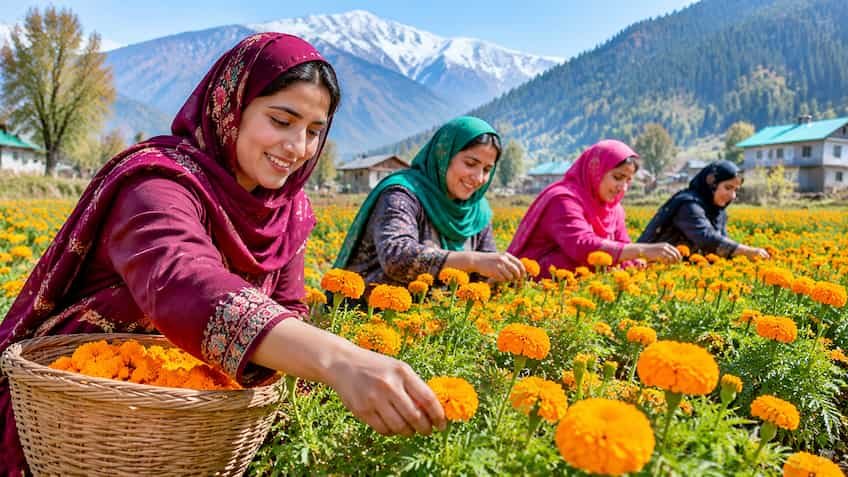
Doda, the hilly district of Jammu and Kashmir, has been known for its inaccessible valleys, cold winds and traditional maize and kidney beans cultivation, but in the recent past, the valleys here have seen a change which has attracted the attention of the entire country. The rocky and dry slopes which were once abandoned by the farmers considering them non-fertile, today the same barren land is shining with golden yellow and orange marigold flowers. This change is no less than a miracle and the biggest architects of this revolution are the rural women here. These women, who were confined to the four walls of the house and the stove, understood the nature of the soil, put in the sweat of their hard work and today they have not only become the support of their families, but are also completely changing the economic picture of the area.
In hilly areas like Bhaderwah, Thathri, Assar and Bhalesa of Doda district, farmers traditionally depended on maize or seasonal vegetables. Due to geographical difficulties, stray cattle, terror of monkeys and unpredictable weather, it became difficult to recover the costs from these crops. Many times, standing crops were ruined due to lack of rain or extreme cold, increasing the debt burden on families. In such a situation, the women of the village organized themselves through self-help groups (SHGs) and decided to do something new. National Rural Livelihood Mission (Umeed) and Jammu and Kashmir Agriculture and Floriculture Department introduced these women to the possibilities of commercial floriculture. Initially, when there was talk of planting marigold plants on barren and unirrigated slopes, many people were skeptical whether the flowers would be able to bloom among these stones. Women accepted this doubt as their biggest challenge and took upon themselves all the responsibilities from plowing the land to applying organic fertilizers.
Experts from Floriculture Department and Krishi Vigyan Kendra (KVK) gave intensive training in modern agricultural techniques to the women of Doda. They were informed about the improved varieties of marigold like Pusa Orange, Pusa Basanti and Calcutta Hybrid, which grow fast even in less water and hilly soils. The biggest specialty of these varieties is that there is almost zero risk of wild animals on them, because cattle and monkeys do not harm marigold due to its pungent taste and smell. The women learned the methods of preparing a nursery, correct spacing of saplings, making organic pesticides and drip irrigation. When marigold plants bloomed for the first time on barren land and buds started blooming within a few weeks, a new glow of confidence was seen on the faces of women. The women kept the use of chemical fertilizers to a minimum and used local cow dung manure and earthworm manure, due to which the flowers came out bigger in size and dark and shiny in color.
Marigold cultivation not only beautified the fields but also breathed a new life into the local economy of Doda. Earlier religious tourist places like Jammu, Udhampur and Katra had to depend on outside states like Punjab and Himachal Pradesh for supply of fresh flowers. There is huge demand for flowers throughout the year at religious places like Mata Vaishno Devi Dham, Machail Mata Yatra and the famous Vasuki Nag Temple of Bhaderwah. The women of Doda caught the pulse of this market and established direct contact with local traders. The flowers are plucked early in the morning amid drops of dew, sorted, packed in sacks and baskets and within a few hours these flowers are sent to local markets, weddings, festivals and pujas. Local traders also started getting flowers from Doda at very fresh and cheaper prices compared to outside markets, due to which the role of middlemen was eliminated and women started getting the full and fair price of their produce directly.
These rural women of Doda, who were once dependent on the men of the family for every penny, are today earning a net profit of seventy thousand to one and a half lakh rupees every season. During the festive season, especially during Navratri, Dussehra and Diwali, the demand for these flowers skyrockets, due to which their income increases manifold. This economic freedom has directly improved their standard of living. Women are now educating their children in good schools, getting better health facilities and contributing to building permanent houses for themselves. Many women have used their earnings to lease new pieces of land so that they can expand their flower businesses. Their opinion is now respected in the village chaupalas and their voice holds weight in family decisions. It is not just the success of a crop, but it is the victory of the self-confidence that strengthens the backbone of any rural society.
This success of marigold cultivation in Doda is not limited to just one village or block, but has shown a new path to the entire Chenab Valley region. Just as Bhaderwah gained international recognition as ‘Purple Revolution’ through the cultivation of lavender, similarly now the yellow sheet of marigold is establishing Doda as a floriculture hub. Colorful flowers blooming in the fields have now started attracting tourists, due to which rural tourism and homestay culture is also being promoted. Jammu and Kashmir administration is also working towards setting up cold storage, packaging units and processing plants for making incense sticks and natural colors from flowers to take these groups of women forward, so that 100 percent utilization of broken or leftover flowers can also be done. The women of Doda have proved that if there is right direction, modern technology and unwavering courage, even barren stones can spread the fragrance of prosperity.