 look news india

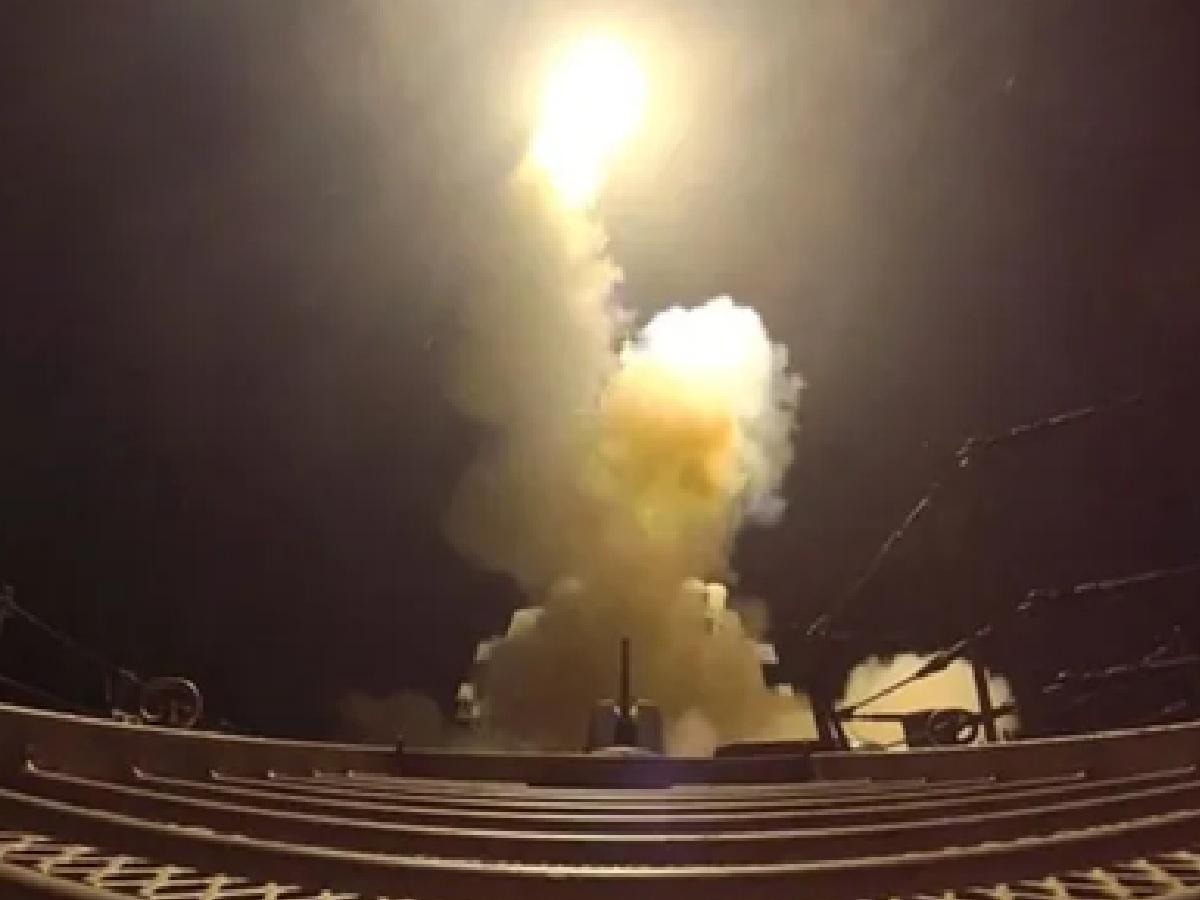
Tehran: The geopolitical scenario of the Middle East has once again come to a standstill. The US military has reimposed a strict naval blockade of Iran’s major ports in response to Iranian attacks on commercial vessels in the Strait of Hormuz, the US military has officially announced. Due to this unprecedented increase in military tension between Washington and Tehran, the fragile interim ceasefire agreement between the two countries has reached the verge of complete breakdown, raising the serious possibility of a completely destructive war breaking out in the Gulf region.
Devastating air strikes on Ahvaz, Bushehr and Qeshm Island
According to Iran’s state broadcaster IRIB, massive explosions were heard in Iran’s strategically sensitive southern city of Ahwaz, the coastal city of Bushehr and Qeshm Island soon after the US announced the new blockade. The US Military Central Command (US CENTCOM) has confirmed that another devastating wave of airstrikes has been launched to destroy US coastal systems, missile bases and drone launch pads. In response, Iran also targeted three commercial tankers near Bahrain, Kuwait and Jordan, killing two sailors and injuring 14 others in attacks on two tankers belonging to the UAE.
Trump changes decision: withdraws plan to impose 20% toll on ships
Amidst this major military development, US President Donald Trump has taken an important diplomatic U-turn. Earlier, Trump had announced to impose a 20 percent security duty (toll) on foreign ships passing through the Strait of Hormuz. However, speaking to the media in the Oval Office, Trump clarified that he had withdrawn the plan after special requests from Gulf allies, kings and emirs. Gulf countries have made an alternative proposal of direct investment of billions of dollars in America in exchange for toll. After this decision of Trump, the price of Brent crude oil suddenly rose in the international market and immediately fell from $87 per barrel to $78.
Global peace talks in crisis and war over Hormuz sovereignty
The main focus of this entire war is to establish control over the Strait of Hormuz, through which about 20% of the world’s crude oil and natural gas passes. Iran’s Deputy Foreign Minister Kazem Garibabadi has alleged that the US is preventing Tehran from exercising its legitimate sovereignty by violating international rules. At the same time, Qatar’s Foreign Ministry has appealed for diplomacy, calling the Iranian attacks on Jordan and Bahrain a gross violation of sovereignty. Currently, a Pakistan-led mediation team is working round the clock to save the ceasefire, because if the US-Iran war erupts, the Israel-Lebanon peace talks going on in Rome and the entire framework for the disarmament of Hezbollah will also be in ruins forever.