 look news india

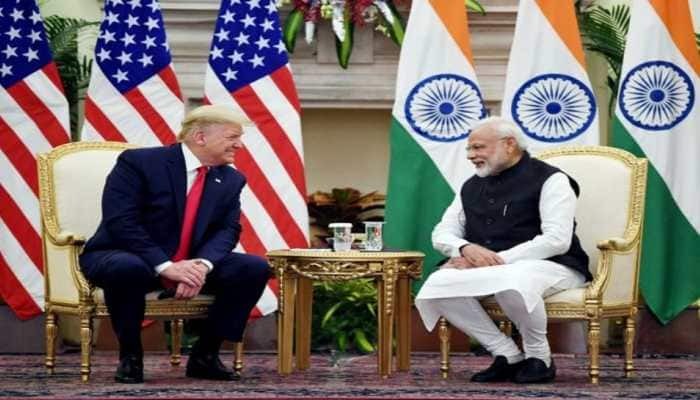
Washington: US President Donald Trump recently interacted with reporters in Air Force One, making important statements about business relations between India and the United States, which also created a stir in New Delhi. A few days before the first date of August’s first date, Trump said that “things are working very well” between Washington and New Delhi. However, he also warned of 20% to 25% high tariffs (import duty) at the same time, creating an atmosphere of uncertainty in Indo-US business relations.
This statement did not come at all. When a reporter asked about the whispers coming from New Delhi whether India was getting ready for heavy new charges, Trump clarified his stance, dismissing speculation. He said, “India has imposed more tariffs than every other country for years. But now I am in charge. And you cannot do it.” This direct allegation was a direct response from the US President to India’s business approach, which has been expressing concern over Indian fees on American products over years.
What are the chances of new tariffs?
Although no formal communication has been sent to India so far, nor a signed letter has been sent like any other country, the possibility of new tariffs is largely on the table. Despite this stressful atmosphere, Trump called India a “good friend”, reflecting his complex diplomatic attitude. This indicates that despite commercial differences, efforts are on to maintain strategic partnership between the two countries.
Talk of tariff continues since April: Ban on ‘mutual’ measures
In April, the Trump administration had already imposed a tariff of 26% on Indian imports, but later it was stopped as a “mutual” measures, which could be again under consideration. This shows that the two countries are closely monitoring each other’s business policies and are deciding their reactions accordingly.
Indian side optimistic stance: ‘talks with strength status’
On the other hand, India’s attitude has been more optimistic. Commerce Minister Piyush Goyal recently said that India is “interacting with the situation of strength, with confidence. He said, “This is the same confidence that encourages us to constantly for free trade agreements. Our discussions with the United States are moving very well.” This statement reflects India’s growing economic power and its strong position in global trade talks.
Progress on bilateral trade agreement (BTA): talk on ‘separate track’
Foreign Secretary Vikram Egyptian also expressed similar confidence during Prime Minister Narendra Modi’s recent United Kingdom visit. He told the media that India is in regular contact with US authorities on the possibility of bilateral trade agreement (BTA), although those dialogues are being handled under a separate track. Egyptian said, “We are discussing it under a separate vertical. I can only say that our attachment is going on. Contacts continue, and we will see how it moves forward.”
Goal for ‘win-win’: India-US shared commitment
On July 14, a senior Indian official said that the government was moving ahead with “concrete progress” on BTA with Washington, and described the deal that is committed to finalizing the two countries under the leadership of Modi and Trump. India’s goal is clearly a “win-win” agreement, with the interests of the two countries.
Turn to peace from diplomacy: Trump claims in India-Pakistan relation
Apart from trade, Trump also mentioned his role in stopping the struggle between India and Pakistan that day early this year. The deadlock started on April 22 after the terrorist attacks in Pahalgam, in which 26 people lost their lives. India’s response, now widely called ‘Operation Sindoor’, included an accurate attack on nine terrorist camps in Pakistan and Pakistan- The Occupied Jammu and Kashmir.
Trump’s claim: ‘We settled very well’
Trump claimed that he helped establish peace. He said, “Look, India, he is my friend and he (Prime Minister Modi) is my friend. And you know that he ended the war with Pakistan and at my request, I was very good and Pakistan too. We made very well.”
India’s side: ‘Pakistan contacted first’
However, India introduced a different version of the events. According to New Delhi, it was the Director General of Military Operations (DGMO) of Pakistan who went to the first trick and contacted his Indian counterpart to request the ceasefire. Only then did the enmity decreased.
Whether or not the version of Trump is correct, trade and geopolitics have once again joined each other, taking care of India and the United States carefully, and every trick is being closely monitored. This shows how economic interests and regional security in global diplomacy affect each other.