 look news india

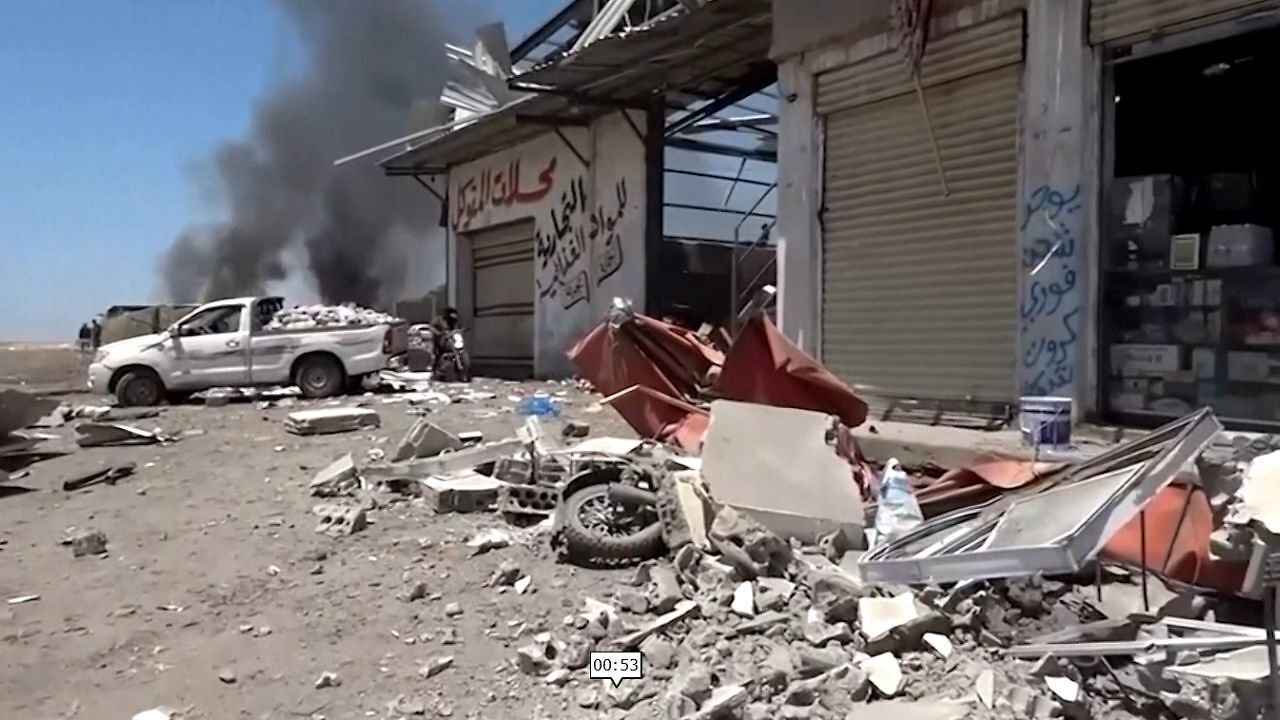
Peace efforts in the war-torn West Asian country Yemen have once again suffered a major setback. At least seven civilians have been killed and more than 40 seriously injured in a massive airstrike on a crowded local market in the restive Taiz province of south-western Yemen. According to official figures released by the Houthi-run Health Ministry, innocent children and shopkeepers were among the casualties. The attack, which took place on Sunday, took place in a market near Mawiyah Junction in Taiziya district, where people had gathered in the morning for daily shopping. According to eyewitnesses, the entire market was shaken by the sudden loud explosions, many commercial shops were turned into piles of debris in the blink of an eye and the vehicles and motorcycles parked nearby were engulfed in flames.
Immediately after the attack, there was chaos at the spot and screams were heard all around. Local rescue workers and civilians pulled out the injured buried under the debris and admitted them to nearby hospitals. The condition of many injured is said to be critical, due to which the death toll is feared to increase. The United Nations (UN) Office for the Coordination of Humanitarian Affairs has expressed deep concern over this attack, saying that attacks on civilian targets and markets are a flagrant violation of international humanitarian law.
After this deadly attack, conflicting statements are coming out from both the sides. Yahya Sari, the military spokesman for the Iran-backed Houthi rebels, and his media outlets alleged that the cowardly attack was carried out by the Saudi-led coalition and Yemeni government forces deliberately targeting civilians and market shops. Calling it a war crime, the Houthis have warned that a strong and serious response will be given to this bloodshed.
On the other hand, the internationally recognized government of Yemen and military sources have clarified their position, rejecting the Houthis’ allegations. Government military officials claim that their forces targeted a secret military camp and armed vehicles of the Houthi rebels recently established at Mawiya Junction, very close to the market. The government alleges that Houthi rebels deliberately build their military bases near civilian settlements, markets and residential structures so that civilians can be used as human shields during any military action. Despite claims from both sides, the actual loss is yet to be confirmed from independent sources.
A fierce civil war has been going on in Yemen since 2014, when Houthi fighters captured the capital Sanaa and ousted the elected government. After this, the Arab coalition led by Saudi Arabia started military intervention to restore the Yemen government. However, in the year 2022, there was an informal ceasefire (ceasefire) mediated by the United Nations, which brought relief to the citizens for some time. But in recent months this ceasefire has completely broken down and the series of missiles, drones and air strikes have once again intensified.
According to the latest figures of the United Nations, more than 700 people have lost their lives in this war that has flared up again in the last two months, while more than 80 thousand civilians have been displaced from their homes and forced to live in temporary tents. Yemen’s geographical location is strategically very sensitive as it is located at the mouth of the Bab el-Mandeb Strait and the Red Sea trade corridor. Recently, the Houthis have claimed to have strengthened their hold on the western coastal areas and important islands, due to which the dark clouds of war have started looming over the maritime trade between Europe and Asia.
This attack on the market of Taiz has raised lines of concern on the forehead of regional and global diplomacy. This attack has come at a time when Houthi rebels are continuously firing drones and ballistic missiles at Saudi Arabia’s Riyadh, Khamis Mushait and other targets across the border, which are being intercepted by Saudi air defense. Experts believe that if the conflict between the Houthis and the government coalition in Yemen remains uncontrolled, it will directly impact the already burning balance of power in the entire Middle East.
Foreign affairs experts say that unless security is provided to civilians and public markets during military operations, the humanitarian crisis will become worse. War-torn ordinary Yemeni civilians are already on the brink of starvation due to lack of basic food, clean water and medical facilities. There is now increasing pressure on world leaders and the UN Security Council to bring both sides to the ceasefire table immediately, so that the lives of innocent children and civilians can be saved.