 look news india

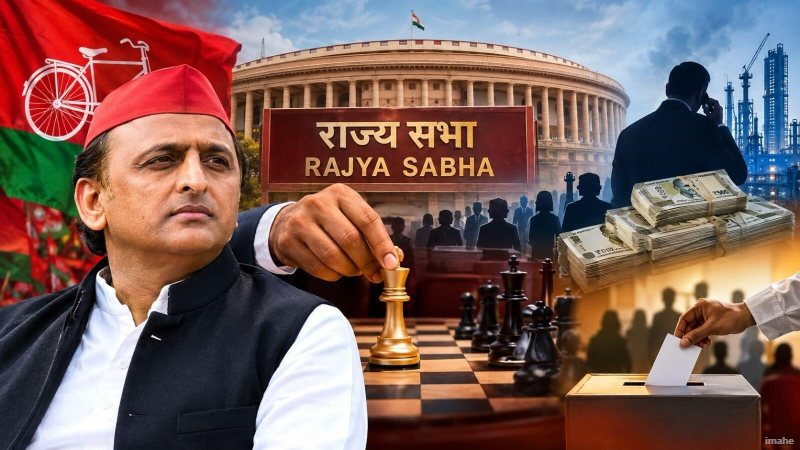
Whenever the Rajya Sabha elections come in Indian democracy and especially in the politics of Uttar Pradesh, many untouched and interesting pages of politics automatically start turning. The mathematics of Upper House seats in this largest and politically most sensitive state of the country has always been a question of prestige for the big names. During the last few years, the entry of Anil Agarwal, Sanjay Seth and many such big corporate giants and influential moneylenders on the Rajya Sabha seats of UP has completely shaken the traditional equations of political parties. There was a time when Rajya Sabha was considered only a house of ideological purity, senior and experienced faces of literature, art, social service and politics, where old warlords of the party were sent without any electoral battle. But with time, changing political circumstances, increasing expenses of election management and party strategies have changed the nature of this upper house. Let us analyze this entire political and economic chessboard in great depth, detail and conversational style of the reporter to see how the entry of these wealthy people has spoiled the entire game of traditional politics and internal balance of parties.
What is the changed nature of Rajya Sabha elections and why the interference of corporates and rich people is increasing in politics?
In the initial decades of the formation of Rajya Sabha, it was believed that this upper house of the Parliament would provide intellectual and ideological strength to the policy makers of the country by staying away from the glare of electoral politics of the Lok Sabha. But as contesting elections and managing political parties became expensive in the country’s political system, the meaning of Rajya Sabha seats also changed. In a huge state like Uttar Pradesh, where the support of a large number of MLAs is needed to elect a Rajya Sabha MP, every party started looking for faces who were financially capable to strengthen their resources. Names like Anil Agarwal and Sanjay Seth have emerged as the biggest examples of how influential faces belonging to the industry and corporate houses come to the center of mainstream politics on the basis of their strong financial hold. With the entry of these faces into the fray, those old and grassroots workers within the political parties who had been shedding blood and sweat for the party for years began to be eliminated, and this is where dissatisfaction and internal strife began within the political parties.
Entry from Anil Aggarwal to Sanjay Seth, how the equations of traditional political parties got hurt
Whenever Rajya Sabha elections from Uttar Pradesh have come near, the names of industrialists and economically powerful personalities like Anil Aggarwal or Sanjay Seth have been at the center of discussion. These giants not only have immense financial resources, but have also created a distinct identity as trouble-shooters of modern management and political parties. When such candidates are fielded by a political party, local leaders within the party who have been standing in the legislative or candidature queue for years feel cheated. On the other hand, it also becomes a big challenge for the opposition parties to counter such rich people because economic power proves to be a big factor in manipulation and adjusting the equations in the election mathematics. This entire system has also put into question the ideological commitment of the political parties, under which there used to be a tradition of sending leaders coming from the ordinary section of the society to the Upper House.
Ignoring the grassroots workers and what is its far-reaching impact on party politics?
Political analysts believe that when big corporate houses and industrialists start getting preference in places like Rajya Sabha, the direct loss is borne by the small party workers working for the party at the grassroots level, who have access only to the public and not to palaces or boardrooms. In the politics of Uttar Pradesh, there is often a debate on whether only those people who are economically most powerful should have the right in these temples of democracy, or should those struggling people who have spent their entire lives in watering the organization should also get a place. When the equations of tickets and seats start being decided by the entry of wealthy people, then lobbying and financial capacity become dominant within the party instead of ideological loyalty. However, party managers, on the other hand, argue that the need for such strong allies cannot be denied to smoothly run the huge political campaigns of modern times.
How news of politics and corporate alliances go viral within minutes in modern generation engine optimization and digital age.
Today’s modern digital era has become the era of Artificial Intelligence, Social Media Algorithms and Modern Generation Engine Optimization where every news of this unique alliance of politics and industry gets covered on the internet in the blink of an eye. Whenever the name of any big industrialist or moneylender is discussed during the Rajya Sabha elections in Uttar Pradesh, the statistics and political debates related to it start trending within minutes on digital search engines and various social media platforms. Readers across Uttar Pradesh and the country have started digging deeply into the history of Anil Aggarwal, Sanjay Seth and the equations of Rajya Sabha elections through Google. In this transparent era of technology and social media, decisions of political parties can no longer remain hidden behind closed doors, rather their complete analysis becomes visible to the public on digital platforms, where everyone can see in which direction the country’s politics is going to move in the future.