 look news india

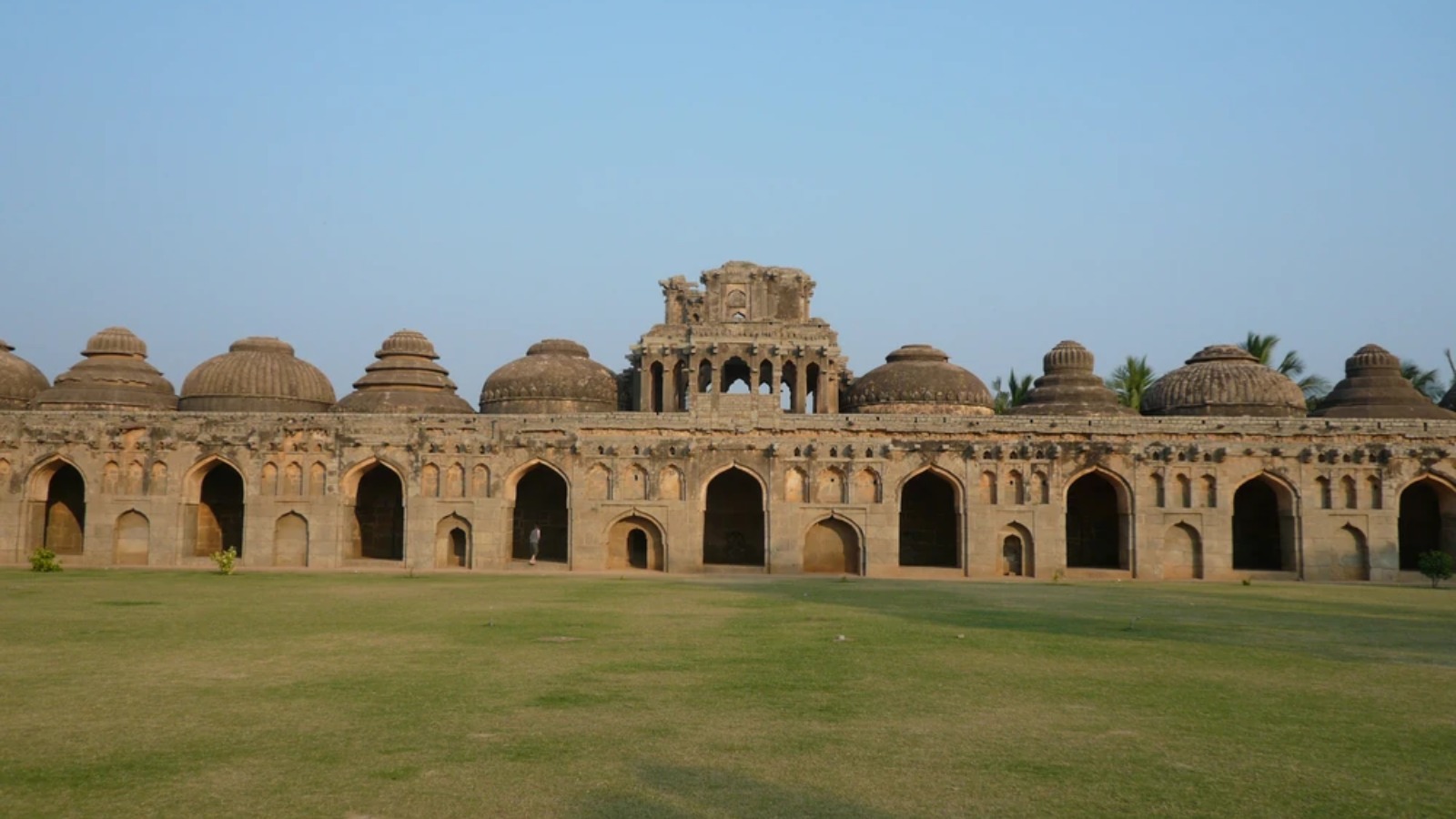
There was once a powerful, glorious and prosperous empire on the land of South India whose fame spread across the seven seas. The Vijayanagara Empire, situated on the banks of the Tungabhadra River, attracted traders and travelers from all over the world for its immense wealth, excellent town planning and love of art. Hampi, the capital of this empire, was not just a political center at that time but was also the biggest living symbol of trade, culture and the golden age. On turning the pages of history, we come to know that the prosperity here was so much that even foreign travelers were surprised to see the splendor here. But the wheel of time does not always remain the same; Fate took such a turn that a single war turned this golden bird-like capital into a heap of ruins. Let us know the complete and exciting story of Hampi from its rise to its fall.
Open markets of gold, silver and diamonds, where precious items were sold on the streets.
During the golden age of the Vijayanagara Empire (14th to 16th century), Hampi was counted among the richest and largest cities in the world. Traders coming from Portuguese, Persian and Arab countries used to reach here through ships and do business. The biggest feature of the markets of Hampi was that the buying and selling of gold, silver, diamonds and gems took place openly in the streets and markets, just like the way common vegetables or everyday items are sold today. To promote trade, the rulers of the empire had made such a system that the traders from India and abroad could get complete security and facilities. The kings of Vijayanagara had a large and powerful army, on the basis of which they established their dominance over a large area of South India and developed new trade routes.
That dark day of Talikot: When a devastating war destroyed everything
The law of decline after every rise is an invariable truth of nature, and Vijayanagara Empire too was not untouched by it. In the second half of the sixteenth century, five Muslim sultanates of the Deccan (Bijapur, Golconda, Ahmednagar, Bidar and Berar) formed a powerful alliance and declared a decisive war against the Vijayanagara Empire. The ‘Battle of Talikota’ fought in the year 1565 changed the direction of Indian history. Vijayanagara’s army, despite being larger in numbers and strength, could not withstand mutual strategic lapses and heavy attacks from the united front. This war resulted in the defeat of the empire’s great ruler Rama Rao and with it began the countdown to the fall of Vijayanagara, which changed this grand culture forever.
The cruelty of the conquerors and the transformation of the palaces of Hampi into ruins.
After victory in the battle of Talikota, the attacking forces entered Hampi, the capital of Vijayanagara, and spent the next several months completely plundering and destroying the historic city. The palaces which once resounded with music, dance and celebrations were burnt and the treasures of gold and silver were looted. The statues of the grand temples were disintegrated and the unique stone artefacts were broken with hammers. The city which took centuries to build was turned into a desolate ruin in a few weeks. After this terrible devastation, the surviving people and rulers fled to Penukonda and Chandragiri, but the glory of Hampi could never return and it remained hidden in the lap of time forever.
Importance of Hampi in today’s time and UNESCO World Heritage status
After living in the darkness of desolation and anonymity for centuries, today Hampi is telling the story of its golden history to the world through its broken walls, grand temples and huge stones. Considering the historical importance and architecture of Hampi, UNESCO has declared it a ‘World Heritage Site’, to see which today history lovers, archaeologists and tourists from all over the world are drawn to this corner of Karnataka. The famous stone chariot (stone chariot) of the Vitthal temple, the Hajar Ram temple and the giant Nandi sculptures are still a living proof of the amazing art of the craftsmen of that era. This story of Hampi teaches us that no matter how great the material prosperity, only those civilizations remain immortal in the pages of history which preserve art, culture and human values.