 look news india

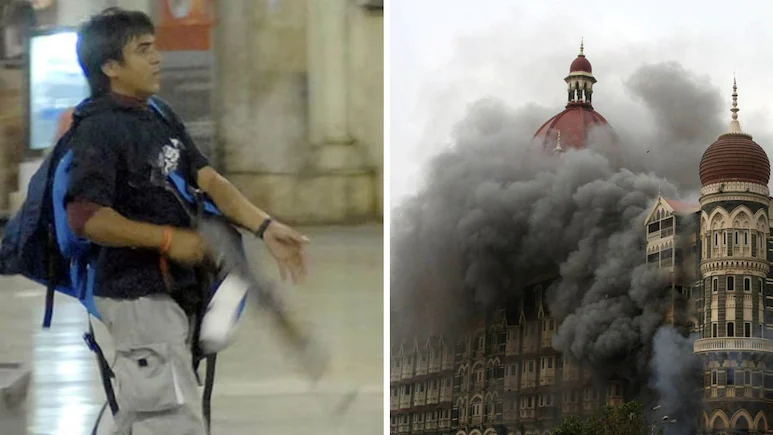
The mention of ‘Major General Saheb’, which appeared in the investigation, judicial records and interrogation details of the gruesome terrorist attacks in Mumbai on 26 November 2008, had exposed a mysterious and serious link in the security and intelligence discourse, regarding which Kasab’s statements refer to a period of rigorous training and radicalization. According to investigative documents and reports, Ajmal Kasab, the sole captured surviving attacker, during his interrogation and statements had mentioned about a mysterious person who visited the training camps, who was addressed as ‘Major General Sahib’ by the camp inmates and who was said to be under his command. From a reporter’s point of view, when a designation like ‘Major General’ or a mention of a high level of surveillance beyond the ground level operatives comes to light in a major cross-border terrorist conspiracy, it becomes an important point for the investigating agencies to understand what kind of organizational and institutional structure was working behind the training, strategy and logistics.
According to judicial records and investigative reports, Kasab had said that during various stages of training in camps in Pakistan, an unknown person had come there and was welcomed by the top leaders of Lashkar-e-Taiba and the trainers had given him a military salute. In the statements, it was said that the same person was described as ‘Major General Sahib’ and the process of inculcating a radicalized mindset and becoming a ‘convinced Jihadi’ during phases like rigorous physical exercises, weapons handling, mountain climbing and maritime training was mentioned. Security analysts believe that such statements are always evaluated in conjunction with independent evidence, digital and physical evidence, call records, GPS data and testimonies of other co-conspirators to test the credibility and actual role of any claim on a legal basis.
The investigation into the 26/11 attacks revealed that the conspiracy was not limited to the radicalization of a few youths, but also involved extensive reconnaissance, financial and technical assistance, fake identities, planning of sea boat routes and urban bases. Investigation of links like that of David Coleman Headley and information related to other accused showed that Mumbai’s key locations, sea landing points and transport routes were monitored in advance so that the attack could be carried out with maximum effect. For the investigating agencies, it was a multi-layered puzzle, in which links were connected at every step, from training camps to entering the city by sea and attacking different targets.
There was a lengthy judicial process in the Mumbai attacks case, in which the special court, the Bombay High Court and the Supreme Court confirmed the conviction and sentence on the basis of evidence and arguments, after which Kasab was hanged on 21 November 2012 in Yerwada Jail, Pune. The tragedy deeply underlined the need to further strengthen India’s internal security, coastal surveillance, intelligence coordination and its policy of zero tolerance towards terrorism. Even today, when the anniversary of 26/11 or the details of the investigation are discussed, it is not just about remembering a chapter from the past but also about the ongoing commitment to hold the cross-border terrorist network and its patrons accountable.
Serious discussions are held in the entire state and many cities of the country, including the capital of Uttar Pradesh, Lucknow, on issues related to national security and paying tribute to the martyrs of 26/11. There is a sentiment often seen among the citizens of Lucknow, youth, ex-servicemen and people of different sections that the sacrifices of the forces protecting the security and sovereignty of the country should always be remembered with respect. Despite new dimensions related to investigation and security emerging with time, this incident of 26/11 is recorded in the collective memory of the country as a warning which gives the message of vigilance and unity.