 look news india

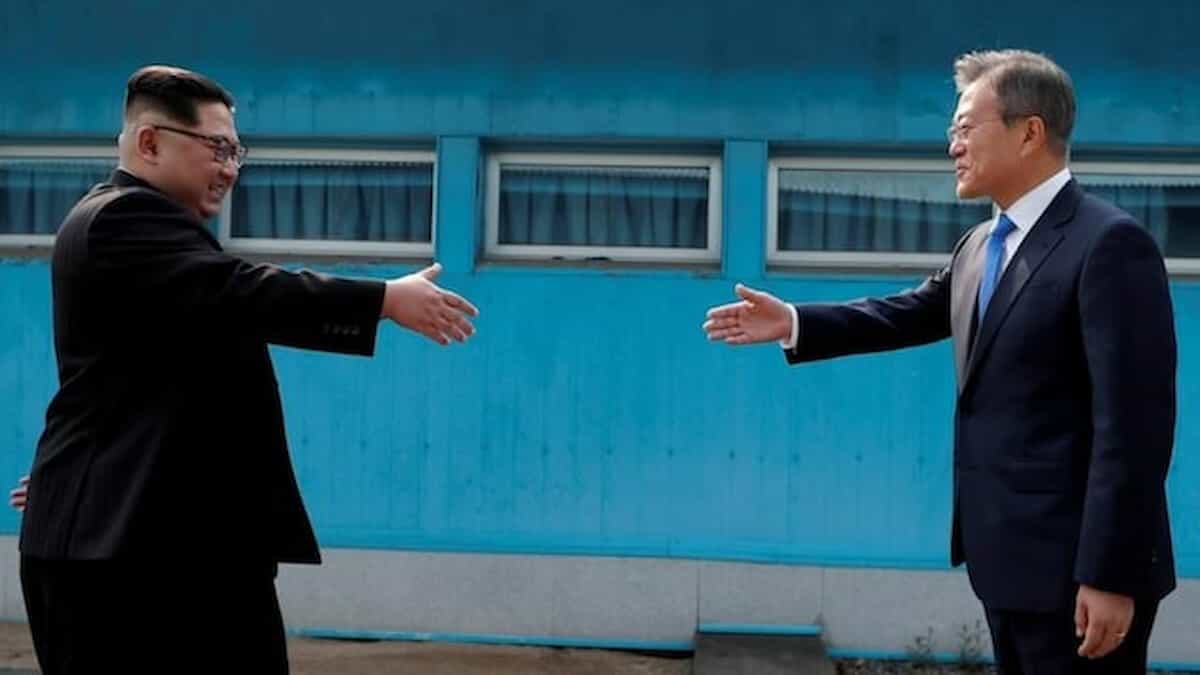
Since the Second World War, many countries have developed and deteriorated on the world map, but a geopolitical fire from the Cold War era is still burning which has divided the Korean Peninsula of East Asia into two parts. We are talking about the historical gap between North Korea and South Korea, which has not been transformed into a complete peace treaty since a temporary armistice in 1953. Even today the two countries remain technically at war, and the border between them is considered one of the most dangerous and heavily militarized areas in the world. The question that arises in the mind of every international affairs expert is why even after seven decades the two Korean countries have not been able to sign a formal peace agreement, and why this rift between Pyongyang and Seoul remains a constant nuclear and conventional threat to the entire world.
The historical armistice of 1953 and the background of the Korean War
The Korean War began in 1950 when North Korean forces supported by the Soviet Union and China, spreading communist ideology, suddenly launched a massive attack on South Korea. In this bloody conflict, US-led United Nations (UN) forces took the field in favor of South Korea, as a result of which lakhs of soldiers and civilians were killed in this gruesome war that lasted for three years. Ultimately, on 27 July 1953, an Armistice Agreement was signed in Pamunjom village, under which the war activities between the two countries were stopped, but it did not get the status of a final peace treaty to end the war. Under this agreement, the DMZ i.e. Demilitarized Zone (DMZ) was created around the 38th parallel between the two countries, which is still considered to be the most guarded border in the world and is the biggest living proof of the permanent enmity between the two countries.
Why are both countries technically at war even today?
According to the rules of international diplomacy, when two countries fight a war, they either sign a peace treaty or unilaterally surrender to end the hostilities. In the case of the Korean Peninsula, neither has anyone surrendered nor has any comprehensive peace agreement been reached till date, due to which technically North Korea and South Korea are still considered legally at war. The citizens of both the countries are bearing the brunt of this strange and tense situation, where huge amount of landmines, lakhs of soldiers deployed on both sides of the border and missiles are always ready for any untoward incident. From time to time, rounds of diplomatic talks took place between the two countries, historic summits were held and claims were made to improve relations, but mutual distrust, North Korea’s frequent nuclear and ballistic missile tests and America’s military presence dashed hopes of peace every time.
The legacy of the Cold War and the diplomatic stranglehold of the superpowers
This unresolved conflict between North and South Korea is not just a mutual rivalry between two neighboring countries, but it is a part of the geopolitical legacy of the Cold War which even today remains the arena of battle for supremacy among the global superpowers. On one hand, North Korea has the strategic support and diplomatic immunity of China and Russia, while on the other hand, the entire guarantee of South Korea’s security rests on its defense agreements and nuclear umbrella with America. This is the reason why whenever even a small ray of peace is seen in the Korean Peninsula, the geopolitical equations of Washington, Beijing and Moscow come in between. North Korean leader Kim Jong Un’s aggressive policies and obsession with nuclear weapons have turned the region into the world’s most sensitive nuclear flashpoint, where a small misunderstanding or military misadventure could spark World War III.
Economic development of South Korea and isolation of North Korea
In the seven decades since the armistice, there has been a huge difference in the socio-economic conditions of the two Korean countries, which makes this conflict more complicated. On one hand, South Korea has registered its name in the list of the world’s largest economies and tech giants on the basis of its amazing hard work, democratic system and technological innovation, and Seoul today presents an example of modernity. On the other hand, North Korea has completely isolated itself from the world as a communist military dictatorship, where the common people are suffering from starvation and poverty due to international sanctions, but the entire budget of the country has been spent on the development of nuclear weapons and long-range missiles. This huge gulf on the ideological front has distanced the two societies from each other, making the chances of peaceful unification of the Korean Peninsula in the future seem almost negligible.
The uncertain path to peace and the future of the Korean Peninsula
In today’s modern and globalized era where the whole world talks about trade, technological cooperation and development of humanity, this unresolved conflict on the Korean Peninsula remains one of the oldest wounds in human history. The general public of both the countries, especially those families who were separated during the partition of 1953 and have not been able to meet their relatives till date, are still waiting for some miraculous peace treaty. However, considering the current international circumstances, there is little hope that this war situation will end completely in the near future, because this vicious circle between North Korea’s nuclear program and US-South Korea joint military exercises is continuously deepening. Overall, the incomplete ceasefire of 1953 is still hanging like a sword, one wrong action of which has the power to destroy this entire region, and diplomats around the world are constantly struggling to put a sprinkle of peace on this powder keg.