 look news india

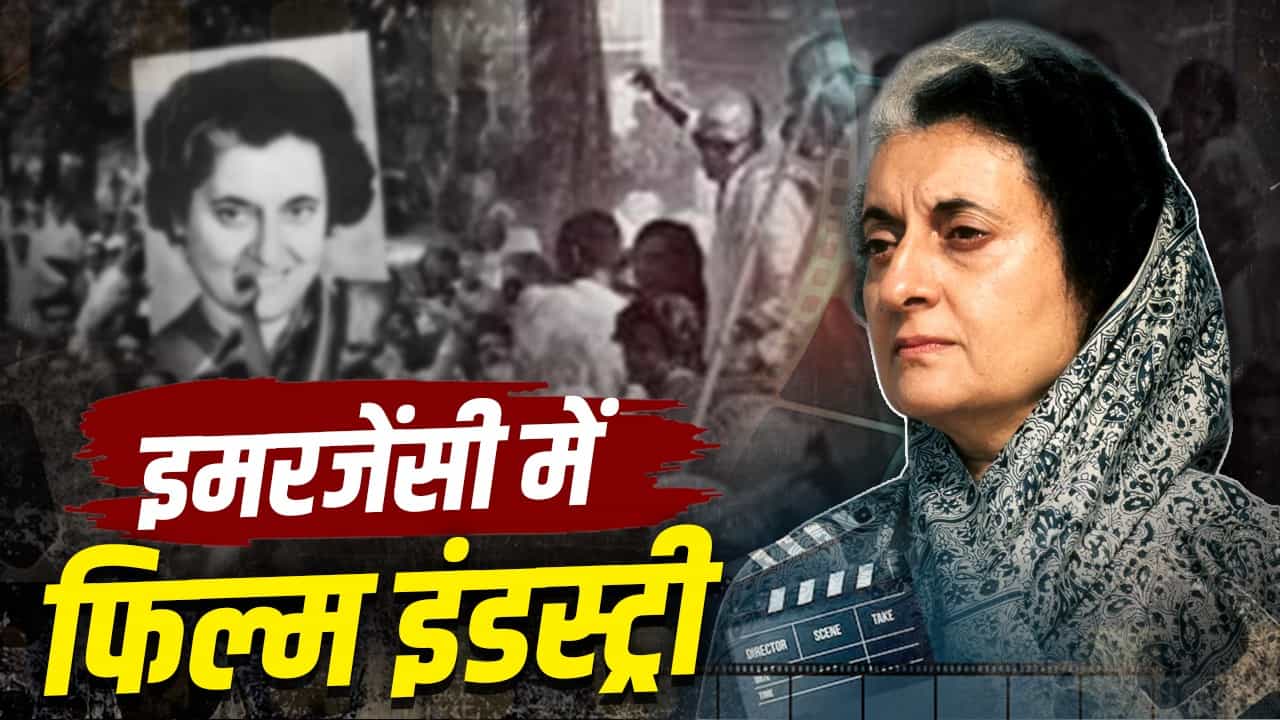
The National Emergency imposed on 25 June 1975 was a period in the history of Indian democracy, which completely banned the freedom of expression in the country. Whenever there is talk of censorship and repression during the Emergency, the ban on newspapers, magazines and radio is usually mentioned. But very few people know that the most powerful medium of mass communication and shaking the public mind i.e. ‘Cinema’ was also thrown into the fire of brutal censorship during this period. Gulzar directed ‘Aandhi’ and Ramesh Sippy’s classic film ‘Sholay’ somehow got permission for release by making changes in some scenes and climax, but there were many such films which were banned outright. The limit was reached when the reels and prints of the films were taken out from the government warehouses and burnt publicly. This opposition to the Emergency and dictatorship was not limited to Bombay (Hindi) cinema only, but this spark of resistance was spread from Bengali to Satyajit Ray’s ‘Hirak Rajar Deshe’ to Kannada cinema. Even today in the year 2026, the ideological power of cinema is understood as well as it was in 1975. 1. Chanda Maruta (Kannada): Symbol of resistance and tragic death of the actress ‘Chanda Maruta’ (Hindi meaning – Wild wind) is still remembered in Kannada cinema as the biggest symbol of resistance to power and anti-Emergency. The production of this film, based on P. Lankesh’s famous play, started around 1972 in both Kannada and English languages. The film was directed by Pattabhirama Reddy and starred famous actress Snehalatha Reddy in the lead role. In the story of the film, showing the political-social conditions of that time, it was feared that the country was moving towards dictatorship and emergency. It so happened that as soon as the shooting of the film was completed, emergency was imposed in the country. Snehalatha Reddy and her husband had socialist views and were close friends of Dr. Ram Manohar Lohia and George Fernandes. Snehlata had to go underground as soon as the Emergency was declared, but was soon arrested and put in Bengaluru jail. The eminent actress was subjected to inhuman and painful torture inside the prison, which completely deteriorated her health. He died shortly after his release from prison. She could not even see the release of her masterpiece film, which was released in theaters in 1977 after the emergency was lifted. 2. Kissa Kursi Ka: When Sanjay Gandhi set all the prints on fire The film that attracted the most political and legal controversies during the Emergency was ‘Kissa Kursi Ka’ directed by Amrit Nahta. Amrit Nahta himself had earlier been a member of the Congress Party and a Lok Sabha MP from Barmer, Rajasthan. But when he became disillusioned with Congress, he made an excellent satire (political satire) film, attacking Indira Gandhi, Sanjay Gandhi and the sycophantic political system. In this film, there was such a sharp satire on dictatorship, forcibly imposed policies and sycophancy that the then Ministry of Information and Broadcasting confiscated all the prints and negatives of this film through the Central Film Censor Board. Later all these prints were taken to Maruti factory near Delhi and set on fire. After the emergency was lifted, when the Janata Party government came and the ‘Shah Commission’ investigated the matter, Sanjay Gandhi and the then Information and Broadcasting Minister V.C. Shukla was found guilty in the criminal case of destroying the prints of the film. Veteran actors like Utpal Dutt, Shabana Azmi, Raj Babbar, Surekha Sikri and Manohar Singh worked in this film. However, after the Emergency, it was remade and released, but it failed at the box office. 3. Andolan: When there was a ban on showing rebellion and revolution, the film ‘Andolan’ directed by veteran director Lekh Tandon also became a victim of the brutal censorship of the Emergency. Interestingly, the plot of this film was based on the background of the ‘Quit India Movement’ of 1942 and it did not make any direct comment on the Gandhi family or the Congress. The film starred Rakesh Pandey and Neetu Singh in the lead roles, and the story depicted the ideological conflict between a father (who is a loyal employee of the British government) and a son (who is a revolutionary teacher of the freedom movement). The reasoning of the Censor Board officials behind banning this film was that the revolutionary main character of the film rebels against the government, administration and the established system. The then government feared that after watching this film, public anger might flare up further among the people troubled by the Emergency. In that strict framework of censorship, there was a strict prohibition on showing revolution, mass movement, and rebellion against the system, due to which this film was also kept in the box. This film could also be released on screen only after the change of government in 1977. 4. Sterilization: Mockery of Bollywood superstars and government claims The film, which was a direct and sharp attack on the ‘forced sterilization campaign’ run under the leadership of Sanjay Gandhi during the Emergency, was made by renowned comedian I.S. ‘Sterilization’ of Jauhar. I.S. Johar was known for attacking social and political evils through ‘black comedy’ and ‘spoof’ (parody) in his films. The funniest and most daring aspect of this film was that the characters were named after the top Bollywood superstars of that time—like ‘Anitav Bachchan’ for Amitabh Bachchan, ‘Kannauj Kumar’ for Manoj Kumar, ‘Shahi Kapoor’ for Shashi Kapoor and ‘Rakesh Khanna’ for Rajesh Khanna. Through these names I.S. Johar had made a strong satire that these big stars had become alleged sycophants and supporters of the Emergency and the then government. The government was so displeased with this spoof that the film was immediately banned. It was released when the Janata Party government came to power, but it was not commercially successful. However, the song in this film was written by poet Hullad Moradabadi and composed by Kalyanji-Anandji. "What did the government achieve by imposing emergency?" It became the biggest slogan of resistance during that period.