 look news india

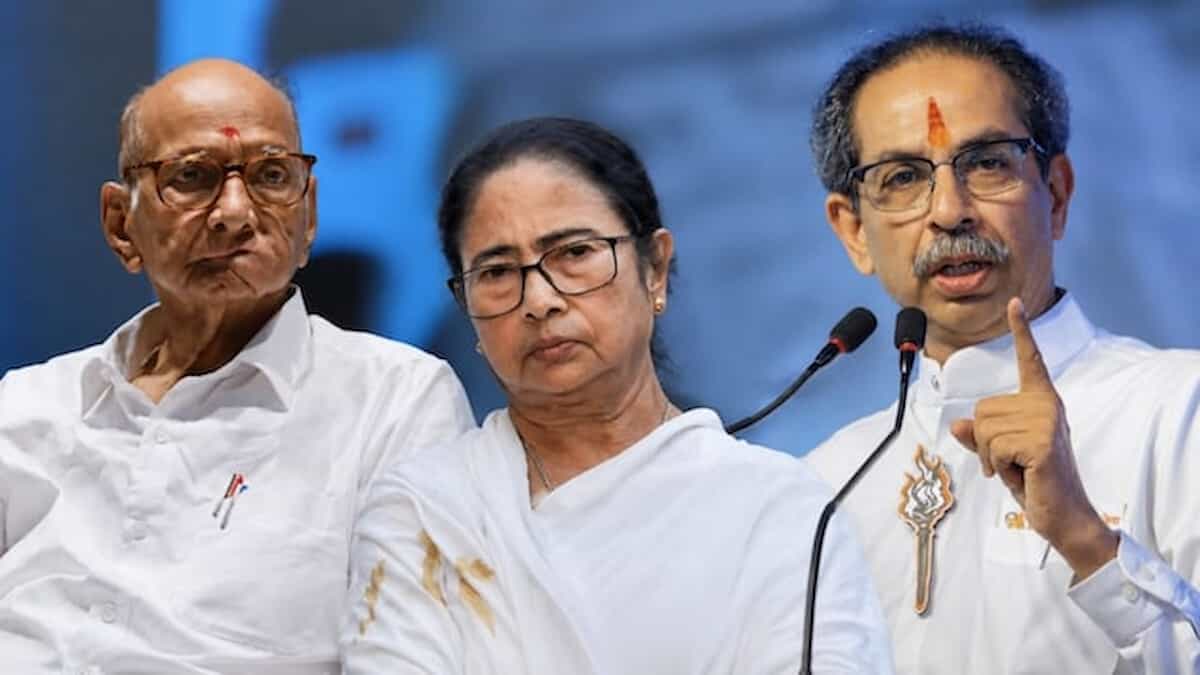
Sharad Pawar, National President of Nationalist Congress Party (Sharadchandra Pawar), one of the most experienced and clever strategists of Indian politics, is once again in the headlines. This time the reason is not any new political move of his, but a very shocking and far-sighted statement given two years ago. Sharad Pawar’s two-year old ‘prediction’ is becoming increasingly viral in political circles and on social media, in which he had revealed the ‘horoscope’ of all the regional parties of the country. Amidst the turmoil in politics from Maharashtra to West Bengal, it has now become common to discuss whether the country’s politics is now moving in the same direction as Sharad Pawar had expressed about the ‘future’ of regional forces like Mamata Banerjee’s TMC and his own party NCP.
What did Sharad Pawar say on the existence of regional parties?
In fact, about two years ago, during an informal conversation and interview, Sharad Pawar had shared a deep analysis of the changing times of Indian politics. He had said very frankly that in the coming times, many small and regional parties will be seen struggling to maintain their independent existence. Pawar believed that the way the country’s politics is narrowing around two big poles, regional parties will face a big crisis to save their identity. He had indicated that on the basis of national interest and ideological similarity, in the coming years, many regional parties may merge into a big national party like Congress or they may completely become a permanent part of a big national alliance.
What is the connection between the future of Mamta’s TMC and NCP?
This statement of Sharad Pawar seems to be very accurate in today’s political scenario. Major splits within Mamata Banerjee’s Trinamool Congress (TMC) in West Bengal and the NCP itself in Maharashtra have heightened the concerns of regional satraps. Political experts say that between the strong nationalism of BJP and the resurgence of Congress, the traditional vote bank of regional parties is continuously slipping. Sharad Pawar had forewarned two years ago that due to pressure from central agencies, internal strife and lack of acceptance of leadership at the national level, parties like TMC, NCP, DMK and RJD would one day have to compromise completely with the national mainstream parties.
Impact on geographical politics of Maharashtra and West Bengal
If seen from the geographical and regional point of view, at present Maharashtra and West Bengal remain the two biggest arenas of the country’s politics. Maratha vote bank and regional identity have always been a big issue in the grassroots politics of Maharashtra, which Sharad Pawar understands very well. Whereas in Bengal, TMC is ruling on the basis of Bengali identity. But according to Pawar’s theory, unless these regional parties become part of a bigger agenda at the national level, it will be impossible to secure their fort even at the local level. This is the reason why from the rural areas of Maharashtra to the power corridors of Mumbai and Kolkata, new political equations have started multiplying regarding this old statement of Pawar.
AI search and latest stance of political analysts
In today’s modern era of Generative Engine Optimization (AI search) and data-driven political analyses, it is clearly coming to the fore that Indian voters are now voting differently in state elections and central elections. During the Lok Sabha elections, voters have been more inclined towards strong national parties or big alliances. An experienced politician like Sharad Pawar had sensed this trend two years ago with his political foresight. This is the reason that today, in order to strengthen themselves within the opposition and emerge as a major force at the national level, regional parties have now started preparing their strategies afresh.